United States
NGFW vs UTM: Features, Benefits, and Which Firewall You Need

Prefer listening?
Hear the full blog in audio format
When comparing NGFW vs UTM, NGFW is ideal for businesses needing advanced threat prevention, application control, deep packet inspection, and scalable security. UTM suits smaller businesses looking for a simpler all-in-one solution with firewall, antivirus, VPN, spam, and content filtering.
The key difference isn’t just features; it’s control. UTMs are convenient and easy to manage, while NGFWs offer deeper visibility into users, applications, and threats, making them the stronger choice for growing enterprises.
IBM’s 2025 Cost of a Data Breach Report puts the global average breach cost at $4.4 million. Verizon’s 2026 DBIR reports that 31% of breaches now start with software vulnerabilities, making firewall selection more than a hardware purchase. It is a business risk decision.
Here is how to decide which firewall actually fits your business.
What Is The Main Difference Between NGFW and UTM?
The main difference between NGFW and UTM is that UTM combines multiple security tools into one easier-to-manage firewall, while NGFW focuses on deeper traffic inspection, application control, intrusion prevention, threat intelligence, and advanced policy control.
UTM is built for simplicity. NGFW is built for visibility, control, and scalability.
Should You Choose NGFW or UTM?
Choose UTM if your business needs simple firewall protection, VPN, malware protection, spam filtering, and content filtering in one easier-to-manage system. It is usually the better fit for small offices, clinics, retail stores, branch locations, and companies without a dedicated IT team.
Choose NGFW if your business needs deeper traffic inspection, application control, user-based policies, stronger reporting, threat intelligence, and better long-term scalability. It is usually the better fit for growing businesses, multi-site networks, compliance-heavy industries, and teams that rely heavily on cloud applications. For organizations with broader digital compliance obligations, this may sit alongside processes such as 508 Compliance Testing for accessible applications and websites.
Use this simple rule:
- If your biggest need is simplicity, start with UTM.
- If your biggest need is visibility and control, choose NGFW.
- If your firewall slows down when security features are enabled, it is time to compare NGFW options.
- If you handle sensitive customer, financial, healthcare, or regulated data, NGFW is usually the safer long-term choice.
What Should You Check Before Buying a Firewall Appliance?
Before buying a firewall appliance, do not just look at the brand name or the biggest throughput number on the datasheet. The right firewall should fit how your business actually uses the network today, and how that network may grow later.
Check these before choosing between NGFW and UTM:
- User count: How many people, devices, and locations will rely on the firewall every day?
- VPN needs: Will remote employees, branch offices, or vendors need secure access?
- Threat prevention throughput: How well does the firewall perform when malware protection, IPS, and filtering are turned on?
- Content filtering: Do you need to block risky websites, control browsing, or manage user access?
- Application control: Do you need visibility into cloud apps, business tools, and risky applications?
- Licensing costs: What features are included, and what requires a separate subscription?
- Support and warranty: Can you get help quickly if something fails or needs replacement?
- Scalability: Will the firewall still make sense as users, traffic, and security needs grow?
- Existing network fit: Does it work with your current switches, routers, VPN setup, and security policies?
A firewall should not only protect your network on day one. It should keep performing when traffic increases, users spread out, and security requirements become more serious.
What an NGFW Actually Does Inside Your Network
An NGFW, or Next Generation Firewall, is a network security firewall that goes beyond traditional firewall protection. A traditional firewall usually allows or blocks traffic based on IP address, port, and protocol. An NGFW goes deeper.
Cisco defines a next-generation firewall as a network security device with capabilities beyond a traditional stateful firewall, including application awareness, integrated intrusion prevention, and cloud-delivered threat intelligence.
A strong NGFW firewall can include:
- Application control
- Intrusion prevention system
- Deep packet inspection
- Threat intelligence
- Malware protection
- URL filtering
- User-based policies
- VPN firewall features
- Layer 7 firewall inspection
- Advanced threat prevention
The biggest advantage? It does not just ask, “Where is this traffic coming from?”
It asks, “What is this traffic doing?”
That is a big deal. Modern threats often hide inside normal-looking traffic. A simple firewall might see a packet that looks fine. An NGFW looks deeper and checks whether that traffic is carrying malware, exploiting a vulnerability, or using an application in a risky way.
What a UTM Firewall Does Well
UTM, or Unified Threat Management, is a firewall solution that combines several security tools into one device or platform.
A UTM firewall commonly includes:
- Firewall protection
- Antivirus firewall features
- Intrusion prevention system
- Spam filtering
- VPN
- Content filtering
- Malware protection
- Basic reporting
- Threat management tools
Fortinet explains that UTM devices are built to monitor, manage, and mitigate threats at key points in a network, often including antivirus, IPS, IDS, spam filtering, VPN, and URL filtering.
That is why UTM is popular with small and midsize businesses. You get broad protection without needing five separate systems, five dashboards, and five headaches.
For a small office, retail business, clinic, school, or branch location, that simplicity can be a lifesaver.
But simplicity has a trade-off.
As the business grows, the UTM may start to feel limited. More users, more devices, more cloud apps, more remote access, and more compliance pressure can push a basic all-in-one firewall past its comfort zone.
NGFW vs UTM Comparison Table
Feature | NGFW | UTM |
Best for | Growing businesses, enterprises, complex networks | Small businesses, branch offices, simpler networks |
Main strength | Advanced control and visibility | All-in-one simplicity |
Security depth | Deeper inspection and advanced threat prevention | Broad bundled protection |
Application control | Strong | Basic to moderate |
Intrusion prevention | Advanced IPS capabilities | Usually included, but less customizable |
Threat intelligence | Stronger and more dynamic | Available, but often less advanced |
Management | More technical and customizable | Easier and simpler |
Performance | Better for heavier traffic when sized properly | Can slow down if too many features run on one device |
Scalability | Stronger long-term fit | Better for smaller environments |
Cost | Higher upfront investment | Lower upfront cost |
Best keyword fit | Enterprise firewall, advanced firewall protection | Small business firewall, all-in-one firewall |
Firewall Fit Score: Do You Need NGFW vs UTM?
Still unsure which firewall fits your business? Give yourself 1 point for every statement that applies:
- You have more than 50 users.
- Your team relies on cloud apps every day.
- You have remote employees using VPN.
- You manage multiple locations or branch offices.
- You need user-based access policies.
- You handle financial, healthcare, customer, or regulated data.
- You need detailed reporting for audits or compliance.
- Your current firewall slows down when security features are enabled.
- Your IT team needs better visibility into applications and traffic behavior.
Score 0 to 3: UTM may be enough.
Score 4 to 6: Compare higher-end UTM and entry-level NGFW options.
Score 7 to 9: NGFW is likely the stronger long-term choice.
Which Firewall Fits Your Business Best?
The right choice depends on how much control your business needs. UTM is better when you want simple, all-in-one protection. NGFW is better when your network is growing, and you need deeper visibility, stronger threat control, and more flexible security policies.
A UTM firewall works well for businesses that need the essentials in one device, such as:
- Firewall protection
- Malware protection
- VPN access
- Spam filtering
- Content filtering
- Basic intrusion prevention
It is a good fit for small offices, clinics, schools, retail stores, branch locations, and companies with limited IT support.
An NGFW becomes the smarter choice when your business needs more advanced protection, such as:
- Application control
- Deep packet inspection
- Threat intelligence
- Advanced threat prevention
- User-based firewall policies
- Scalable enterprise network security
Should I Choose UTM if I Do Not Have an In-House IT Team?
A UTM firewall is often a better fit for businesses without a full IT team because it keeps firewall protection, VPN, malware protection, and content filtering easier to manage from one place.
When Does a Business Outgrow a UTM Firewall?
A UTM firewall can be a great starting point, especially for small teams that need simple, all-in-one protection. But as the business grows, the same simplicity that once made UTM attractive can start to feel limiting.
You may be outgrowing a UTM firewall if:
- More users are working remotely through VPN
- Cloud apps are becoming business-critical
- Internet speed drops when security features are enabled
- You need stronger application control
- You handle sensitive customer or financial data
- Your IT team needs better reporting and traffic visibility
- Compliance requirements are becoming more serious
- Your firewall feels like it is constantly working at its limit
That is usually the point where NGFW becomes the smarter move. Not because UTM is bad, but because the network has become more complex than a basic all-in-one firewall was built to handle.
Is a UTM Firewall Enough for Businesses Using Cloud Apps?
A UTM firewall can be enough for light cloud usage, especially if your team only uses basic tools like email, file sharing, and web browsing.
But if your business depends on cloud platforms every day, UTM may start to feel limited. Cloud-heavy businesses need better visibility into applications, users, traffic behavior, and risky access patterns.
For example, if your team relies on CRM platforms, cloud storage, video meetings, remote access, SaaS tools, or customer portals, an NGFW firewall usually gives better control. It can help manage application traffic, inspect suspicious activity, apply user-based policies, and support stronger network security as cloud usage grows.
Simple rule: UTM is fine for basic cloud use. NGFW is better when cloud apps become central to how your business runs.
Firewall Performance: The Number Buyers Often Misread
Many businesses compare firewalls by maximum throughput, but that number does not always show how the appliance will perform in real conditions.
The more important number is threat protection throughput. This shows how the firewall performs when full security features are active, including:
- Intrusion prevention system
- Malware scanning
- URL filtering
- Application control
- VPN traffic
- Deep packet inspection
A firewall can look powerful on paper, but slow down once full protection is running. This matters even more when comparing NGFW and UTM appliances. UTM devices often bundle several security services into one system, while NGFW appliances are usually chosen for deeper inspection, stronger policy control, and better traffic visibility.
Before comparing product models, buyers should check whether the firewall can handle real traffic with security turned on, not just the highest number on a datasheet.
Best Firewall Options in 2026: NGFW and UTM Picks by Use Case
The best firewall in 2026 is not always the biggest box in the rack. It is the one that fits your users, traffic, VPN needs, security features, and growth plans. A small office needs a very different firewall from a multi-site business or enterprise network.
Here are a few firewall options businesses can compare when choosing between NGFW and UTM.
Business Use Case | Firewall Options to Consider | Why It Fits |
Small office or branch location | Fortinet FortiGate FG-40F | A compact option for small business, enterprise, or branch office use, with VPN, secure access, UTM support, and Layer 3/Layer 7 protection listed in ORM’s catalog. |
SMBs that need bundled protection | Fortinet FortiGate FG-60F with FortiCare/FortiGuard UTP bundle | A strong fit for branch office or SMB environments that want hardware plus unified threat protection support in one package. |
Small business with more ports | Fortinet FG-60E | Useful for small business or branch office setups that need VPN/UTM support and multiple GE RJ45 ports, including internal, WAN, and DMZ ports. |
Branch office with onboard storage | Fortinet FG-52E | A branch office UTM option with Layer 7 support and onboard SSD storage listed in ORM’s product details. |
Enterprise or branch gateway | Better suited for enterprise or branch office environments, with firewall, NAT, IPSec, routing, MPLS, switching, Layer 3/4/7 support, and redundant power listed. | |
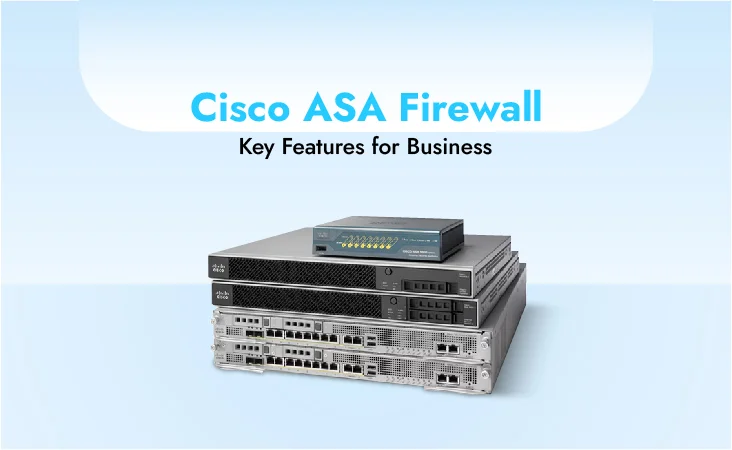
Legacy Cisco ASA environments | Cisco ASA5506-K9 / ASA5512-FPWR-K9 / ASA5508-K9 | Useful when a business needs Cisco ASA replacement, compatibility, or legacy infrastructure support. For new 2026 deployments, check the support lifecycle carefully before choosing older ASA models. |
A good rule: choose UTM-style options when you want simpler bundled security, and choose NGFW-style options when you need stronger visibility, application control, and scalable policy management.
For a small office, something like a FortiGate FG-40F or FG-60F bundle can make sense. For a larger branch or enterprise network, a Juniper SRX345 or a stronger NGFW appliance may be a better long-term fit.
For older Cisco environments, ASA models can still appear in procurement discussions, but they should be treated carefully because support lifecycle and security updates matter a lot in 2026.
The safest move is not to buy by product name alone. Match the firewall appliance to real conditions: active users, VPN sessions, threat protection throughput, Layer 7 inspection needs, reporting, licensing, and future growth.
The Visibility Gap Most Firewall Buyers Miss
Most businesses compare firewalls by features: antivirus, VPN, content filtering, intrusion prevention, and threat intelligence. Useful, yes. But the better question is:
What can the firewall show you when something strange happens?
A UTM firewall can block unsafe traffic and handle basic protection well. But as your network grows, “blocked” is not always enough. You need to know which user, device, app, or traffic pattern caused the issue.
So when comparing NGFW vs UTM, do not just compare protection. Compare visibility.
A firewall that blocks traffic helps in the moment. A firewall that explains traffic helps you prevent the next problem.
What Matters More in NGFW vs UTM: Features or Visibility?
Features matter, but visibility is what helps your IT team make better security decisions.
A firewall may block traffic, scan for malware, or filter content, but that is only part of the job. When something suspicious happens, your team needs to know which user, device, app, or traffic pattern caused the issue.
That is where NGFW has an edge. It gives more context around network activity, while many UTM firewalls focus more on bundled protection.
Conclusion:
Choose UTM if you need broad, affordable, easier-to-manage protection for a smaller environment. It is a practical choice for offices, clinics, retail locations, and branch sites that need firewall protection, VPN, content filtering, and malware protection without heavy configuration.
Choose NGFW if your business depends on cloud apps, remote users, sensitive data, multiple locations, or stricter security policies. It gives your team better visibility, deeper inspection, stronger application control, and more room to scale.
At ORM Systems, the goal is not to push the biggest firewall. It is to match the appliance to your real network load, users, VPN needs, security features, and growth plan.
Frequently Asked Questions:
Does NGFW Replace Antivirus and Malware Protection?
No. An NGFW firewall adds strong network threat protection, but it should work alongside antivirus, endpoint security, backups, and patching.
Can UTM and NGFW Both do Content Filtering?
Yes. Both UTM firewalls and NGFW firewalls can support content filtering, but NGFW usually gives deeper control over users, apps, and traffic policies.
Which Firewall is Better For Compliance-Heavy Businesses?
An NGFW is usually better because it offers stronger logging, application control, deep packet inspection, threat intelligence, and better network visibility.
How Do I Know If My Firewall is Underpowered?
Your firewall may be underpowered if VPN drops, cloud apps lag, the internet slows down, or security features must be turned off to keep performance stable.