 United States
Business Applications Driving Digital Growth
Unlock unprecedented operational efficiency and profit maximization with our comprehensive business applications suite. Empower your enterprise with scalable, secure, and efficient digital solutions driving measurable business success.
Talk to an expert
Juniper Business Applications
(2)Juniper business applications support campus service delivery with Ethernet switching, IP routing, and secure segmentation for multi-building headquarters networks
2 Matching results

AS-MCC (Application Services - Modular Carrier Card for MX)
4.4 (5)Est Value $102,091.50
$51,045.75
50% offIn stockRefurbishedFirst-Time Buyer Discount – Get up to 2% additional off on your first order
ORM Rewards Earn $50 in Rewards + Free Expedited Delivery – Join Now!
Use eCoupon ORMSAVE10
eCoupon limited to 5 units
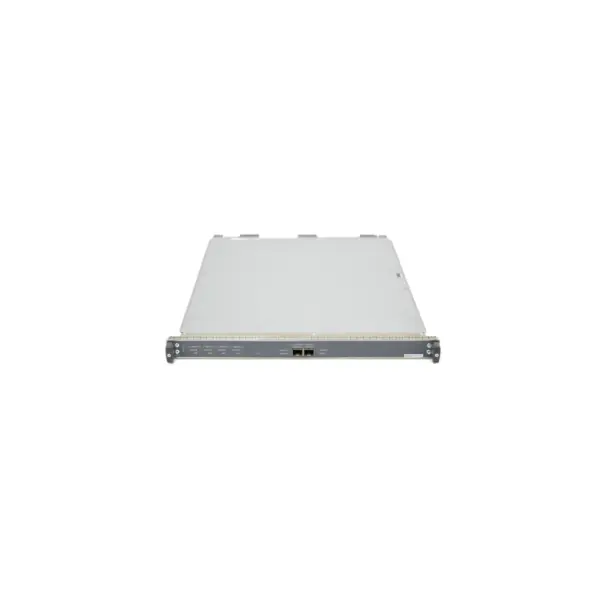
MS-MPC-128G (BNDL, Multi-service Services MPC, 128G of Memory, 4 NPUs Enabled, Bundle of MS-MPC-64G and S-MS-MPC-128G-UPG. Requires JunOs 13.2 or higher)
4.2 (5)Est Value $3,375.74
In stockNewRefurbishedFirst-Time Buyer Discount – Get up to 2% additional off on your first order
ORM Rewards Earn $50 in Rewards + Free Expedited Delivery – Join Now!
Use eCoupon ORMSAVE10
eCoupon limited to 5 units

ORM Sales Advisors
Buying for your business? Get a personalised quote in under 2 hours. Talk to an expert
LEARNFilters (2) 
Questions & Answers
What are business applications and how can they benefit my company?
Business applications are software solutions designed to automate and streamline operations, improve collaboration, and drive data-driven decisions, resulting in higher efficiency and reduced costs.
How do I choose the right business application for my needs?
Identify your key processes, define feature requirements, evaluate vendor reputation and integration capabilities, then compare total cost of ownership to select the best fit.
What deployment options are available for business applications?
Business applications can be deployed on-premises, in the cloud (public, private, or hybrid), or via a software-as-a-service (SaaS) model to match your security, scalability, and budget requirements.
How do business applications integrate with existing systems?
Most business applications offer APIs, prebuilt connectors, and middleware to seamlessly sync data with ERPs, CRMs, accounting software, and third-party services.
What is the typical pricing structure for business applications?
Pricing models include subscription (per user or per module), perpetual licensing with annual maintenance, and usage-based fees, allowing you to choose the plan that aligns with your budget.
How can I measure ROI from implementing business applications?
Calculate ROI by comparing efficiency gains, cost savings, error reduction, and revenue improvements against implementation and operational expenses over a defined period.
Are business applications scalable as my company grows?
Yes, modern business applications support horizontal scaling (adding users and modules) and vertical scaling (enhancing performance) to adapt to evolving organizational needs.
What security measures do business applications provide?
They typically include data encryption, multi-factor authentication, role-based access control, regular security patches, and compliance certifications like ISO 27001 or SOC 2.
Can I customize business applications to fit unique workflows?
Most platforms offer low-code/no-code customization, configurable dashboards, custom fields, and workflow automation to tailor the solution to your processes.
What level of support and maintenance is offered?
Vendors usually provide tiered support (email, phone, live chat), regular updates, knowledge bases, and optional premium support packages for faster response times.
How often are updates and upgrades available?
Cloud-based solutions typically release updates monthly or quarterly, while on-premises systems follow annual or semi-annual upgrade cycles to deliver new features and fixes.
Is there a free trial or demo for business applications?
Most vendors offer a 14- to 30-day free trial or personalized demo to help you evaluate features, usability, and integration before committing.
How long does it take to implement a business application?
Implementation varies by complexity: simple deployments can take 2–4 weeks, while enterprise-wide rollouts may require 3–6 months for configuration, testing, and training.
Do business applications support mobile access?
Yes, leading solutions provide native iOS and Android apps or responsive web interfaces so users can access data and workflows securely from any device.
How can I ensure data migration is seamless?
Use vendor-provided migration tools, perform data cleansing, map source to target fields, run pilot migrations, and validate results before full-scale transfer.
What training resources are available for users?
Vendors offer online tutorials, webinars, instructor-led courses, certification programs, and in-app guidance to accelerate user adoption and proficiency.
How do business applications comply with industry regulations?
They embed compliance frameworks (GDPR, HIPAA, SOX), provide audit trails, encryption, and reporting features to meet regulatory requirements and simplify audits.