 United States
Power Supply For Controller
Discover our state-of-the-art power supply systems engineered for industrial controllers, delivering uncompromised reliability, optimal performance, and seamless integration to support mission-critical operations in dynamic environments.
Talk to an expert
2 Matching results
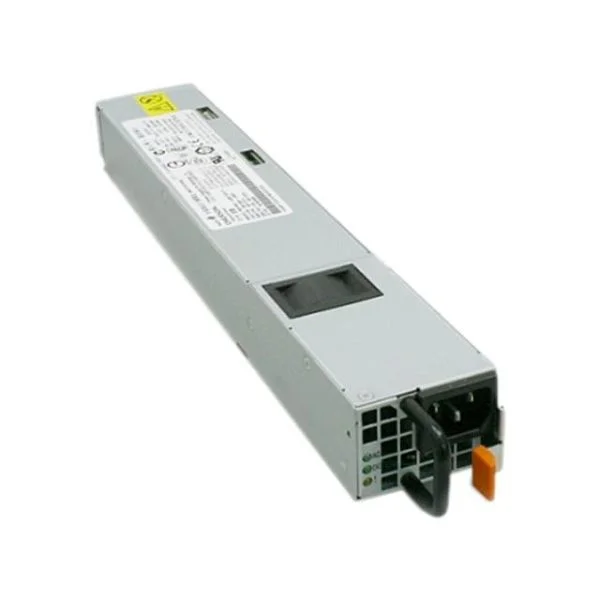
AIR-PSU1-770W (770W AC Hot-Plug Power Supply for 5520 Controller )
4.6 (5)- Power Supply
- Cisco
- 770W
- Workstation / Gaming
- ATX
- Modular
- Gold
Est Value $2,068.42
$1,034.21
50% offIn stockNewRefurbishedFirst-Time Buyer Discount – Get up to 2% additional off on your first order
ORM Rewards Earn $50 in Rewards + Free Expedited Delivery – Join Now!
Use eCoupon ORMSAVE10
eCoupon limited to 5 units
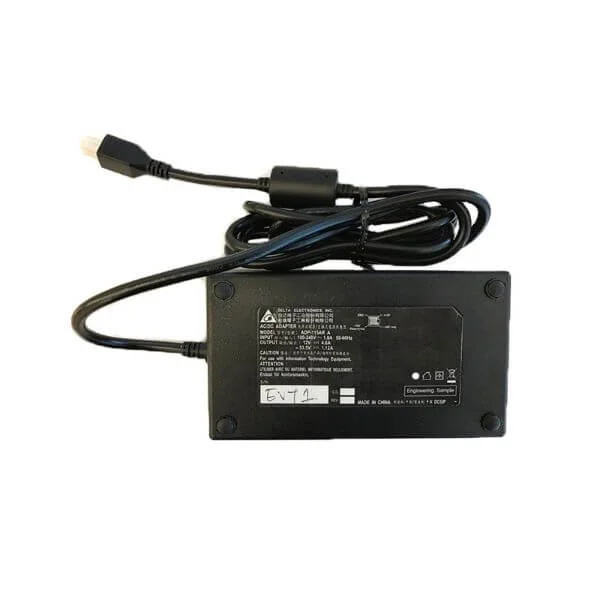
PWR-115W-AC (POWER SUPPLY FOR 3504 WRLS CONTROLLER)
4.4 (5)- Power Supply
- Cisco
- 115W
- General Use
- ATX
- Non-Modular
- 80 PLUS
Est Value $508.20$254.10
50% offIn stockNewRefurbishedFirst-Time Buyer Discount – Get up to 2% additional off on your first order
ORM Rewards Earn $50 in Rewards + Free Expedited Delivery – Join Now!
Use eCoupon ORMSAVE10
eCoupon limited to 5 units

ORM Sales Advisors
Buying for your business? Get a personalised quote in under 2 hours. Talk to an expert
LEARNFilters (2) 
Questions & Answers
What is a power supply for a controller?
A power supply for a controller converts AC or DC mains voltage into the precise DC voltage and current required to operate industrial or automation controllers reliably.
How do I select the correct voltage and current rating for my controller power supply?
Determine your controller’s voltage requirement (commonly 5 V, 12 V, or 24 V DC) and add a safety margin of 20 % to its maximum current draw to ensure stable performance under peak load.
What types of power supplies are compatible with controllers?
Most controllers use switching-mode DC power supplies, but linear supplies or uninterruptible power supplies (UPS) may also be used depending on noise tolerance and backup requirements.
What is the difference between AC and DC power supplies for controllers?
AC power supplies deliver alternating current at line voltage, while DC power supplies convert AC to stable direct current, which is the standard input for most modern controllers.
How do I install a power supply for a controller safely?
Mount the power supply per manufacturer instructions, ensure proper grounding, use the correct input voltage, and connect output leads to the controller’s designated terminals, observing polarity markings.
Which safety certifications should I look for in a controller power supply?
Choose power supplies with UL, CE, or RoHS certifications to ensure compliance with international safety, electromagnetic compatibility (EMC), and environmental standards.
How can I troubleshoot a failing controller power supply?
Verify input voltage, inspect wiring and connectors for damage, measure output voltage with a multimeter, and replace the unit if output falls below rated specifications.
Can I use a higher wattage power supply than my controller requires?
Yes, as long as the output voltage matches your controller’s requirement; a higher wattage rating provides additional headroom without harming the controller.
How should I maintain my controller power supply for longevity?
Keep the unit free of dust, ensure adequate ventilation, periodically check output voltage stability, and replace aged capacitors per the manufacturer’s maintenance schedule.
What are common power supply connector types for controllers?
Controllers typically use screw-terminal blocks, barrel jack connectors, or pluggable Phoenix-style terminals for secure and tool-free power connections.
How do I prevent electrical noise and interference from my power supply?
Use shielded cables, install inline ferrite filters, maintain proper grounding, and select power supplies with built-in EMC filters to minimize noise affecting your controller.
What efficiency rating should I expect from a controller power supply?
Look for units with at least 80 % efficiency (often labeled “80 PLUS”) to reduce energy waste, minimize heat generation, and improve overall system reliability.
How do I upgrade my controller power supply for better performance?
Select a power supply with higher stability, improved efficiency, additional protection features (OVP, OCP, SCP), and a compatible form factor to fit your existing installation.
What impact do voltage fluctuations have on controller performance?
Voltage fluctuations can cause erratic controller behavior, data corruption, or permanent damage; using a regulated power supply and surge protection minimizes these risks.
Are there waterproof power supplies available for outdoor controllers?
Yes, IP65- to IP67-rated power supplies are designed for outdoor use, offering protection against dust and water ingress while maintaining stable output in harsh environments.
How do I verify the output voltage of my controller power supply?
Use a calibrated digital multimeter to measure DC output under no-load and full-load conditions, ensuring the readings match the rated voltage within ±1 % tolerance.