 United States
Switches Aruba Instant On 1930
Discover superior network performance with Aruba Instant On 1930 switches. Engineered for modern enterprises, these high-performance switches deliver advanced security, seamless scalability, and robust connectivity, enhancing IT performance.
Talk to an expert
7 Matching results
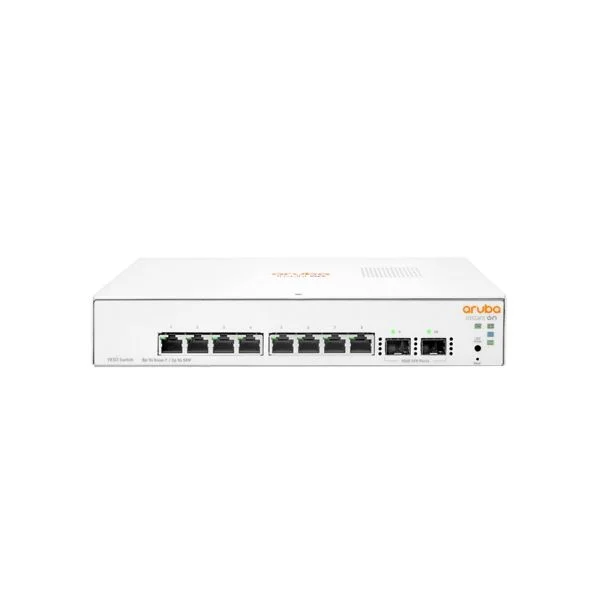
JL680A (Aruba Instant On 1930 8G 2SFP Switch)
4.4 (5)- Switch
- Hpe
- AC Power Supply
- Layer 2 / Layer 3
- Rack-mount
- 150 W
- 24–48 Ports
Est Value $321.56
$274.50
14.6% offIn stockNewRefurbishedFirst-Time Buyer Discount – Get up to 2% additional off on your first order
ORM Rewards Earn $50 in Rewards + Free Expedited Delivery – Join Now!
Use eCoupon ORMSAVE10
eCoupon limited to 5 units
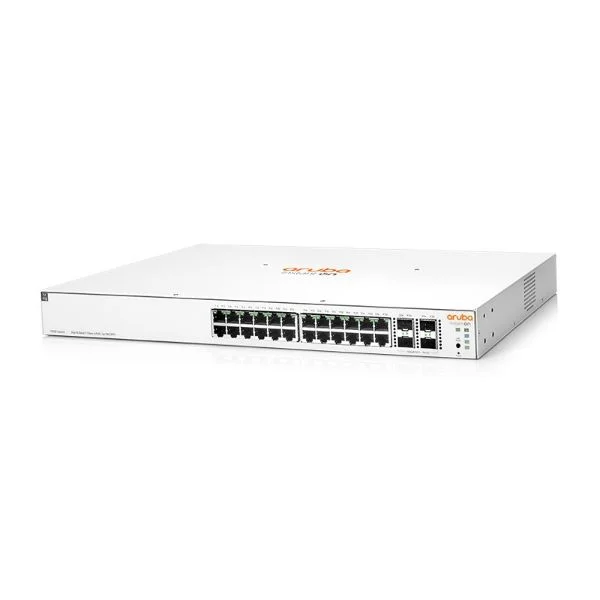
JL682A (Aruba Instant On 1930 24G 4SFP/SFP+ Switch)
4.4 (5)- Switch
- Hpe
- AC Power Supply
- Layer 2 / Layer 3
- Rack-mount
- 24–48 Ports
Est Value $538.65$411.60
23.6% offIn stockNewRefurbishedFirst-Time Buyer Discount – Get up to 2% additional off on your first order
ORM Rewards Earn $50 in Rewards + Free Expedited Delivery – Join Now!
Use eCoupon ORMSAVE10
eCoupon limited to 5 units
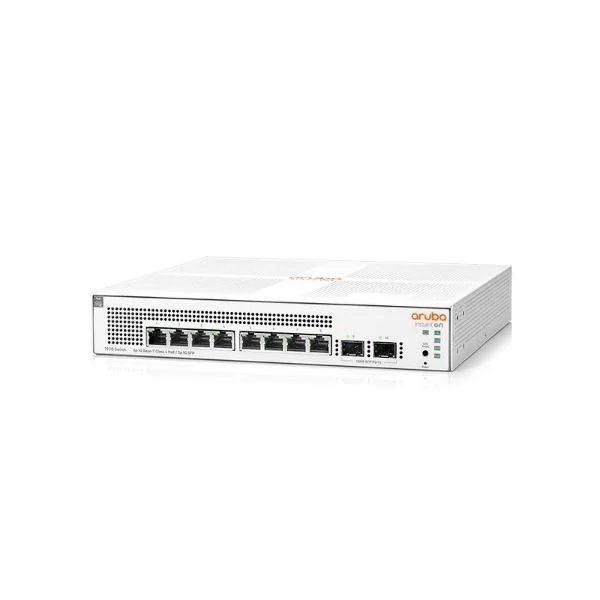
JL681A (Aruba Instant On 1930 8G Class4 PoE 2SFP 124W Switch)
4.2 (5)- Switch
- Hpe
- AC Power Supply
- Layer 2 / Layer 3
- Rack-mount
- 50W
- 24–48 Ports
Est Value $600.00$483.17
19.5% offIn stockNewRefurbishedFirst-Time Buyer Discount – Get up to 2% additional off on your first order
ORM Rewards Earn $50 in Rewards + Free Expedited Delivery – Join Now!
Use eCoupon ORMSAVE10
eCoupon limited to 5 units
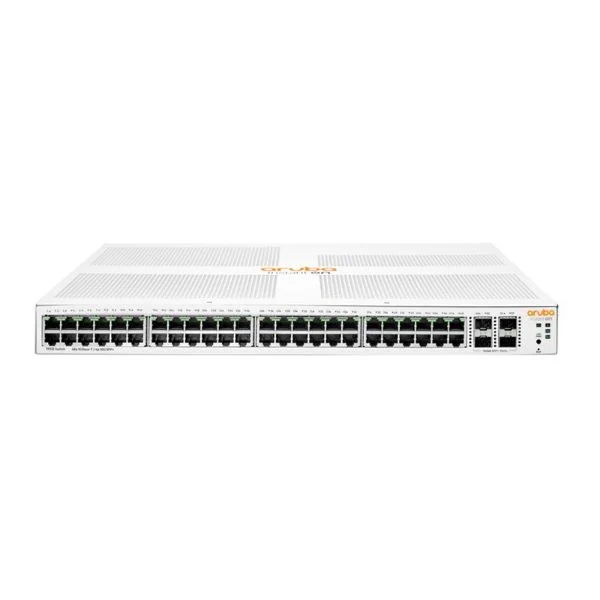
JL685A (Aruba Instant On 1930 48G 4SFP/SFP+ Switch)
4.6 (5)- Switch
- Hpe
- Redundant Power Supply
- Layer 2 / Layer 3
- Rack-mount
- 250 W
- 24–48 Ports
Est Value $544.00$173.15
68.2% offIn stockNewRefurbishedFirst-Time Buyer Discount – Get up to 2% additional off on your first order
ORM Rewards Earn $50 in Rewards + Free Expedited Delivery – Join Now!
Use eCoupon ORMSAVE10
eCoupon limited to 5 units
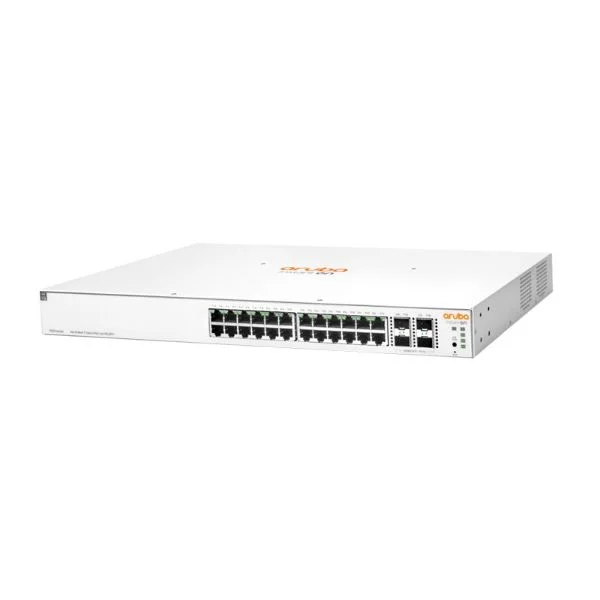
JL683A (Aruba Instant On 1930 24G Class4 PoE 4SFP/SFP+ 195W Switch)
4.8 (5)- Switch
- Hpe
- Redundant Power Supply / AC Power Supply
- Layer 2 / Layer 3
- Rack-mount
- 150 W
- 24–48 Ports
Est Value $604.00$493.50
18.3% offIn stockNewRefurbishedFirst-Time Buyer Discount – Get up to 2% additional off on your first order
ORM Rewards Earn $50 in Rewards + Free Expedited Delivery – Join Now!
Use eCoupon ORMSAVE10
eCoupon limited to 5 units
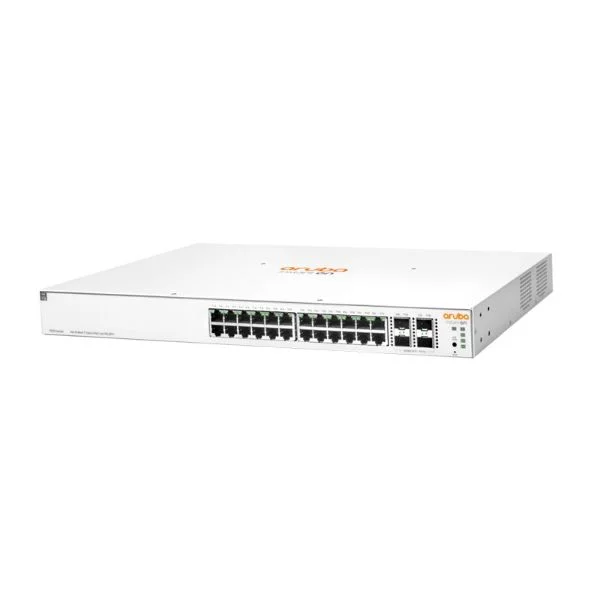
JL684A (Aruba Instant On 1930 24G Class4 PoE 4SFP/SFP+ 370W Switch)
4.8 (5)- Switch
- Hpe
- AC Power Supply
- Layer 3
- Rack-mount
- 75 W
- 24–48 Ports
Est Value $1,185.63$1,012.13
14.6% offIn stockNewRefurbishedFirst-Time Buyer Discount – Get up to 2% additional off on your first order
ORM Rewards Earn $50 in Rewards + Free Expedited Delivery – Join Now!
Use eCoupon ORMSAVE10
eCoupon limited to 5 units
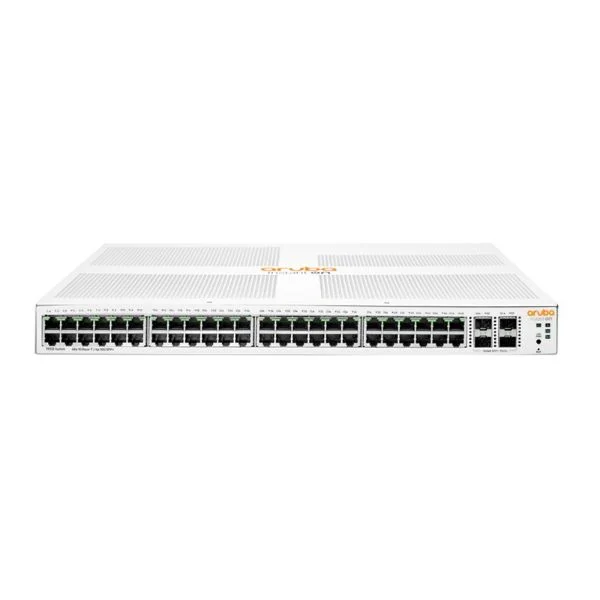
JL686A (Aruba Instant On 1930 48G Class4 PoE 4SFP/SFP+ 370W Switch)
4.6 (5)- Switch
- Hpe
- AC Power Supply
- Layer 3
- Rack-mount
- 85W
- 24–48 Ports
Est Value $1,828.70$1,561.09
14.6% offIn stockNewRefurbishedFirst-Time Buyer Discount – Get up to 2% additional off on your first order
ORM Rewards Earn $50 in Rewards + Free Expedited Delivery – Join Now!
Use eCoupon ORMSAVE10
eCoupon limited to 5 units

ORM Sales Advisors
Buying for your business? Get a personalised quote in under 2 hours. Talk to an expert
LEARNFilters (7) 
Questions & Answers
What is the Aruba Instant On 1930 Switch?
The Aruba Instant On 1930 Switch is a managed Gigabit Ethernet switch series providing 8–48 ports with advanced Layer 2 features, PoE/PoE+ options, and cloud-based or on-premise management for small to medium businesses.
What port configurations are available on Aruba Instant On 1930 Switch?
The 1930 series offers models with 8, 24, or 48 Gigabit Ethernet ports, and selected models include 2 × 10 Gb SFP+ uplinks or 4 × 1 Gb RJ45 uplinks for flexible connectivity.
Does Aruba Instant On 1930 support Power over Ethernet (PoE)?
Yes, select Aruba Instant On 1930 models support PoE and PoE+ on all Gigabit ports, delivering up to 30 W per port to power cameras, phones, and access points.
What is the maximum PoE budget of Aruba Instant On 1930 Switch?
The Aruba Instant On 1930 PoE+ models provide a total power budget of up to 195 W, ensuring sufficient capacity for high-power devices.
Can you stack Aruba Instant On 1930 Switches for scalability?
No, the Aruba Instant On 1930 series does not support hardware stacking; you can manage multiple switches centrally via the Instant On mobile app or web portal.
How do I manage the Aruba Instant On 1930 Switch?
Manage your 1930 switch locally via its web-based GUI or remotely using the Aruba Instant On mobile app and cloud portal for configuration, monitoring, and firmware updates.
Does Aruba Instant On 1930 support VLAN and advanced Layer 2 features?
Yes, it supports up to 256 VLANs, port-based and 802.1Q tagging, link aggregation (LACP), IGMP snooping, Spanning Tree Protocol (RSTP/MSTP), and DHCP snooping.
What Quality of Service (QoS) features does Aruba Instant On 1930 offer?
The 1930 series provides 8 priority queues, 802.1p traffic prioritization, DSCP remarking, and rate limiting to ensure optimal performance for voice, video, and data traffic.
What is the switching capacity and throughput of the Aruba Instant On 1930?
Depending on the model, the 1930 delivers up to 176 Gbps switching capacity and up to 131 Mpps packet forwarding rate for line-rate Gigabit performance.
Is Aruba Instant On 1930 easy to deploy for small businesses?
Yes, the plug-and-play design, intuitive Instant On app, and preconfigured default settings simplify deployment without specialized IT expertise.
What security features are included on the Aruba Instant On 1930 Switch?
The 1930 series includes Access Control Lists (ACLs), BPDU guard, DHCP snooping, ARP inspection, storm control, and 802.1X port authentication for enhanced network security.
Does Aruba Instant On 1930 support IPv6 and SNMP for network management?
Yes, it supports full IPv6 addressing and management alongside SNMP v1/v2c/v3 for integrated monitoring and logging with existing network management systems.
What warranty and technical support are available for Aruba Instant On 1930?
Aruba Instant On 1930 switches include a limited lifetime warranty with next-business-day advance hardware replacement and free online support via the Aruba Instant On portal.
How do I update the firmware on an Aruba Instant On 1930 Switch?
Firmware updates can be applied directly through the Instant On mobile app, cloud portal, or the switch’s web interface with a single click for minimal downtime.
Can Aruba Instant On 1930 integrate with existing network infrastructure?
Yes, the 1930 series interoperates with standard Ethernet switches, routers, and wireless access points, supporting open protocols like 802.1Q, LLDP, and SNMP.
What are typical use cases for Aruba Instant On 1930 Switch in small to medium businesses?
Common use cases include PoE-powered wireless AP backhaul, VoIP deployments, CCTV camera connectivity, and wired office networks requiring secure, managed switching.
What are the differences between Aruba Instant On 1930 and 1960 series switches?
The 1960 series adds stacking support, higher PoE budgets, more advanced Layer 3 features, and increased port densities, while the 1930 focuses on simplified management and cost-effectiveness.