 United States
Networking Juniper QFX3000 Switches
Engineered for performance and reliability, the Juniper QFX3000 Series Switches deliver advanced networking capabilities, streamlined management, and secure connectivity essential for modern data center and enterprise environments.
Talk to an expert
3 Matching results
- BEST SELLING
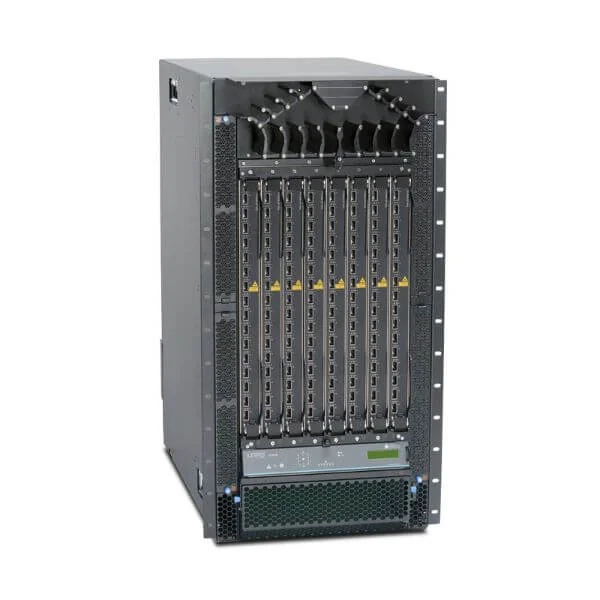
QFX3008-CHASA-BASE (QFX3008 CHASSIS)
4.4 (5)- Chassis Switch
- Juniper
- Redundant Power Supply
- Layer 2 / Layer 3
- Chassis
- 350W
- 24–48 Ports
Est Value $2,456.98
$1,228.49
50% offIn stockRefurbishedFirst-Time Buyer Discount – Get up to 2% additional off on your first order
ORM Rewards Earn $50 in Rewards + Free Expedited Delivery – Join Now!
Use eCoupon ORMSAVE10
eCoupon limited to 5 units
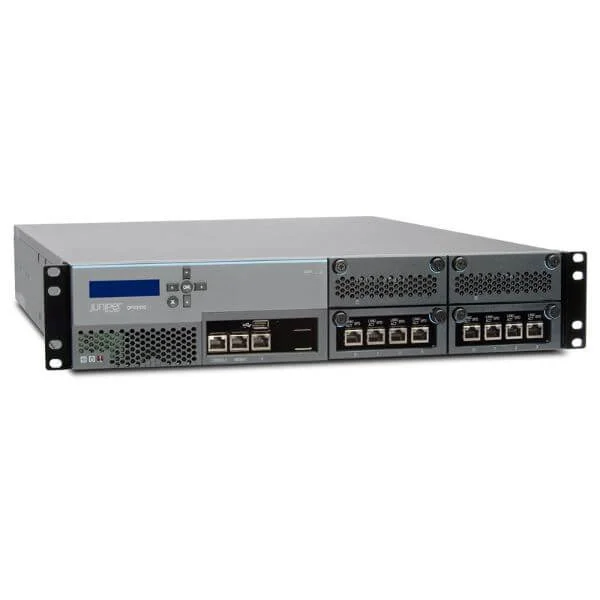
QFX3100-GBE-ACR (QFX3100 Base System with Redundant AC Power Supply, Dual Disk and Network Interface Cards)
4.4 (5)- Switch
- Juniper
- Redundant Power Supply / AC Power Supply
- Layer 2 / Layer 3
- Rack-mount
- 85 W
- 24–48 Ports
Est Value $2,994.58$1,497.29
50% offIn stockRefurbishedFirst-Time Buyer Discount – Get up to 2% additional off on your first order
ORM Rewards Earn $50 in Rewards + Free Expedited Delivery – Join Now!
Use eCoupon ORMSAVE10
eCoupon limited to 5 units
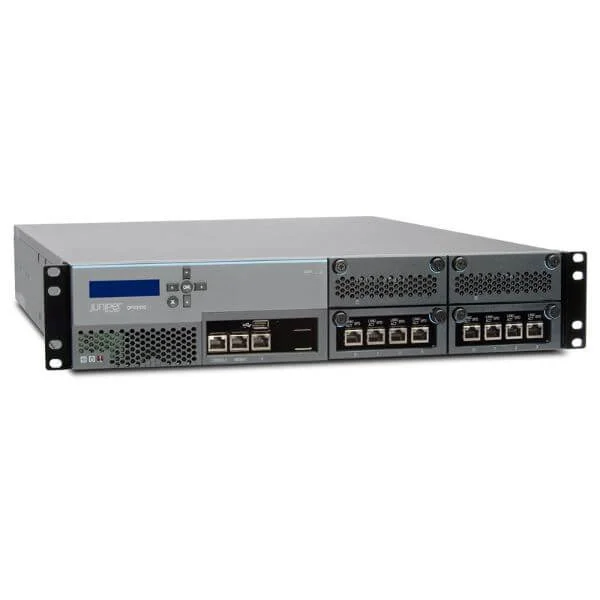
QFX3100-GBE-SFP-ACR (QFX3100 Base System with Redundant AC Power Supply, Dual Disks and SFP Network Interface Cards)
4.6 (5)- Switch
- Juniper
- AC Power Supply
- Layer 2 / Layer 3
- Rack-mount
- 24–48 Ports
Est Value In stockFirst-Time Buyer Discount – Get up to 2% additional off on your first order
ORM Rewards Earn $50 in Rewards + Free Expedited Delivery – Join Now!
Use eCoupon ORMSAVE10
eCoupon limited to 5 units

ORM Sales Advisors
Buying for your business? Get a personalised quote in under 2 hours. Talk to an expert
LEARNFilters (3) 
Questions & Answers
What is the Juniper QFX3000 Series switch?
The Juniper QFX3000 Series is a high-performance, low-latency data center switch family designed for leaf-and-spine architectures, delivering scalable 10/25/40/100 GbE connectivity with advanced VXLAN EVPN support.
Which key performance metrics define the QFX3000 Series?
The QFX3000 Series offers up to 2.56 Tbps switching capacity, sub-500 ns port-to-port latency, and up to 2.4 billion packets per second (bpps), ensuring wire-speed forwarding in demanding environments.
What port densities and speeds are available on QFX3000 models?
Models support mixed 10/25/40/50/100 GbE QSFP28, SFP28, and QSFP+ interfaces, with up to 32 x 100 GbE or 96 x 25 GbE ports per chassis, enabling flexible top-of-rack deployments.
How does the QFX3000 Series support network virtualization?
It natively supports EVPN-VXLAN for multi-tenant overlay networks, network segmentation, and zero-touch provisioning, delivering scalable Layer 2 and Layer 3 virtualization with hardware-offload.
Which use cases are ideal for Juniper QFX3000 switches?
The QFX3000 Series is optimized for leaf-and-spine fabrics, high-density top-of-rack, scale-out Cloud deployments, NFV infrastructure, and high-performance computing clusters.
What software powers the QFX3000 Series?
Juniper QFX3000 runs Junos OS with modular Control Plane, rich telemetry features, Zero Trust security policies, and automation support via PyEZ, Ansible, REST, and gNMI.
How do you manage and automate QFX3000 switches?
Management options include Junos CLI, Junos Space, Juniper Apstra, Ansible playbooks, REST APIs, NETCONF, and open-source tools for centralized configuration and telemetry.
What high-availability features are built into the QFX3000?
The series supports Virtual Chassis, ISSU (In-Service Software Upgrade), redundant power supplies, and front-to-back or back-to-front airflow for uninterrupted operations.
How does Virtual Chassis simplify network scaling?
Virtual Chassis bundles up to 10 QFX3000 switches into a single logical device, providing unified management, distributed control plane, and linear scaling of ports and throughput.
What security capabilities does the QFX3000 Series offer?
It delivers MACsec encryption, RADIUS/TACACS+ authentication, role-based access control, Dynamic ARP Inspection, DHCP Snooping, and integrated DDoS protection at line rate.
How energy-efficient is the QFX3000 Series?
With 60 W per 100 GbE port and an industry-leading power-per-GbE ratio, advanced cooling modules, and intelligent fan control, the QFX3000 minimizes operational costs.
What topology options are supported by QFX3000 switches?
They support traditional Layer 2/3 fabrics, spine-leaf, collapsed-spine, DCI (Data Center Interconnect) over EVPN, and routed network topologies with MLAG for redundancy.
How do I deploy QFX3000 in a spine-leaf architecture?
Connect leaf switches directly to spine nodes using 25/100 GbE uplinks, enable EVPN-VXLAN underlay and overlay, configure MLAG on leaf pairs for dual-homed host resilience.
What monitoring and telemetry features are available?
QFX3000 provides Junos Telemetry Interface (JTI), sFlow, IP-FIX, SNMP, and streaming analytics for real-time performance monitoring, anomaly detection, and capacity planning.
Which power and cooling configurations does QFX3000 support?
Available with front-to-back or back-to-front airflow, hot-swappable dual AC/DC power supplies, and redundant variable-speed fans to meet data center airflow requirements.
What support and software maintenance options are available?
Juniper offers Foundation, Core, and Premium Care support services, along with Junos OS software bundles, SLAs for hardware replacement, and Junos upgrade licenses for feature access.