 United States
Network Switches Juniper Qfx5200 Series
Engineered for high-performance data center operations and enterprise networking, the Juniper Qfx5200 Series offers scalable switching, robust security, and seamless integration to empower your mission-critical infrastructure.
Talk to an expert
2 Matching results
- BEST SELLING
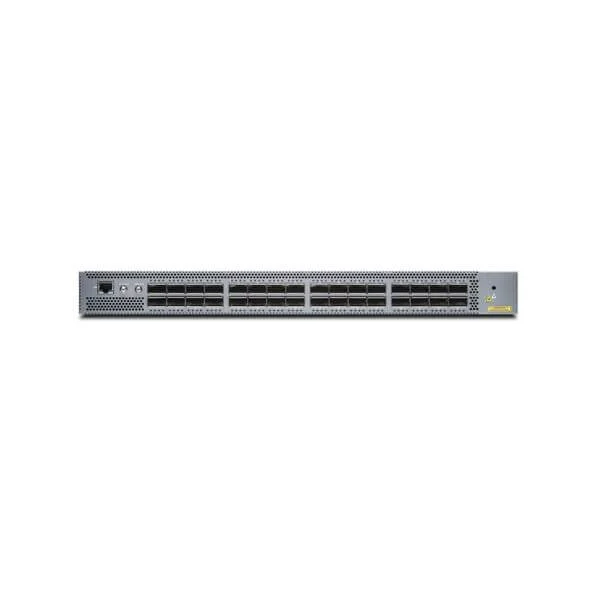
QFX5200-32C-AFO (QFX5200, 32 QSFP+ ports, redundant fans, 2 AC power supplies, front to back airflow, SW license not included.)
4.8 (5)- Switch
- Juniper
- Redundant Power Supply / AC Power Supply
- Layer 2 / Layer 3
- Rack-mount
- 24–48 Ports
Est Value $10,639.00
$1,596.00
85% offIn stockNewRefurbishedFirst-Time Buyer Discount – Get up to 2% additional off on your first order
ORM Rewards Earn $50 in Rewards + Free Expedited Delivery – Join Now!
Use eCoupon ORMSAVE10
eCoupon limited to 5 units
- BEST SELLING
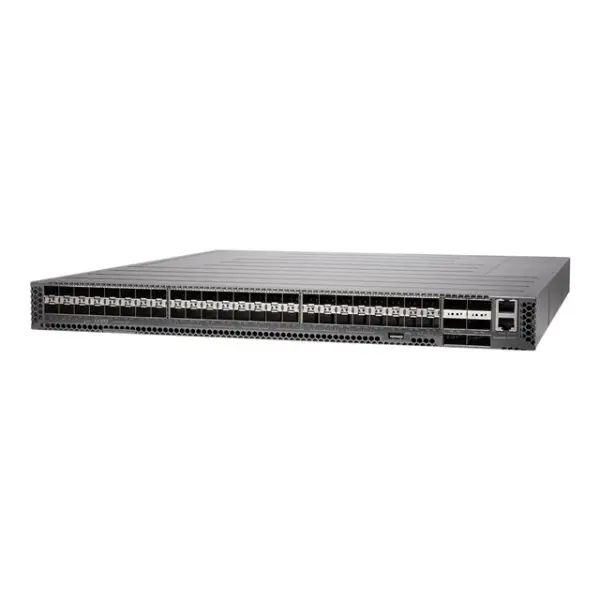
QFX5200-48Y-AFO (Juniper Networks QFX Series QFX5200-48Y - switch - 48 ports - managed - rack-mountable)
0 (0)- Switch
- Juniper
- Redundant Power Supply
- Layer 2 / Layer 3
- Rack-mount
- 24–48 Ports
Est Value $18,721.48$5,932.50
68.3% offIn stockNewRefurbishedFirst-Time Buyer Discount – Get up to 2% additional off on your first order
ORM Rewards Earn $50 in Rewards + Free Expedited Delivery – Join Now!
Use eCoupon ORMSAVE10
eCoupon limited to 5 units

ORM Sales Advisors
Buying for your business? Get a personalised quote in under 2 hours. Talk to an expert
LEARNFilters (2) 
Questions & Answers
What is the Juniper QFX5200 Series Switch and what are its key benefits?
The Juniper QFX5200 Series Switch is a high-performance, low-latency data center switch offering flexible 10/25/100/400GbE port options, Junos OS automation, and EVPN-VXLAN support for scalable leaf-and-spine architectures.
Which port speeds and densities are available on the QFX5200 Series?
The QFX5200 Series supports up to 32×400GbE, 64×100GbE, 128×25GbE, or 256×10GbE ports in a compact 1U form factor, delivering industry-leading density for data center deployments.
How does the QFX5200 Series improve data center performance?
By combining cut-through architecture with ASIC-based forwarding, the QFX5200 delivers sub-microsecond latency, wire-speed throughput, and consistent performance at high port densities.
What data center use cases are ideal for the QFX5200 Series?
The QFX5200 excels as a leaf or spine switch in cloud, container, and HPC environments, supporting high-density east-west traffic, microservices, and multi-tenant virtualization.
What software features does Junos OS provide on the QFX5200?
Junos OS on QFX5200 offers unified management, zero-touch provisioning, automation with APIs (NETCONF, gRPC, PyEZ), advanced telemetry, and a modular, secure software architecture.
How does the QFX5200 enable leaf-and-spine network architectures?
With EVPN-VXLAN, MLAG, and BGP-EVPN control plane support, the QFX5200 provides scalable, loop-free, high-availability leaf-and-spine fabric for modern data centers.
What virtualization and automation capabilities does the QFX5200 support?
The QFX5200 supports EVPN-VXLAN overlays, SR-TE, container firewalls, and programmable interfaces for Ansible, Chef, Puppet, and native Juniper automation frameworks.
How does the QFX5200 deliver low latency and high throughput?
Leveraging Juniper’s Trio ASIC with cut-through switching delivers deterministic sub-microsecond latency and up to 51.2 Tbps of non-blocking throughput per device.
What power and cooling options are offered on the QFX5200 Series?
The QFX5200 features redundant, hot-swappable PSU and fan trays, supports front-to-back or back-to-front airflow, and offers AC or DC power supplies to match data center designs.
How scalable is the QFX5200 Series for future growth?
With flexible optics, modular traffic profiles, and EVPN-VXLAN fabric expansion, you can scale port count, speed, and virtualization layers without forklift upgrades.
Can the QFX5200 support EVPN-VXLAN overlays?
Yes, the QFX5200 fully supports EVPN-VXLAN as both leaf and spine, enabling multi-tenant segmentation, seamless VM mobility, and simplified east-west traffic routing.
What management and monitoring tools integrate with QFX5200?
The QFX5200 integrates with Juniper’s Junos Telemetry Interface, Junos Space, Contrail, AppFormix, and third-party tools via open APIs for real-time analytics and lifecycle management.
How does the QFX5200 ensure high availability and redundancy?
High availability is achieved through MLAG, active-active fabric roles, redundant power and fans, non-stop software upgrades, and stateful In-Service Software Upgrade (ISSU).
What security features are built into the QFX5200 Series?
QFX5200 offers MACsec encryption, dynamic ACLs, DDoS protection, role-based access control, secure boot, and Junos OS kernel integrity checks for end-to-end data center security.
How does Juniper support and warranty the QFX5200 Series?
Juniper provides a 90-day software warranty, one-year hardware warranty, with options for Enhanced Care, Advanced Care, and Software Advantage to ensure rapid remediation and updates.
What deployment considerations should be made for cloud environments?
Plan for VXLAN overlay addressing, BGP-EVPN control plane, spine uplink oversubscription, power/cooling capacity, and integration with orchestration frameworks like Kubernetes or OpenStack.
How does the QFX5200 compare to earlier QFX Series switches?
Compared to prior QFX models, the QFX5200 offers higher port densities, native 400GbE support, improved latency, enhanced telemetry, and deeper automation integration for modern fabrics.