 United States
Extreme Network Transceivers Unrivaled Performance
Extreme Network Transceivers deliver exceptional speed, reliability, and secure connectivity, engineered to optimize data transmission for diverse network environments. Benefit from advanced technology ensuring uncompromised performance and efficiency.
Talk to an expert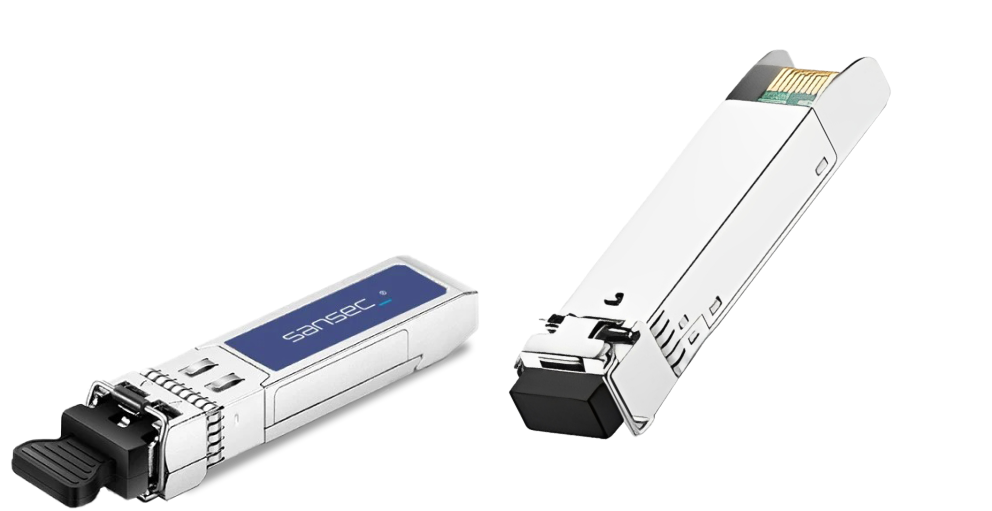
1 Matching results

10071H (Extreme Networks Industrial Temperature - SFP (mini-GBIC) transceiver module - GigE)
4.6 (5)- Transceiver
- Extreme Network
- SFP+
- 10G
- LC
- 1310nm
- Long-Range
Est Value $10,466.62
$5,233.31
50% offIn stockRefurbishedFirst-Time Buyer Discount – Get up to 2% additional off on your first order
ORM Rewards Earn $50 in Rewards + Free Expedited Delivery – Join Now!
Use eCoupon ORMSAVE10
eCoupon limited to 5 units

ORM Sales Advisors
Buying for your business? Get a personalised quote in under 2 hours. Talk to an expert
LEARNFilters (1) 
Questions & Answers
What is an Extreme Networks transceiver?
An Extreme Networks transceiver is a hot-swappable optical or electrical module that enables high-speed connectivity between switches, routers, and fiber or copper cabling.
What transceiver types and form factors does Extreme Networks offer?
Extreme Networks provides SFP, SFP+, QSFP+, QSFP28 and XFP form-factors in single-mode and multimode variants to support data rates from 1 Gbps to 400 Gbps.
How do I select the right Extreme Networks transceiver for my network?
Choose a transceiver based on your switch interface, required data rate, link distance and fiber type; consult the Extreme Networks compatibility matrix and module datasheets.
What data rates and reach options are available?
Data rates range from 1 Gbps (SFP) up to 400 Gbps (QSFP28), with reach options spanning 300 meters on OM3 multimode fiber to over 80 kilometers on single-mode fiber.
What is the difference between single-mode and multimode transceivers?
Single-mode transceivers use a laser source for long-haul links up to tens of kilometers, while multimode transceivers use VCSELs for shorter links (up to 550 meters).
Are Extreme Networks transceivers compatible with third-party hardware?
While Extreme Networks transceivers adhere to industry MSA standards for generic compatibility, using genuine modules ensures validated performance and support.
How do I install and hot-swap an Extreme Networks transceiver?
Align the module with the port, slide it in until it clicks, and hot-swap safely without powering down the switch or disrupting other links.
How can I verify transceiver status and performance?
Use CLI commands (e.g., show interfaces transceiver), SNMP queries or ExtremeCloud IQ to view link state, temperature, optical power and error counters.
Do Extreme Networks transceivers support Digital Diagnostics Monitoring (DDM)?
Yes, Extreme Networks transceivers implement DDM (also called DOM) to provide real-time monitoring of temperature, voltage, bias current, transmit and receive power.
What is the typical operating temperature range for Extreme transceivers?
Commercial-grade modules operate from 0 °C to 70 °C, while industrial versions support –40 °C to 85 °C for harsh-environment deployments.
How often should I clean and maintain transceiver connectors?
Clean connectors with lint-free wipes and approved isopropyl alcohol before initial deployment and periodically in dusty environments or after frequent handling.
How do I troubleshoot a faulty or degraded transceiver?
Check link LEDs, verify interface counters, clean connectors, swap with a known-good module and review switch logs for diagnostic alarms.
What warranty and support options are available for Extreme transceivers?
Extreme Networks offers a one-year limited warranty on all transceivers, with optional support contracts for extended coverage, advance replacement and on-site assistance.
Where can I purchase genuine Extreme Networks transceivers?
Buy from authorized Extreme Networks distributors and certified partners or directly through Extreme’s sales channels to ensure authentic modules and support.
How do I ensure firmware compatibility with Extreme Networks transceivers?
Maintain your switch’s firmware at the recommended release level, consult release notes for module support, and apply published transceiver firmware updates when required.