United States
Top Cisco Competitors & Alternatives in 2026 For Networking, Security & Cloud
Prefer listening?
Hear the full blog in audio format
Cisco has long been a leader in networking and security. However, with advancements in cloud technology, security, and networking, several companies have emerged as strong competitors. In 2026, these companies are vying for Cisco’s spot, offering more specialized and cost-effective solutions.
This blog delves into the top Cisco competitors in networking, security, and cloud solutions in 2026, plus new players making waves in the industry.
Top Cisco Competitors in Networking in 2026
Arista Networks
Arista Networks specializes in cloud networking and data centers, offering high-performance switches designed for scalability. Its EOS operating system allows for seamless automation. Arista’s solutions excel in low-latency environments, making them ideal for businesses needing real-time performance, where Cisco sometimes falls short.
Arista’s CloudVision platform simplifies network management and automation. This open architecture makes it more flexible for cloud-first businesses compared to Cisco’s proprietary systems, which can be more complex to implement.
Feature | Arista Networks | Cisco |
Product Focus | Specializes in cloud networking, data centers, and SDN. | Focuses on a broader range: enterprise networking, security, and collaboration. |
Cloud Integration | Cloud-native, optimized for cloud-scale solutions. | Strong in hybrid cloud but less optimized for full cloud-native environments. |
Low Latency | Superior low-latency solutions ideal for high-performance environments. | Offers low-latency solutions but often considered behind Arista in this regard. |
Network Automation | Highly automated with CloudVision for cloud network management. | Cisco’s DNA Center offers automation but requires more configuration and is often more complex. |
Price | More affordable, especially in large-scale deployments. | Premium pricing, especially for enterprise and security solutions. |
Deployment | Easier deployment and integration for cloud-first organizations. | More suitable for traditional enterprise networks and hybrid environments. |
Juniper Networks
Juniper Networks excels in enterprise networking, offering high-performance routers and switches. Its Contrail SDN platform enables easy automation and cloud integration, giving it an edge over Cisco's more complex solutions. Juniper is a go-to for businesses seeking flexibility in network management.
Known for its cost-effective solutions, Juniper provides competitive pricing without sacrificing performance. This makes it a strong alternative to Cisco in large-scale deployments, especially for companies that want to avoid the premium costs associated with Cisco’s solutions.
Feature | Juniper Networks | Cisco |
Product Focus | Specializes in enterprise networking, SDN, and cloud-ready solutions. | Focuses on a broader range: enterprise networking, security, and collaboration. |
SDN & Automation | Strong focus on Contrail SDN and network automation. | Cisco’s DNA Center is more complex, with a steeper learning curve for automation. |
AI Integration | Mist AI optimizes wireless networks and ensures scalability. | Cisco’s Meraki offers similar AI-driven features but often at a higher cost. |
Price | Competitive pricing, especially in large deployments. | Generally more expensive, particularly for security and enterprise-level solutions. |
Security | Built-in advanced security features, especially with MX routers. | Cisco’s Firepower and Umbrella platforms are widely recognized, but often more complex. |
Huawei
Huawei provides a wide range of networking solutions, including routers, switches, and wireless access points. Known for its 5G technology, Huawei positions itself as a leader in telecom networking, challenging Cisco’s presence in the global market, especially in developing regions.
Huawei's cost-to-performance ratio is a key advantage, making it an attractive option for budget-conscious businesses. While Cisco offers premium solutions, Huawei provides similar features at a more affordable price, making it ideal for companies in emerging markets.
Feature | Huawei | Cisco |
Global Reach | Strong presence, especially in Asia and emerging markets. | More focused on enterprise networks in developed markets. |
5G Technology | Leader in 5G networking, providing next-gen telecom solutions. | Cisco is more focused on enterprise and cloud networking. |
Cost Efficiency | Offers highly competitive pricing for high-performance solutions. | Cisco's solutions tend to be premium-priced, especially for larger enterprises. |
End-to-End Solutions | Provides telecom infrastructure in addition to networking equipment. | Primarily focused on enterprise networking, though expanding in telecom. |
Top Cisco Competitors in Security Solutions in 2026
Fortinet
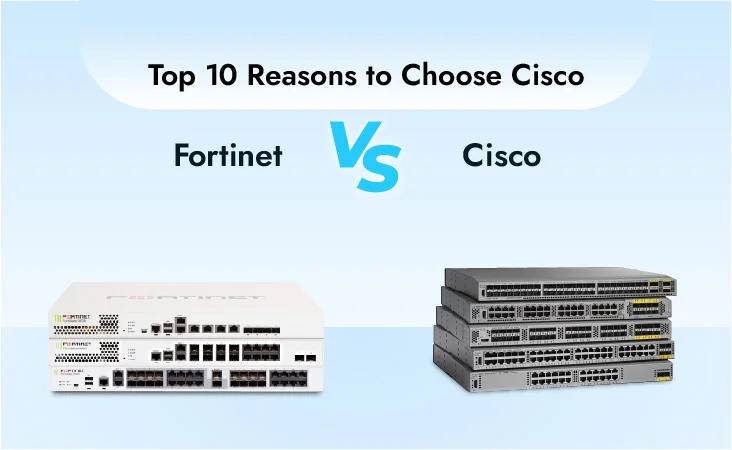
Fortinet is a leading competitor to Cisco in the network security space, known for its FortiGate firewalls. These high-performance firewalls are designed to protect businesses from advanced threats, offering deep packet inspection and intrusion prevention capabilities. Fortinet’s integrated approach combines networking and security into a single platform, providing better control and performance than traditional solutions.
Fortinet’s Security Fabric platform simplifies security operations, making it easier to manage and scale network protection. With its affordable pricing and comprehensive threat intelligence, Fortinet is a popular choice for businesses looking for robust security without the high costs associated with Cisco’s Firepower and Umbrella solutions.
Feature | Fortinet | Cisco |
Security Solutions | Known for FortiGate firewalls and Security Fabric, offering a comprehensive security platform. | Cisco’s Firepower and Umbrella provide robust security but often at a higher cost. |
Pricing | More affordable, especially for small to mid-sized businesses. | Premium pricing, especially for enterprise and security-focused solutions. |
Threat Intelligence | Provides real-time threat intelligence through FortiGuard. | Cisco’s Threat Grid and SecureX offer strong threat detection but with more complexity. |
Deployment | Easier to deploy and manage, with simpler configuration. | Cisco’s solutions can be more complex and time-consuming to set up. |
Palo Alto Networks
Palo Alto Networks is a dominant player in next-gen firewalls and cloud security. Known for its Traps endpoint protection and Prisma cloud security platform, Palo Alto offers a holistic security approach that integrates network and cloud protection. Their solutions are designed to detect and prevent sophisticated threats with machine learning and AI-powered analytics.
Palo Alto is highly regarded for its focus on zero-trust security and advanced threat prevention. While Cisco has similar solutions, Palo Alto’s cloud-first approach and AI-driven security set it apart, making it a go-to solution for businesses with a strong focus on digital transformation and cloud migration.
Feature | Palo Alto Networks | Cisco |
Security Solutions | Known for next-gen firewalls, Traps endpoint protection, and Prisma cloud security. | Cisco’s Firepower and Umbrella solutions are reliable but tend to be more focused on traditional enterprise environments. |
AI & Machine Learning | Utilizes AI and machine learning for real-time threat prevention. | Cisco’s SecureX offers advanced detection but can be more complex. |
Cloud Integration | Strong cloud-native security solutions with Prisma. | Cisco’s cloud security solutions are growing but are still more hybrid-focused compared to Palo Alto’s approach. |
Price | Premium pricing for advanced security features. | Cisco’s Firepower solutions are often priced higher, especially for large enterprises. |
Check Point
Check Point is another formidable competitor to Cisco, offering a range of firewalls and network security products. Known for its Threat Prevention platform, Check Point provides a comprehensive approach to network, endpoint, and cloud security. Its products are highly scalable, making them ideal for enterprises of all sizes.
What sets Check Point apart is its centralized security management and advanced threat prevention technologies. The company’s ThreatCloud service provides real-time threat intelligence, helping businesses stay ahead of potential attacks. While Cisco provides similar tools, Check Point’s security platform is more integrated, offering better centralized control over all security operations.
| Feature | Check Point | Cisco |
| Security Solutions | Known for end-to-end protection with Threat Prevention platform. | Cisco’s Firepower and Umbrella platforms are widely used but may require more complex setup and integration. |
| Management | Centralized security management simplifies network protection. | Cisco’s SecureX offers centralized management but is more complex for large networks. |
| Threat Intelligence | Provides real-time threat intelligence through ThreatCloud. | Cisco’s Threat Grid offers advanced threat detection, but Check Point’s ThreatCloud is more integrated. |
| Price | Competitive pricing, especially for larger enterprises. | Cisco solutions are typically premium-priced, especially for enterprise security. |
Top Cisco Competitors in SD-WAN & Cloud in 2026
AWS
Amazon Web Services (AWS) has become a leading competitor to Cisco in cloud networking and SD-WAN solutions. AWS’s AWS Cloud WAN enables businesses to build, manage, and monitor global networks seamlessly. Its scalability and flexibility make it ideal for companies shifting to a cloud-first strategy. AWS provides advanced security and performance optimization, which is a direct challenge to Cisco’s Meraki and Viptela solutions.
AWS also leads the way in cloud infrastructure with solutions for compute, storage, and networking that integrate seamlessly. This end-to-end approach positions AWS as a powerful alternative to Cisco for businesses looking for cloud-native and agile networking solutions.
| Feature | AWS | Cisco |
| Cloud Networking | Fully integrated cloud-native networking solutions. | Cisco offers hybrid solutions, but lacks AWS’s full cloud-first focus. |
| Scalability | Seamless scalability, ideal for growing businesses. | Cisco’s cloud solutions are scalable but often require more customization. |
| Security | Advanced cloud security with built-in features. | Cisco offers strong security through Meraki and Umbrella, but AWS leads in cloud-native environments. |
| Price | Pay-as-you-go pricing model makes it cost-effective. | Cisco’s Meraki solutions are often more expensive for large-scale deployments. |
VMware
VMware is a key player in SD-WAN and cloud networking, offering VeloCloud SD-WAN solutions that challenge Cisco’s Viptela and Meraki SD-WAN products. VMware’s solutions are designed for businesses that prioritize cloud integration and network automation, making them highly suitable for businesses migrating to the cloud. VMware’s cloud-first approach makes it easier for companies to scale and optimize their networks without heavy reliance on traditional hardware.
VMware also integrates well with other cloud services, providing customers with the ability to create hybrid or multi-cloud environments. This flexibility, along with VMware’s strong focus on automation and network intelligence, positions it as a major competitor to Cisco, especially for businesses moving toward software-driven networking solutions.
| Feature | VMware | Cisco |
| Cloud Integration | Strong focus on cloud-first solutions for SD-WAN and networking. | Cisco’s SD-WAN solutions are more hybrid and enterprise-focused. |
| SD-WAN | VeloCloud offers advanced SD-WAN capabilities. | Cisco’s Viptela offers robust SD-WAN but is more complex to deploy. |
| Automation | Strong in automation and network intelligence for easy management. | Cisco’s solutions like DNA Center offer automation but can be more complex. |
| Pricing | Competitive pricing with flexible cloud options. | Cisco’s solutions are generally more premium-priced. |
Zscaler
Zscaler is a leader in cloud security, providing a Zero Trust architecture that directly competes with Cisco’s Umbrella and SecureX platforms. Zscaler’s cloud-native security solutions are designed to protect businesses as they move to the cloud, offering secure access to applications from anywhere. With its cloud-first approach, Zscaler helps businesses reduce reliance on traditional network security appliances, making it a strong alternative to Cisco’s security solutions.
Zscaler’s platform provides real-time threat intelligence and data protection, offering a higher level of visibility and security for cloud-based infrastructures. While Cisco has similar cloud security offerings, Zscaler’s simplified deployment and focused approach to cloud security give it an edge in cloud-first organizations.
| Feature | Zscaler | Cisco |
| Cloud Security | Specializes in cloud-native security with Zero Trust architecture. | Cisco’s Umbrella provides cloud security but is more hybrid-focused. |
| Deployment | Simpler deployment for cloud-first organizations. | Cisco’s security solutions often require more complex deployment. |
| Threat Intelligence | Real-time threat intelligence built into the platform. | Cisco’s Threat Grid offers similar intelligence but is more enterprise-focused. |
| Pricing | More affordable for businesses focusing on cloud security. | Cisco’s cloud security offerings can be more premium-priced. |
Emerging Cisco Competitors to Watch in 2026
Apstra
Apstra is making waves in network automation with its Intent-based Networking (IBN) platform. Its cloud-driven solutions allow businesses to manage their networks with greater flexibility and efficiency. Apstra’s focus on AI-driven automation and end-to-end visibility gives it a competitive edge, especially in complex data center environments where Cisco’s ACI can be more rigid.
Apstra’s solutions are particularly appealing to businesses looking for a more flexible and cloud-first approach to network management. As AI and automation continue to reshape networking, Apstra’s innovation in this space positions it as a key player in the race against Cisco.
Viptela
Viptela, now under Cisco’s umbrella, is an SD-WAN pioneer that continues to compete with Cisco’s own Viptela-based solutions. Viptela’s cloud-first SD-WAN solutions allow businesses to create more agile, scalable, and cost-effective networks compared to Cisco’s traditional network solutions. Its ability to integrate with multiple cloud providers and offer centralized control sets it apart from Cisco’s more complex legacy systems.
With the rise of cloud-native businesses, Viptela’s approach to simplifying network operations through its SD-WAN solutions makes it a strong alternative to Cisco’s Merakiofferings, which tend to focus more on enterprise networking.
Is Cisco Still the Best Choice in 2026?
As the networking landscape evolves, Cisco products face intense competition from both established giants and emerging players. While Arista, Juniper, and Fortinet continue to challenge Cisco’s dominance, cloud-native solutions from AWS, VMware, and Zscaler provide businesses with more scalable and flexible alternatives.
Moreover, companies like Apstra and Viptela are pushing the envelope in network automation and SD-WAN, presenting unique challenges to Cisco’s more traditional infrastructure. As 5G, AI, and cloud-first networking become the future of IT, businesses will need to carefully consider their needs. Whether cost efficiency, flexibility, or cloud-native capabilities, there’s no one-size-fits-all solution in 2026.
Cisco remains a leader in many areas, but businesses must weigh emerging competitors' innovations when deciding the best fit for their future networking and security needs.
Frequently Asked Questions
1. Who are some competitors to Cisco Meraki?
Some top competitors to Cisco Meraki include Aruba Networks, Ubiquiti, and Fortinet. These companies offer SD-WAN and wireless solutions similar to Meraki. Aruba is known for its cloud-managed network solutions, while Ubiquiti provides cost-effective alternatives for smaller businesses.
2. What are the main Cisco Meraki competitors?
The main Cisco Meraki competitors include Aruba Networks, Ubiquiti, and Ruckus Wireless. These companies challenge Meraki with strong cloud networking, Wi-Fi solutions, and networking management tools designed for flexibility and scalability.
3. Who are Cisco Systems' competitors?
Cisco Systems’ competitors include Arista Networks, Juniper Networks, and Huawei. These companies compete in networking, security, and cloud solutions, offering alternatives to Cisco’s routers, switches, and SD-WAN products.
4. What are Cisco’s main competitors?
Cisco’s main competitors are Arista Networks, Juniper Networks, Huawei, and Fortinet. These companies compete with Cisco across networking, security solutions, and cloud infrastructure, providing cost-effective and innovative alternatives to Cisco’s portfolio.
5. Who are Cisco switch competitors?
Cisco switch competitors include Arista Networks, Juniper Networks, and Dell EMC. These companies offer enterprise-grade switches that rival Cisco’s Catalyst and Nexus series, providing similar performance and scalability at competitive prices.
6. Who are Cisco’s direct competitors?
Cisco’s direct competitors are Arista Networks, Juniper Networks, Huawei, and Fortinet. These companies offer networking, SD-WAN, and security solutions that challenge Cisco’s dominance in both enterprise networking and cloud-based technologies.