 United States
Security Event Correlation & Risk Management
Fortinet FortiSIEM delivers unified event correlation and risk management solutions that enhance security posture, streamline threat detection, and facilitate proactive risk mitigation for enterprise environments.
Talk to an expert
1 Matching results
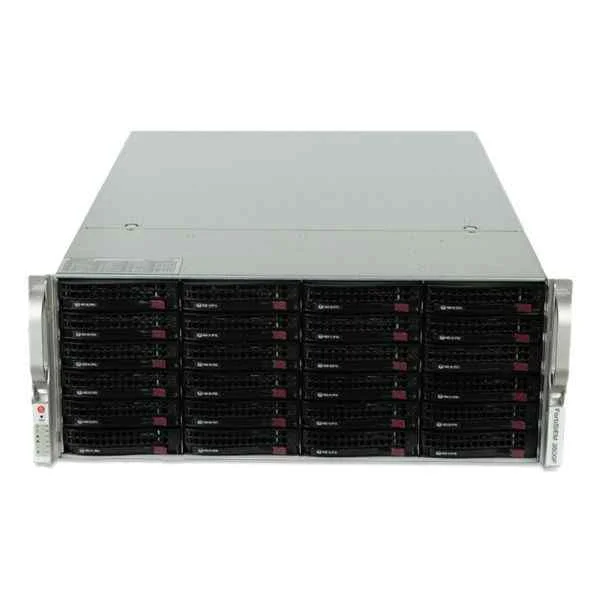
FSM-3500F (Fortinet FSM-3500F FortiSIEM All-in-one Hardware Appliance FSM-3500F. Does not include any device or EPS.)
4.6 (5)Est Value In stock
First-Time Buyer Discount – Get up to 2% additional off on your first order
ORM Rewards Earn $50 in Rewards + Free Expedited Delivery – Join Now!
Use eCoupon ORMSAVE10
eCoupon limited to 5 units

ORM Sales Advisors
Buying for your business? Get a personalised quote in under 2 hours. Talk to an expert
LEARNFilters (1) 
Questions & Answers
What is Fortinet FortiSIEM Unified Event Correlation and Risk Management solution?
FortiSIEM is a unified security information and event management platform that correlates events in real time, calculates risk scores, and provides centralized visibility into network, endpoint and cloud infrastructure.
How does FortiSIEM enhance threat detection and response?
By combining rule-based analytics, machine learning-driven anomaly detection and automated incident response playbooks, FortiSIEM reduces both time to detect (MTTD) and time to respond (MTTR) to security threats.
What deployment options are available for FortiSIEM?
FortiSIEM supports on-premises physical or virtual appliances, cloud-hosted instances and hybrid deployments to meet diverse infrastructure and regulatory requirements.
How does FortiSIEM scale for large and distributed environments?
With a distributed data collection architecture, high-performance correlation engines and horizontal scaling clusters, FortiSIEM efficiently processes millions of events per second across global networks.
What integration capabilities does FortiSIEM offer with third-party tools?
FortiSIEM provides 500+ native connectors, RESTful APIs and SNMP support to integrate seamlessly with firewalls, endpoints, cloud services, identity providers and orchestration platforms.
How does FortiSIEM simplify compliance and reporting?
FortiSIEM delivers over 200 pre-built compliance templates, automated audit-ready reports and customizable dashboards to streamline PCI DSS, GDPR, HIPAA and other regulatory requirements.
What are the key features of FortiSIEM dashboards and visualizations?
FortiSIEM’s intuitive dashboards offer real-time risk scoring, heat maps, drill-down event analysis and customizable widgets for rapid insights into security posture and operational metrics.
How does FortiSIEM perform real-time event correlation?
FortiSIEM’s high-performance correlation engine applies multi-attribute rules, time-based sequencing and behavioral analytics to link disparate events and surface priority incidents instantly.
Can FortiSIEM monitor both on-premises and cloud environments?
Yes, FortiSIEM provides unified visibility and risk management across physical, virtual and multi-cloud infrastructures including AWS, Azure and Google Cloud Platform.
How does FortiSIEM help reduce mean time to detect (MTTD) and mean time to respond (MTTR)?
By automating event correlation, leveraging adaptive risk scoring and integrating orchestration playbooks, FortiSIEM accelerates detection and automates remediation workflows to minimize dwell time.
What licensing models are available for FortiSIEM?
FortiSIEM offers capacity-based subscription and perpetual licensing options, allowing customers to choose a flexible model based on event per second (EPS) throughput and feature requirements.
How does FortiSIEM’s risk score calculation work?
FortiSIEM assigns weighted risk values to users, assets and events, aggregates dynamic context and applies threshold-based scoring to prioritize threats and compliance gaps.
What support and training resources are included with FortiSIEM?
Customers receive 24/7 global technical support, access to Fortinet’s online training portal, certification programs and comprehensive product documentation.
How can I evaluate FortiSIEM before purchase?
You can request a Proof-of-Concept or 30-day trial through Fortinet’s sales team to test FortiSIEM’s capabilities in your environment with no obligation.
What differentiates FortiSIEM from other SIEM solutions?
FortiSIEM uniquely converges event correlation, performance monitoring and risk management in a single console, delivering lower total cost of ownership and faster time to value.
What are the hardware and system requirements for FortiSIEM?
FortiSIEM’s appliances require a minimum of 8 CPU cores, 32 GB RAM and 1 TB SSD; virtual deployments recommend equivalent vCPU, memory and storage based on event throughput.