 United States
Networking Platforms Juniper CTP150 & CTP2000
Experience unparalleled performance and reliability with Juniper CTP150 and CTP2000 Platforms, engineered for secure, scalable network solutions that drive business growth and digital transformation.
Talk to an expert
7 Matching results
- BEST SELLING
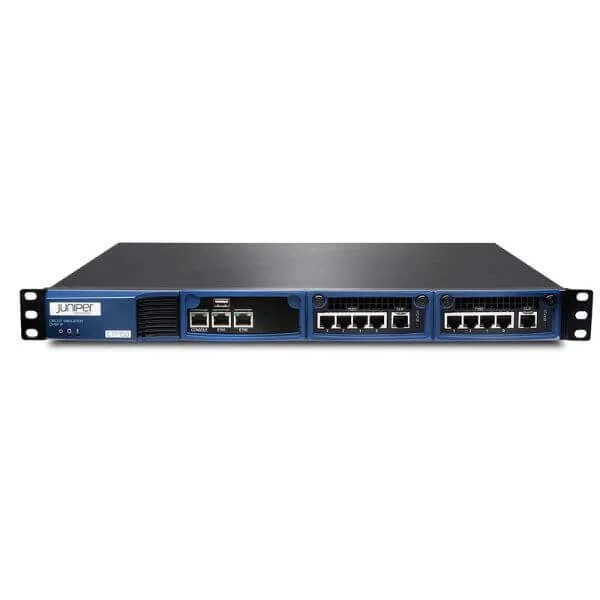
CTP150-AC (CTP150 chassis with two interface slots, power supply, processor, and CTPOS)
4.6 (5)- Enterprise Router
- Juniper
- IPSec / SSL VPN
- AC Power Supply
- OSPF / BGP / EIGRP / Static Routing
- Fixed
Est Value $4,898.48
$4,181.63
14.6% offIn stockNewRefurbishedFirst-Time Buyer Discount – Get up to 2% additional off on your first order
ORM Rewards Earn $50 in Rewards + Free Expedited Delivery – Join Now!
Use eCoupon ORMSAVE10
eCoupon limited to 5 units
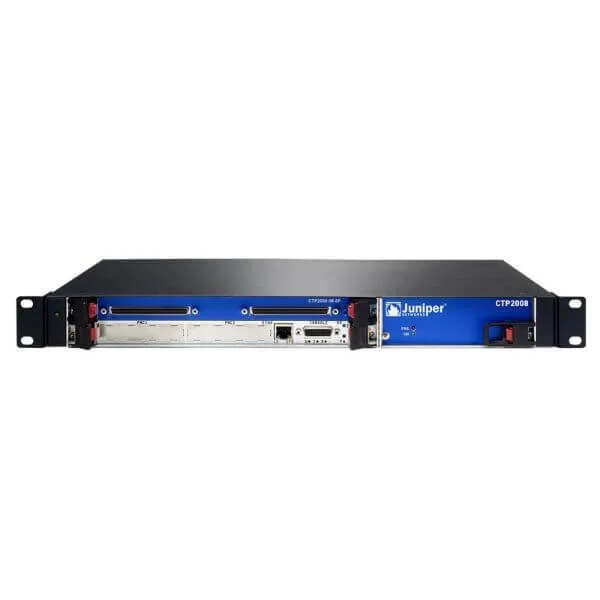
CTP2008-AC-03 (CTP2008 AC Chassis includes Processor, Power Supply, CLK Main, 1G RAM)
4.6 (5)- Enterprise Router
- Juniper
- IPSec / SSL VPN
- AC Power Supply / Redundant
- OSPF / BGP / Static Routing
- Modular
Est Value $16,971.00$15,144.15
10.8% offIn stockNewRefurbishedFirst-Time Buyer Discount – Get up to 2% additional off on your first order
ORM Rewards Earn $50 in Rewards + Free Expedited Delivery – Join Now!
Use eCoupon ORMSAVE10
eCoupon limited to 5 units
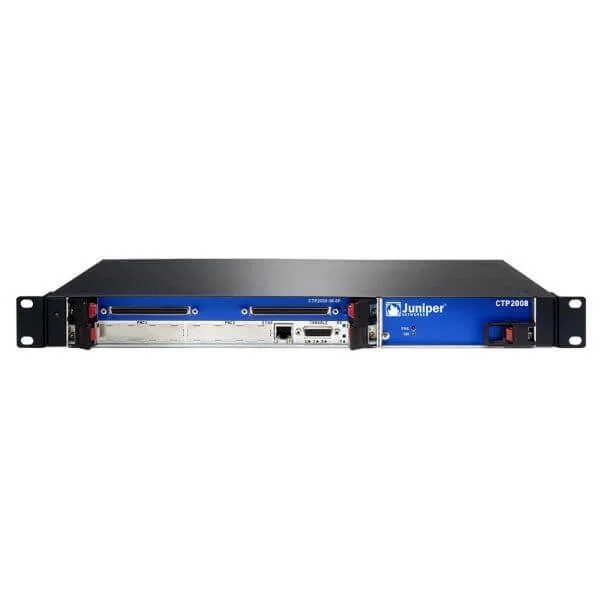
CTP2008-DC-03 (CTP2008 DC Chassis includes Processor, Power Supply, CLK Main, 1G RAM)
4.6 (5)- Enterprise Router
- Juniper
- IPSec / SSL VPN
- DC Power Supply / Redundant
- OSPF / BGP / EIGRP / Static Routing
- Modular
Est Value $17,329.00$15,464.40
10.8% offIn stockNewRefurbishedFirst-Time Buyer Discount – Get up to 2% additional off on your first order
ORM Rewards Earn $50 in Rewards + Free Expedited Delivery – Join Now!
Use eCoupon ORMSAVE10
eCoupon limited to 5 units
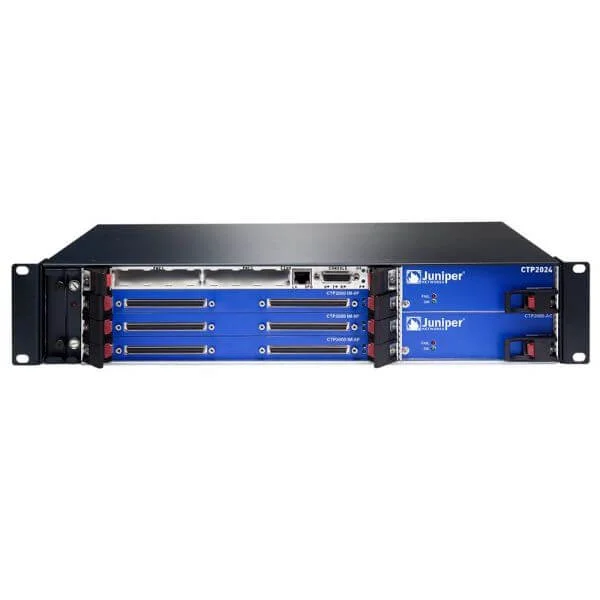
CTP2024-AC-03 (CTP2024 AC Chassis includes Processor, Power Supply, CLK Main, 1G RAM)
5 (5)- Enterprise Router
- Juniper
- IPSec / SSL VPN
- AC Power Supply / Redundant
- OSPF / BGP / Static Routing
- Fiber Optic
- Modular
Est Value $22,782.00$20,331.15
10.8% offIn stockNewRefurbishedFirst-Time Buyer Discount – Get up to 2% additional off on your first order
ORM Rewards Earn $50 in Rewards + Free Expedited Delivery – Join Now!
Use eCoupon ORMSAVE10
eCoupon limited to 5 units
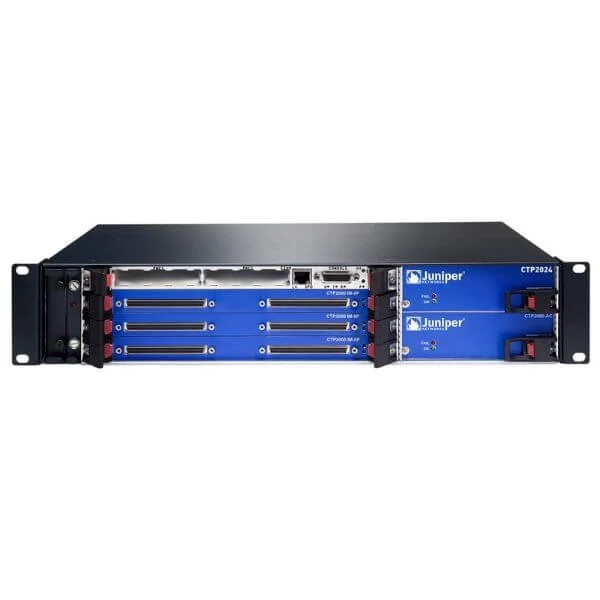
CTP2024-DC-03 (CTP2024 DC Chassis includes Processor, Power Supply, CLK Main, 1G RAM)
4.6 (5)- Enterprise Router
- Juniper
- IPSec / SSL VPN
- Redundant DC Power Supply
- OSPF / BGP / EIGRP / Static Routing
- Fiber Optic / 4G / LTE
- Modular
Est Value $23,259.00$20,756.40
10.8% offIn stockNewRefurbishedFirst-Time Buyer Discount – Get up to 2% additional off on your first order
ORM Rewards Earn $50 in Rewards + Free Expedited Delivery – Join Now!
Use eCoupon ORMSAVE10
eCoupon limited to 5 units
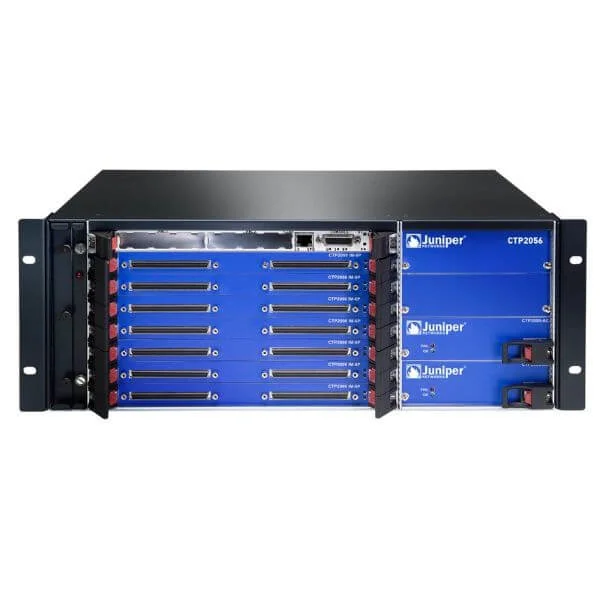
CTP2056-AC-03 (CTP2056 AC Chassis includes Processor, Power Supply, CLK Main, 1G RAM)
4.6 (5)- Enterprise Router
- Juniper
- IPSec / SSL VPN / GRE
- AC Power Supply with Redundancy Support
- OSPF / BGP / Static Routing
- Fiber Optic / DSL
- Modular
Est Value $29,306.00$26,153.40
10.8% offIn stockNewRefurbishedFirst-Time Buyer Discount – Get up to 2% additional off on your first order
ORM Rewards Earn $50 in Rewards + Free Expedited Delivery – Join Now!
Use eCoupon ORMSAVE10
eCoupon limited to 5 units
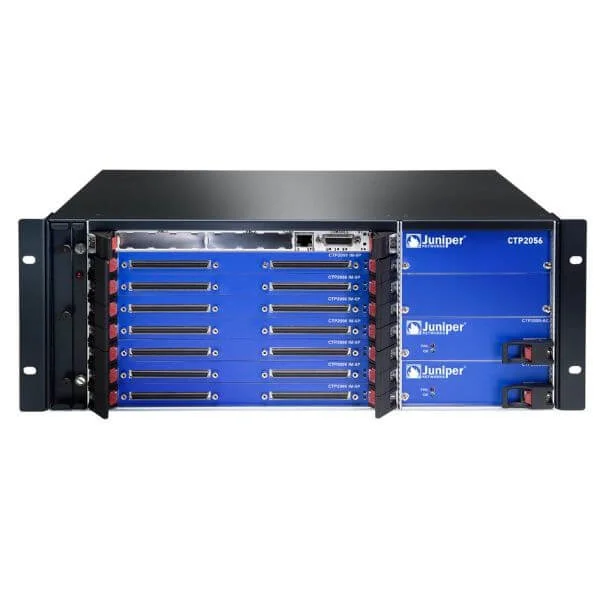
CTP2056-DC-03 (CTP2056 DC Chassis includes Processor, Power Supply, CLK Main, 1G RAM)
4.8 (5)- Enterprise Router
- Juniper
- IPSec / SSL VPN
- DC Power Supply
- OSPF / BGP / Static Routing
- Fiber Optic
- Modular
Est Value $29,782.00$26,578.65
10.8% offIn stockNewRefurbishedFirst-Time Buyer Discount – Get up to 2% additional off on your first order
ORM Rewards Earn $50 in Rewards + Free Expedited Delivery – Join Now!
Use eCoupon ORMSAVE10
eCoupon limited to 5 units

ORM Sales Advisors
Buying for your business? Get a personalised quote in under 2 hours. Talk to an expert
LEARNFilters (7) 
Questions & Answers
What are the Juniper CTP150 and CTP2000 platforms?
The Juniper CTP150 and CTP2000 are compact, carrier-grade traffic processing platforms designed for service providers. They deliver subscriber management, deep packet inspection, QoS enforcement, and dynamic policy control in a modular, high-availability chassis.
What key features differentiate CTP150 from CTP2000?
The CTP150 is a 1RU appliance optimized for entry-level to mid-scale deployments, while the CTP2000 is a 3RU chassis supporting higher port density, increased throughput and modular expansion slots for growth.
Which use cases are ideal for CTP150 and CTP2000?
Both platforms excel in broadband aggregation, mobile backhaul, Wi-Fi offload and enterprise VPN services. They provide subscriber policy enforcement, usage metering and real-time analytics for service monetization.
What maximum throughput do these platforms support?
CTP150 supports up to 40 Gbps of aggregate throughput; CTP2000 scales up to 200 Gbps. Throughput varies by module combination and feature activation.
How many physical and virtual ports can I deploy?
The CTP150 base offers up to eight 1/10GbE SFP+ ports. The CTP2000 chassis supports up to 24 line-card slots, accommodating up to 96 10GbE or 12 100GbE ports.
Which routing and tunneling protocols are supported?
Both platforms support IPv4/IPv6 routing (OSPF, BGP, IS-IS), MPLS L2/L3 VPNs, GRE/IPsec tunnels and advanced segment routing for flexible traffic engineering.
What Quality of Service (QoS) features are available?
CTP150 and CTP2000 provide hierarchical QoS, traffic shaping, policing, class-based forwarding, priority queuing and dynamic bandwidth allocation to ensure SLA compliance.
How do I manage and automate Juniper CTP platforms?
Management is via Junos OS with CLI, J-Web GUI and RESTful APIs. You can integrate with automation tools like Ansible, Puppet and Juniper’s NorthStar Controller for zero-touch provisioning.
What security features are built in?
Both platforms include hardware-based DDoS protection, deep packet inspection, stateful firewalling, MAC/IP filtering and role-based access control to secure the control and data planes.
How scalable are the CTP150 and CTP2000?
Scale from hundreds to millions of sessions using modular line cards, redundant fabrics and a distributed control plane. Add capacity non-disruptively to meet growing subscriber and traffic demands.
What are the hardware redundancy options?
CTP150 offers dual AC/DC power supplies and a hot-swappable fan tray. CTP2000 adds redundant management modules, fabric modules, power supplies and fans for carrier-grade availability.
Which Junos OS version is supported?
Both platforms run Junos OS with full feature parity for routing, security and policy services. Verify the hardware compatibility matrix for your Junos release to ensure module support.
How is licensing structured for these platforms?
Licenses are modular: you can activate subscriber sessions, deep packet inspection, DDoS protection or advanced analytics on demand. Licenses can be capacity-based or feature-based.
Can I integrate CTP150/CTP2000 with existing Juniper infrastructure?
Yes. They seamlessly integrate with Juniper MX, PTX and SRX series via standardized protocols, OpenConfig, NETCONF/YANG and Juniper NorthStar for unified network orchestration.
What deployment best practices should I follow?
Use redundant fabrics and power modules, deploy in N+1 or N+N modes, segregate control and data traffic, enable hot-swap features, and monitor with Juniper HealthBot for proactive maintenance.
How do I troubleshoot performance issues?
Leverage Junos CLI show and trace commands, J-Web dashboards, and analytics logs. Use Juniper Support’s proactive monitoring tools and real-time telemetry for root-cause analysis.