 United States
Juniper Enterprise MX10003/MX10008/MX10016 Routers
Engineered for unmatched scalability and reliability, these advanced Juniper routers deliver robust performance and secure connectivity across diverse network environments, ensuring optimized data flow and business continuity.
Talk to an expert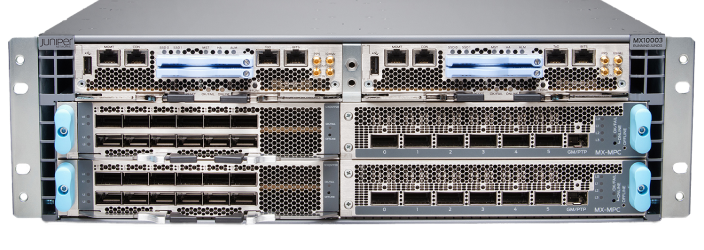
8 Matching results
- BEST SELLING
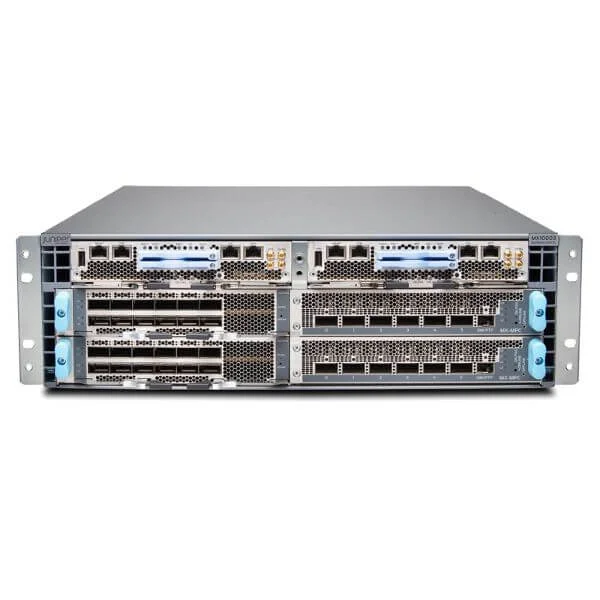
JNP10003-CHAS (JNP10003 CHASSIS)
4.8 (5)- Enterprise Router
- Juniper
- IPSec / SSL VPN / GRE / DMVPN / FlexVPN / N/A
- AC Power Supply / Redundant
- OSPF / BGP / EIGRP / MPLS / IS-IS / Static Routing
- Fiber Optic
- Modular
Est Value $12,471.00
$11,127.90
10.8% offIn stockNewRefurbishedFirst-Time Buyer Discount – Get up to 2% additional off on your first order
ORM Rewards Earn $50 in Rewards + Free Expedited Delivery – Join Now!
Use eCoupon ORMSAVE10
eCoupon limited to 5 units
- BEST SELLING
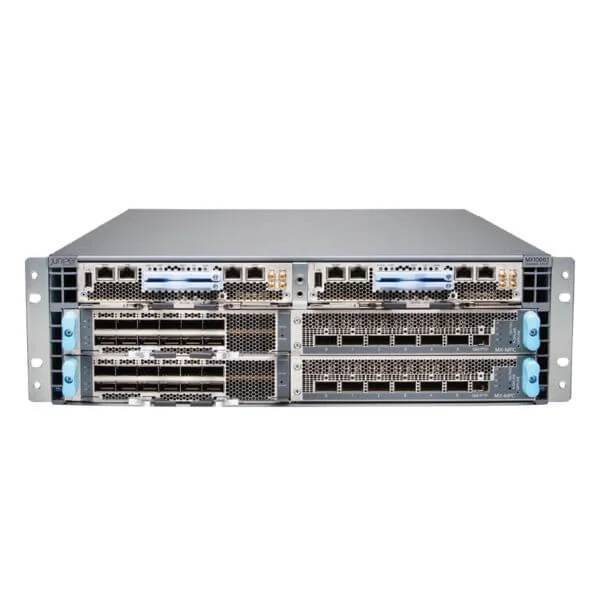
MX10003-BASE (JNP10003/MX10003 Base 2-slot chassis - price includes 1 Routing Engine, 4 Power Supplies (Offers PS redundancy but not feed redundancy), 4 Fan trays incl. Junos)
5 (5)- Enterprise Router
- Juniper
- IPSec / SSL VPN / DMVPN
- AC Power Supply / DC Power Supply / Redundant
- OSPF / BGP / RIP / Static Routing
- Fiber Optic / DSL / N/A
- Modular
Est Value $65,000.00$39,426.45
39.3% offIn stockNewFirst-Time Buyer Discount – Get up to 2% additional off on your first order
ORM Rewards Earn $50 in Rewards + Free Expedited Delivery – Join Now!
Use eCoupon ORMSAVE10
eCoupon limited to 5 units
- BEST SELLING
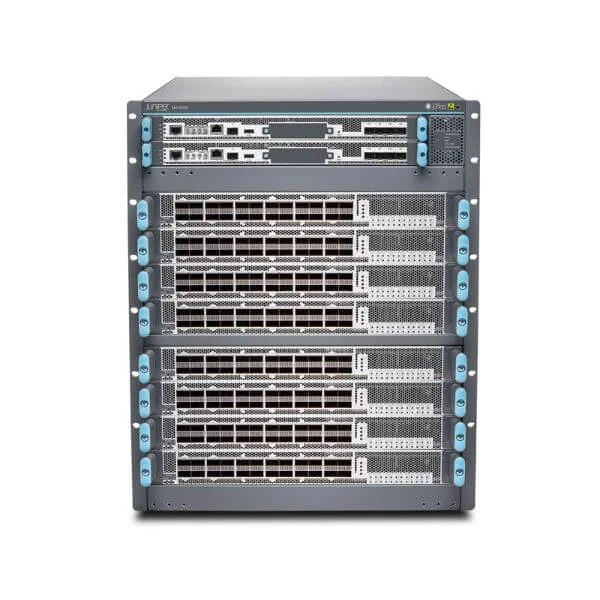
MX10008-PREMIUM (JNP10008/MX10008 Redundant 8-slot chassis - includes 2 Routing Engines, 6 Power Supplies, 2 Fan trays, 2 Fan tray Controllers and 6Switch Fabric Cards)
4.6 (5)- Enterprise Router
- Juniper
- IPSec / SSL VPN / GRE / DMVPN / FlexVPN
- AC Power Supply / Redundant
- OSPF / BGP / EIGRP / MPLS / RIP / Static Routing
- Fiber Optic / DSL / 4G / 5G
- Modular
Est Value $130,260.00$84,210.00
35.4% offIn stockNewFirst-Time Buyer Discount – Get up to 2% additional off on your first order
ORM Rewards Earn $50 in Rewards + Free Expedited Delivery – Join Now!
Use eCoupon ORMSAVE10
eCoupon limited to 5 units
- BEST SELLING
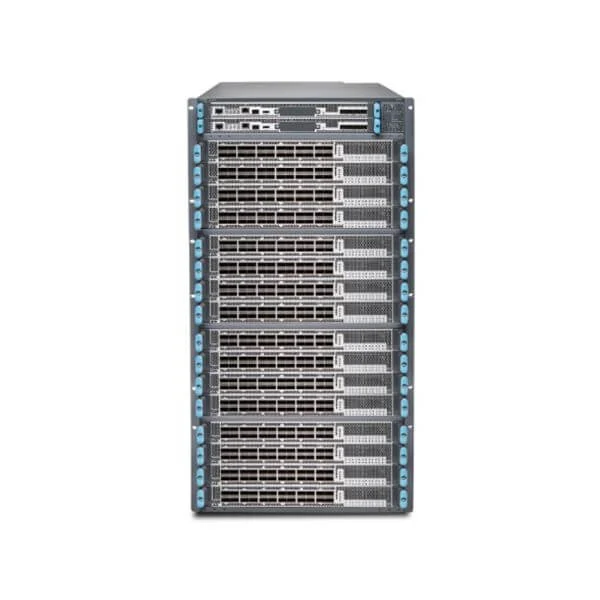
MX10016-PREMIUM (JNP10016/MX10016 Redundant 16-slot chassis - includes 2 Routing Engines, 10 Power Supplies, 2 Fan trays, 2 Fan tray Controllers and6 Switch Fabric Cards.)
4.6 (5)- Enterprise Router
- Juniper
- IPSec / SSL VPN
- AC Power Supply (Redundant)
- OSPF / BGP / EIGRP / MPLS / RIP / Static Routing
- Fiber Optic / LTE
- Modular
Est Value $234,161.00$172,108.65
26.5% offIn stockNewFirst-Time Buyer Discount – Get up to 2% additional off on your first order
ORM Rewards Earn $50 in Rewards + Free Expedited Delivery – Join Now!
Use eCoupon ORMSAVE10
eCoupon limited to 5 units
- FEARURED
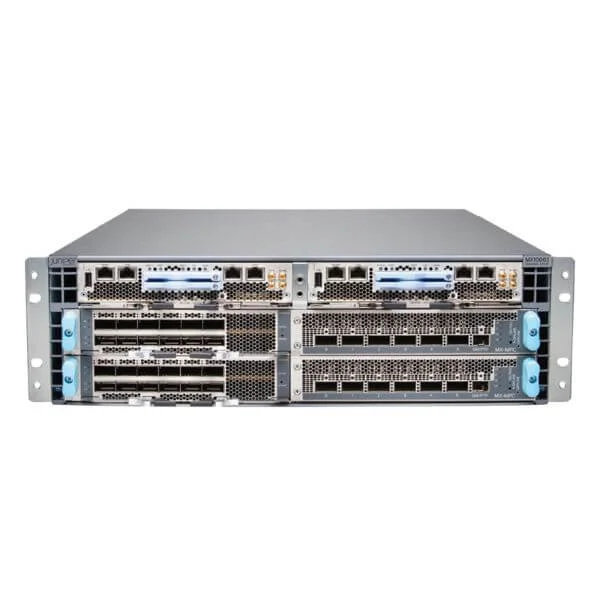
MX10003-PREMIUM (MX10003 premium 2-slot chassis *includes 2 REs, 4 fan trays, 6 power supplies, and 1 EMI door with air filter assembly)
4.6 (5)- Enterprise Router
- Juniper
- IPSec / SSL VPN / GRE / DMVPN / FlexVPN
- AC Power Supply / Redundant
- OSPF / BGP / EIGRP / Static Routing
- Fiber Optic / DSL / LTE
- Modular
Est Value $83,556.00$16,377.27
80.4% offIn stockNewRefurbishedFirst-Time Buyer Discount – Get up to 2% additional off on your first order
ORM Rewards Earn $50 in Rewards + Free Expedited Delivery – Join Now!
Use eCoupon ORMSAVE10
eCoupon limited to 5 units
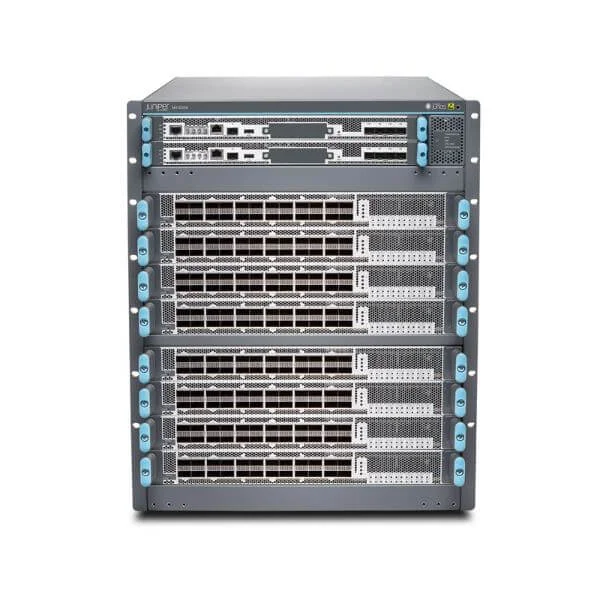
MX10008-BASE (JNP10008/MX10008 Base 8-slot chassis - includes 1 Routing Engine, 3 Power Supplies, 2 Fan trays, 2 Fan tray Controllers and 5 Switch Fabric Cards)
4.6 (5)- Enterprise Router
- Juniper
- IPSec / SSL VPN / GRE
- Redundant AC Power Supply
- OSPF / BGP / Static Routing
- Modular
Est Value $93,045.00$60,150.30
35.4% offIn stockNewFirst-Time Buyer Discount – Get up to 2% additional off on your first order
ORM Rewards Earn $50 in Rewards + Free Expedited Delivery – Join Now!
Use eCoupon ORMSAVE10
eCoupon limited to 5 units
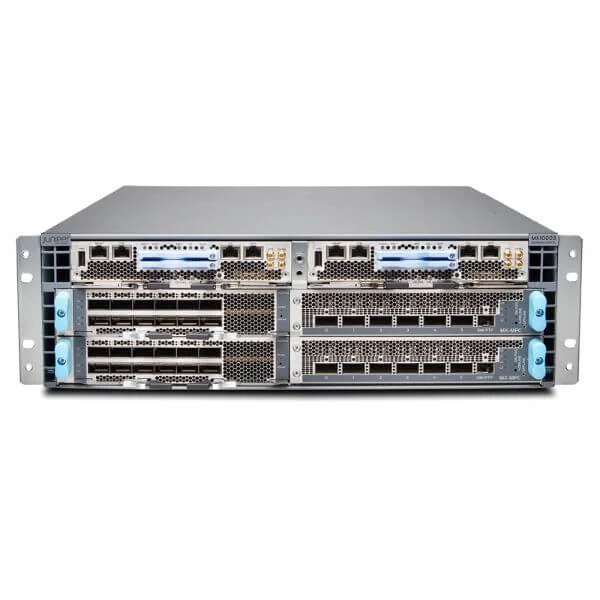
JNP10003-CHAS-BB (JNP10003 Chassis Base unit)
4.8 (5)- Enterprise Router
- Juniper
- IPSec / SSL VPN
- AC Power Supply / Redundant
- OSPF / BGP / EIGRP / Static Routing
- Fiber Optic
- Modular / Chassis
Est Value $197.40$98.70
50% offIn stockRefurbishedFirst-Time Buyer Discount – Get up to 2% additional off on your first order
ORM Rewards Earn $50 in Rewards + Free Expedited Delivery – Join Now!
Use eCoupon ORMSAVE10
eCoupon limited to 5 units
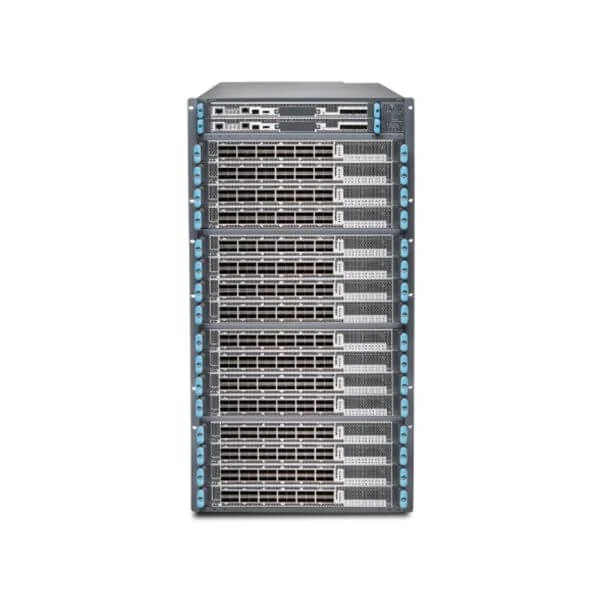
MX10016-BASE (JNP10016/MX10016 Base 16-slot chassis - includes 1 Routing Engine, 5 Power Supplies, 2 Fan trays, 2 Fan tray Controllers and 5 Switch Fabric Cards.)
4.6 (5)- Enterprise Router
- Juniper
- IPSec / SSL VPN / GRE / DMVPN
- AC Power Supply / Redundant
- OSPF / BGP / EIGRP / Static Routing
- Fiber Optic
- Modular
Est Value In stockFirst-Time Buyer Discount – Get up to 2% additional off on your first order
ORM Rewards Earn $50 in Rewards + Free Expedited Delivery – Join Now!
Use eCoupon ORMSAVE10
eCoupon limited to 5 units

ORM Sales Advisors
Buying for your business? Get a personalised quote in under 2 hours. Talk to an expert
LEARNFilters (8) 
Questions & Answers
What are the key features of the Juniper MX10003 router?
The MX10003 delivers up to 19.2 Tbps system throughput, 3 line-card slots, hardware-accelerated MPLS, Segment Routing, EVPN-VXLAN, MACsec encryption and runs on Junos OS for carrier-grade reliability and automation.
How does the MX10008 router differ from the MX10003?
The MX10008 expands capacity to 8 line-card slots with up to 51.2 Tbps throughput, doubling port density while retaining identical Junos OS features, control-plane scaling and high-availability architecture.
What throughput capacity does the MX10016 router provide?
The MX10016 offers up to 102.4 Tbps of system capacity, 16 line-card slots for massive port density and full feature parity with the MX10003/MX10008 under Junos OS.
Which port densities and line-card options are available on MX1000-series routers?
MX10003/MX10008/MX10016 support modular line cards ranging from 100 GbE to 400 GbE ports, offering up to hundreds of 100 GbE or dozens of 400 GbE interfaces per chassis.
What routing and tunneling protocols are supported on Juniper MX1000-series?
They support BGP, OSPF, IS-IS, MPLS LDP/RSVP-TE, RSVP-TE Segment Routing, EVPN, VXLAN, multicast (PIM-SM/SSM) and advanced IPv4/IPv6 routing under a unified Junos OS architecture.
How does Junos OS enhance reliability on MX10003/MX10008/MX10016 routers?
Junos OS delivers in-service software upgrades (ISSU), non-stop routing (NSR), active/backup Route Engines and stateful control-plane redundancy for five-nines availability.
What high-availability features are built into the Juniper MX1000-series?
All models support dual Route Engines, redundant power supplies, hot-swappable fans/line cards and ISSU for zero-impact maintenance and nonstop forwarding.
How do MX10003/MX10008/MX10016 routers support network virtualization?
They offer Virtual Chassis, Virtual Routing and Forwarding (VRF-Lite), logical systems and EVPN-VXLAN overlays for multi-tenant segmentation and service chaining.
What security features are integrated into the MX10003/MX10008/MX10016?
Built-in features include MACsec encryption, DOS/DDOS protection, unified threat management via SRX branch services, RPKI for BGP origin validation and dynamic firewall filters.
What are the power and cooling requirements for the MX1000-series chassis?
Each chassis supports N+1 redundant AC or DC power trays (up to 48 kW total) and front-to-back hot-swappable fans optimized for standard data-center cooling.
How many rack units and what are the dimensions of the MX10003, MX10008 and MX10016?
MX10003 is 6RU (8.75
What scalability options do the MX10003/MX10008/MX10016 routers offer for service providers?
They scale control-plane sessions (millions of BGP routes), line-rate 400 GbE ports and multi-chassis link aggregation for seamless expansion in large-scale networks.
How does the MX1000-series support automation and programmability?
Junos OS provides native Python, NETCONF/YANG, gNMI/gRPC, Ansible modules and Juniper Contrail integration for end-to-end workflow automation.
What are the typical use cases for Juniper MX10003, MX10008 and MX10016 routers?
They serve as core/edge routers in service-provider networks, data-center interconnects, 5G mobile edge, OTT peering and large enterprise WAN aggregation.
What maintenance and software-update lifecycle support is available for MX1000-series?
Juniper provides five-year software maintenance, hardware replacement support, Junos upgrades, security advisories and optional high-touch managed services.
How do MX10003/MX10008/MX10016 routers integrate with cloud and data-center fabrics?
They natively support EVPN-VXLAN, BGP-EVPN multi-tenant fabrics, SDN controllers (Contrail/Open Daylight) and provide telemetry for cloud orchestration.