 United States
Rack Power Server Excellence
Experience unparalleled computing efficiency with our Rack Power Servers engineered for robust performance, high reliability, optimized security, and advanced energy management for scalable enterprise environments.
Talk to an expert
1 Matching results
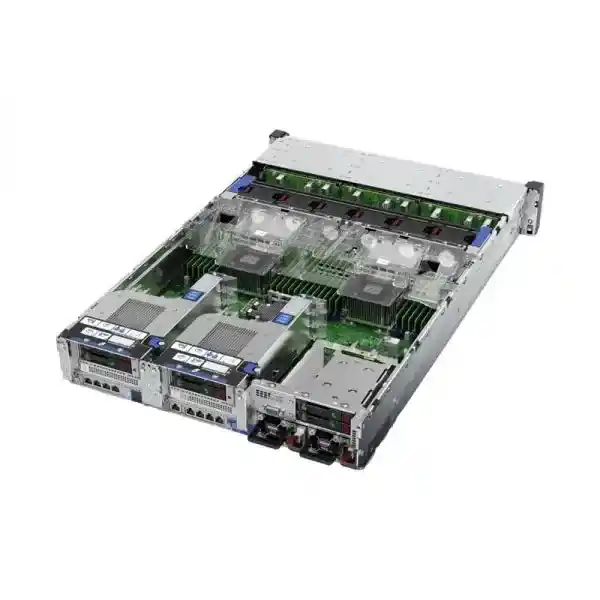
P25215-AA1 (HPE Proliant DL388 G10 3206R (8-Core, 1.9 GHz, 85W) 1P 16G P408i-a NC 8SFF 500W PS server)
4.4 (8)- Server
- Hpe
- Rackmount
- 2U
- Intel
- Intel Xeon Scalable
- Xeon 4th Gen
Est Value In stock
First-Time Buyer Discount – Get up to 2% additional off on your first order
ORM Rewards Earn $50 in Rewards + Free Expedited Delivery – Join Now!
Use eCoupon ORMSAVE10
eCoupon limited to 5 units

ORM Sales Advisors
Buying for your business? Get a personalised quote in under 2 hours. Talk to an expert
LEARNFilters (1) 
Questions & Answers
What is a Rack Power Server?
A Rack Power Server is an integrated power distribution and management unit designed for data center racks. It centralizes power delivery, monitoring, and control to optimize uptime and efficiency.
How does a Rack Power Server improve data center efficiency?
By providing real-time power monitoring, dynamic load balancing, and automated alerts, a Rack Power Server reduces energy waste, prevents overloads, and streamlines capacity planning for up to 20% lower operational costs.
What power capacity options are available for Rack Power Servers?
Rack Power Servers come in 10 kVA, 20 kVA, and 30 kVA models with redundant power inputs. Users can choose single or dual PDU configurations for N+1 redundancy and scalable power up to 60 kVA per rack.
How do I select the right Rack Power Server for my requirements?
Assess your peak and average load (in kW), rack space (U units), redundancy needs, and future expansion. Match these with PDU capacity, number of outlets, and form factor to ensure optimal performance.
Can I integrate a Rack Power Server with existing UPS systems?
Yes. Rack Power Servers support integration with most leading UPS brands via SNMP and Modbus. This enables unified power monitoring, orderly shutdowns, and end-to-end circuit protection.
What remote monitoring features does a Rack Power Server offer?
Built-in network interfaces deliver real-time metrics via web GUI, SNMP traps, and email/SMS alerts. Key features include per-outlet current measurement, environmental sensor alerts, and custom threshold configuration.
How does a Rack Power Server enhance redundancy and uptime?
With dual PDUs, automatic failover, and load balancing, the system prevents single-point failures. N+1 redundancy ensures continuous power delivery even during maintenance or component replacement.
What are the installation requirements for a Rack Power Server?
Installation requires a standard 19″ rack, 2–4U mounting space, compatible power feeds (208 V or 415 V), and network connectivity. A qualified electrician should handle circuit connections and compliance checks.
How scalable is a Rack Power Server solution?
Rack Power Servers scale modularly. You can add additional PDUs, expansion modules, or link multiple units via daisy-chain cabling to grow from a single rack to a multisite deployment without downtime.
What cooling solutions are compatible with Rack Power Servers?
They pair with in-row coolers, air containment systems, and liquid-cooling headers. Integrated temperature/humidity sensors help you adjust CRAC settings or chilled-water flow for optimal thermal management.
How do I maintain and service a Rack Power Server?
Regular tasks include firmware updates via web UI, visual inspections of connectors, cleaning air filters, and verifying sensor calibration. Most components are hot-swappable to ensure zero downtime.
What safety certifications do Rack Power Servers have?
Rack Power Servers are UL/cUL listed, CE marked, and RoHS compliant. They meet IEC 60950/62368 for electrical safety, and carry ISO 9001/14001 quality and environmental management certifications.
What warranty and support options are available?
Standard coverage includes a 3-year hardware warranty and 24/7 technical support with a 4-hour onsite response. Extended service plans up to 5 years and premium SLAs are available.
How does a Rack Power Server contribute to cost savings?
By reducing unplanned outages, optimizing energy use, and enabling right-sized capacity, a Rack Power Server can lower total cost of ownership by up to 25% over five years.
Can a Rack Power Server support high-density computing workloads?
Yes. With power densities up to 12 kW per U, dual hot-swap power supplies, and intelligent load management, it reliably supports GPU clusters, blade servers, and AI/inference appliances.
What is the expected ROI when investing in a Rack Power Server?
Typical ROI is achieved within 18–24 months through reduced energy bills, minimized downtime, and simplified management. Real-time analytics help you track savings and optimize rack utilization.