 United States
Networking Cisco Catalyst Compact Switch
Engineered for high performance and secure connectivity, the Cisco Catalyst Compact Switch delivers advanced network agility, robust security features, and seamless integration for future-proof IT infrastructures.
Talk to an expert
8 Matching results
- BEST SELLING
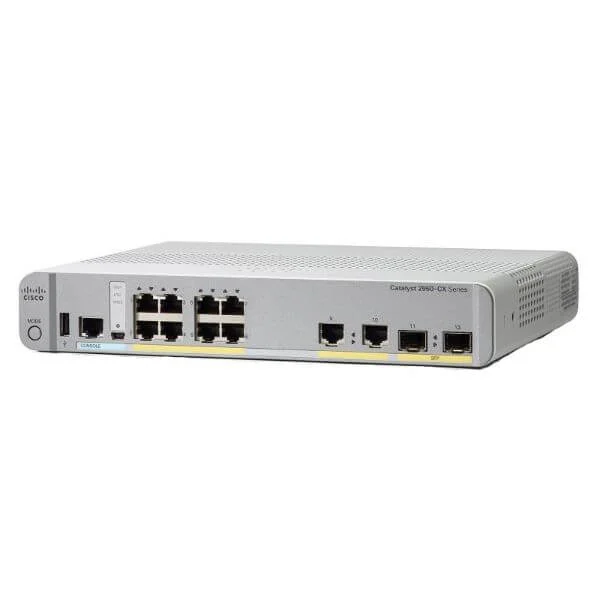
WS-C2960CX-8TC-L (Cisco Catalyst 2960-CX 8 Port Data Lan Base)
4.8 (6)- Switch
- Cisco
- AC Power Supply
- Layer 2
- Desktop / Rack-mount
- 14.5 W
- Under 12 Ports
Est Value $1,561.00
$616.00
60.5% offIn stockNewFirst-Time Buyer Discount – Get up to 2% additional off on your first order
ORM Rewards Earn $50 in Rewards + Free Expedited Delivery – Join Now!
Use eCoupon ORMSAVE10
eCoupon limited to 5 units
- BEST SELLING
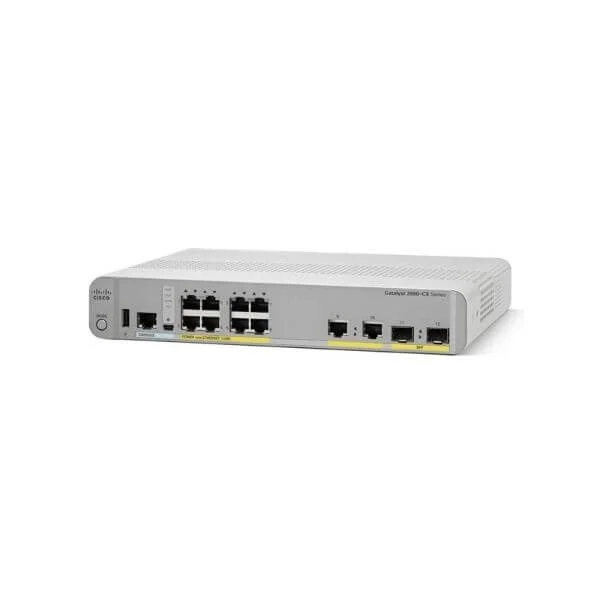
WS-C2960CX-8PC-L (Cisco Catalyst 2960-CX Compact Switch, 8x Gigabit PoE+, LAN Base)
4.7 (6)- Network Switch
- WS-C2960CX-8PC-L
- Cisco
- Cisco Catalyst 2960-CX
- Enterprise Access
- Managed
- LAN Base
Est Value $1,934.00$1,065.00
44.9% offIn stockNewFirst-Time Buyer Discount – Get up to 2% additional off on your first order
ORM Rewards Earn $50 in Rewards + Free Expedited Delivery – Join Now!
Use eCoupon ORMSAVE10
eCoupon limited to 5 units
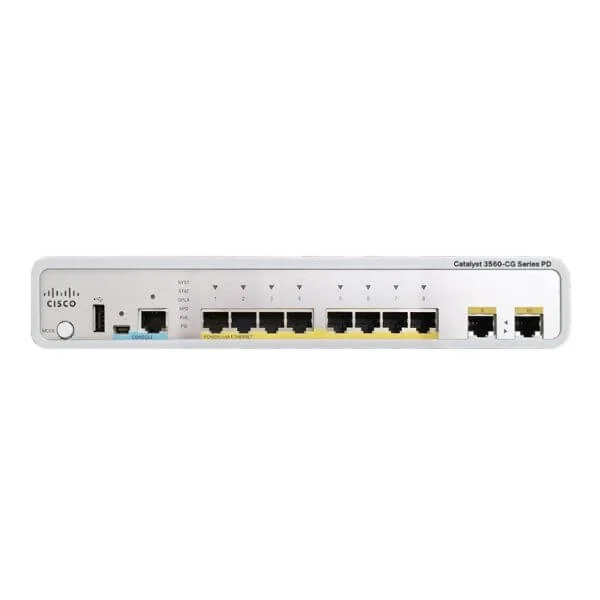
WS-C3560CPD-8PT-S (CATALYST 3560C PD 8PORT PSE SWITCH GBE POE 2X1GB IP BASE)
4.4 (5)- Switch
- Cisco
- AC Power Supply
- Layer 2
- Rack-mount
- 125 W
- Under 12 Ports
Est Value $1,950.00$536.00
72.5% offIn stockNewFirst-Time Buyer Discount – Get up to 2% additional off on your first order
ORM Rewards Earn $50 in Rewards + Free Expedited Delivery – Join Now!
Use eCoupon ORMSAVE10
eCoupon limited to 5 units
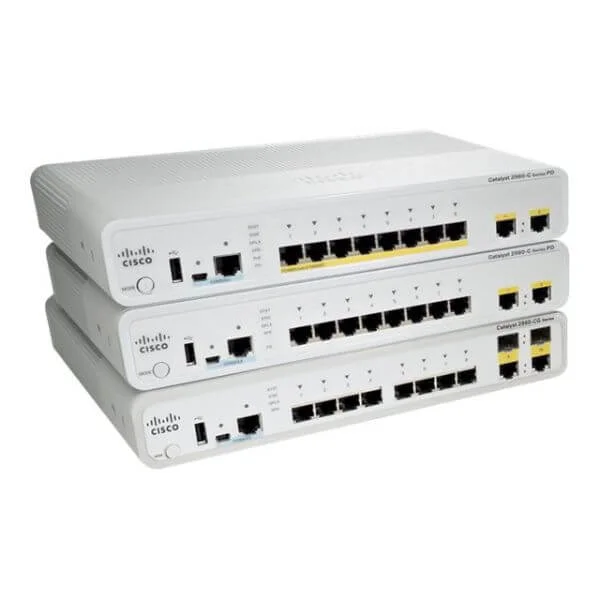
WS-C2960CG-8TC-L (Catalyst 2960C Switch 8 GE, 2 x Dual Uplink, LAN Base)
4.7 (6)- Switch
- Cisco
- AC Power Supply
- Layer 2
- Desktop
- 33 W
- Under 12 Ports
Est Value $1,250.00$564.00
54.9% offIn stockNewFirst-Time Buyer Discount – Get up to 2% additional off on your first order
ORM Rewards Earn $50 in Rewards + Free Expedited Delivery – Join Now!
Use eCoupon ORMSAVE10
eCoupon limited to 5 units
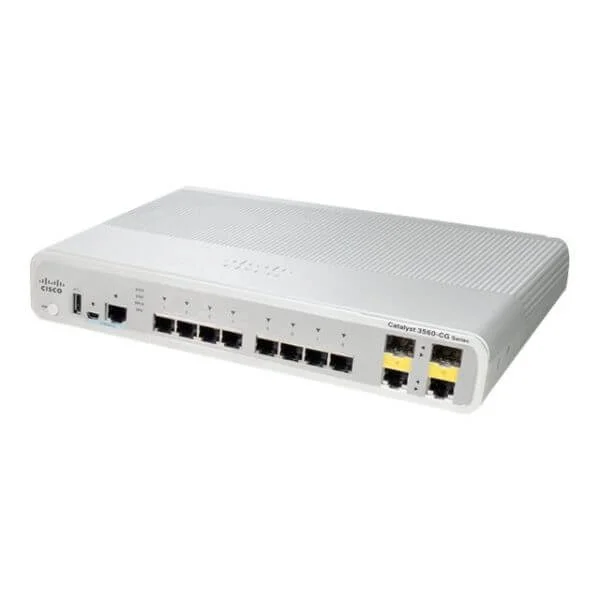
WS-C3560CG-8TC-S (Catalyst 3560C Switch 8 GE, 2 x Dual Uplink, IP Base)
4.4 (5)- Switch
- Cisco
- AC Power Supply
- Layer 2 / Layer 3
- Desktop
- 44 W
- Under 12 Ports
Est Value $1,700.00$701.00
58.8% offIn stockNewFirst-Time Buyer Discount – Get up to 2% additional off on your first order
ORM Rewards Earn $50 in Rewards + Free Expedited Delivery – Join Now!
Use eCoupon ORMSAVE10
eCoupon limited to 5 units
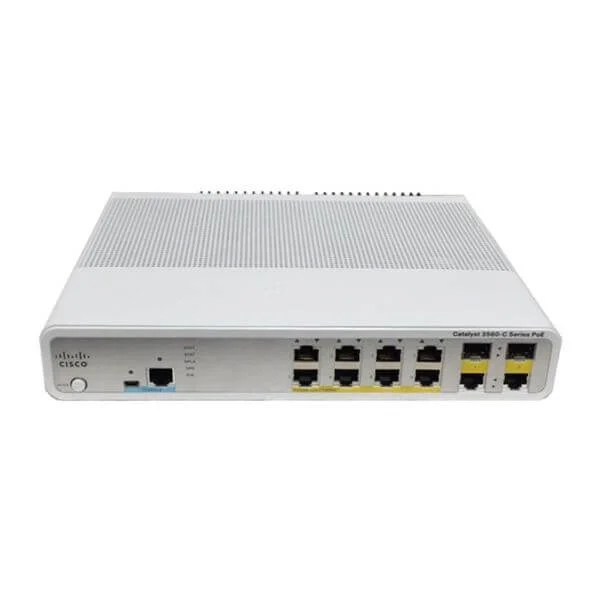
WS-C3560C-8PC-S (Catalyst 3560C Switch 8 FE PoE, 2 x Dual Uplink, IP Base)
5 (5)- Switch
- Cisco
- AC Power Supply
- Layer 2 / Layer 3
- Rack-mount
- Under 12 Ports
Est Value $1,600.00$729.00
54.4% offIn stockNewFirst-Time Buyer Discount – Get up to 2% additional off on your first order
ORM Rewards Earn $50 in Rewards + Free Expedited Delivery – Join Now!
Use eCoupon ORMSAVE10
eCoupon limited to 5 units
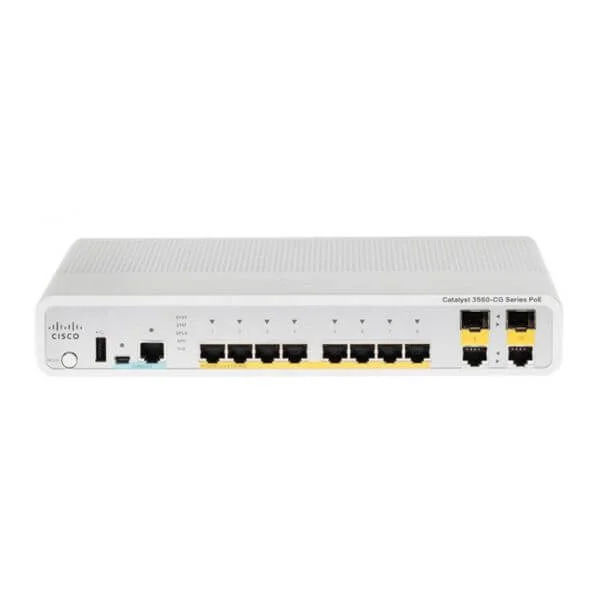
WS-C3560CG-8PC-S (Catalyst 3560C Switch 8 GE PoE, 2 x Dual Uplink, IP Base)
4.6 (5)- Switch
- Cisco
- AC Power Supply
- Layer 2 / Layer 3
- Rack-mount
- 60 W
- Under 12 Ports
Est Value $2,050.00$903.00
56% offIn stockNewFirst-Time Buyer Discount – Get up to 2% additional off on your first order
ORM Rewards Earn $50 in Rewards + Free Expedited Delivery – Join Now!
Use eCoupon ORMSAVE10
eCoupon limited to 5 units
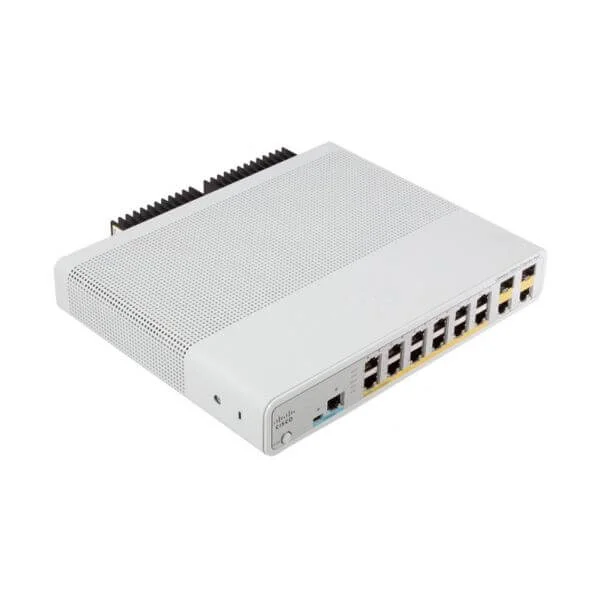
WS-C3560C-12PC-S (Catalyst 3560C Switch 12 FE PoE, 2 x Dual Uplink, IP Base)
4.4 (5)- Switch
- Cisco
- AC Power Supply
- Layer 2
- Desktop / Rack-mount
- 35 W
- 12–24 Ports
Est Value $2,000.00$1,013.00
49.4% offIn stockNewFirst-Time Buyer Discount – Get up to 2% additional off on your first order
ORM Rewards Earn $50 in Rewards + Free Expedited Delivery – Join Now!
Use eCoupon ORMSAVE10
eCoupon limited to 5 units

ORM Sales Advisors
Buying for your business? Get a personalised quote in under 2 hours. Talk to an expert
LEARNFilters (8) 
Questions & Answers
What is a Cisco Catalyst Compact Switch?
A Cisco Catalyst Compact Switch is a fixed-configuration Ethernet switch designed for small to medium-sized networks, offering enterprise-grade performance, security, and simplified management in a compact form factor.
What are the key features of the Cisco Catalyst Compact Switch?
Key features include up to 24 Gigabit Ethernet ports, optional PoE/PoE+, 1G/10G uplinks, advanced security (802.1X, ACLs), QoS, and integrated management via Cisco DNA Center or web/CLI interfaces.
What use cases is the Cisco Catalyst Compact Switch designed for?
It is ideal for branch offices, retail outlets, school campuses, and IoT deployments where enterprise-level switching, security, and scalability are required in a cost-effective, compact solution.
How many ports does the Cisco Catalyst Compact Switch support?
Depending on the model, you can choose configurations with 8, 16, or 24 Gigabit Ethernet ports and up to two 1G/10G uplink ports to accommodate diverse network topologies.
Does the Cisco Catalyst Compact Switch support PoE and PoE+?
Yes, select models deliver PoE and PoE+ up to a total of 370W, enabling you to power IP phones, wireless access points, and cameras directly from the switch.
What is the switching capacity and forwarding rate of the Cisco Catalyst Compact Switch?
Depending on the configuration, the switch offers up to 176 Gbps switching capacity and a forwarding rate of up to 130 Mpps to handle high-bandwidth applications.
How do I configure the Cisco Catalyst Compact Switch?
Configuration can be done using the intuitive web-based GUI, Cisco IOS CLI, or centrally via Cisco DNA Center, enabling quick setup with Smartports and zero-touch provisioning.
What security features are available on the Cisco Catalyst Compact Switch?
It includes 802.1X network access control, DHCP snooping, dynamic ARP inspection, port-based MAC security, and Secure Boot to protect against unauthorized access and threats.
Does the Cisco Catalyst Compact Switch support QoS?
Yes, it provides advanced QoS capabilities such as traffic classification, marking, policing, and priority queuing to ensure reliable performance for voice, video, and data.
What management options are available for the Cisco Catalyst Compact Switch?
Management options include Cisco DNA Center for policy-based automation, command-line interface, web GUI, SNMP, NetFlow, and Cisco Prime Infrastructure for visibility and control.
Can I stack Cisco Catalyst Compact Switch units?
Certain models support Cisco StackWise technology, allowing you to stack up to 8 switches with a single management IP and 160 Gbps of stack bandwidth for simplified scaling.
What power redundancy options does the Cisco Catalyst Compact Switch offer?
Select models support an optional external Redundant Power System (RPS) and hot-swappable power supplies to ensure continuous operation in case of a failure.
How energy-efficient is the Cisco Catalyst Compact Switch?
It features Energy Efficient Ethernet (IEEE 802.3az), variable-speed fans, and power-down idle ports to reduce power consumption and operational costs.
What software license levels are available for the Cisco Catalyst Compact Switch?
Available licenses include LAN Lite and LAN Base on IOS XE, and DNA Essentials or DNA Advantage for advanced automation, analytics, and security features.
How do I update the firmware on the Cisco Catalyst Compact Switch?
Firmware can be upgraded via Cisco IOS XE images using USB, TFTP/FTP, or directly through Cisco DNA Center to ensure you have the latest features and security patches.
What warranty and support options are available for the Cisco Catalyst Compact Switch?
Cisco offers a limited lifetime hardware warranty, one-year limited software updates, and optional Cisco SMARTnet service for 24/7 technical support and hardware replacement.
How do I troubleshoot common issues on the Cisco Catalyst Compact Switch?
Use built-in diagnostic tools such as ‘show’ commands, embedded event manager (EEM), syslog, SPAN, and packet buffering, or engage Cisco TAC for advanced analysis and resolution.