 United States
HPE Switches Flexfabric 5700
HPE Flexfabric 5700 Switches deliver unmatched reliability and performance engineered for high-density data centers, offering scalable connectivity, advanced security, and efficient management for modern enterprise networks.
Talk to an expert
3 Matching results
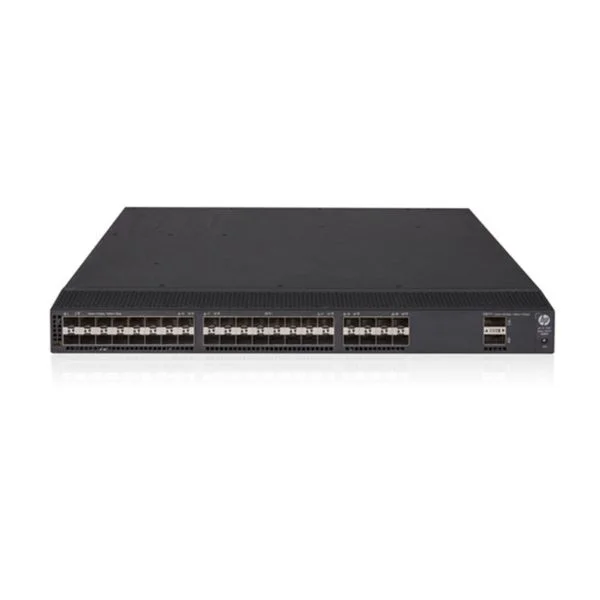
JG896A (FF 5700-40XG-2QSFP+ SWITCH PS PL-NT)
4.8 (5)- Switch
- Hpe
- AC Power Supply
- Layer 2 / Layer 3
- Rack-mount
- 120W
- 24–48 Ports
Est Value $487.35
$277.19
43.1% offIn stockNewRefurbishedFirst-Time Buyer Discount – Get up to 2% additional off on your first order
ORM Rewards Earn $50 in Rewards + Free Expedited Delivery – Join Now!
Use eCoupon ORMSAVE10
eCoupon limited to 5 units
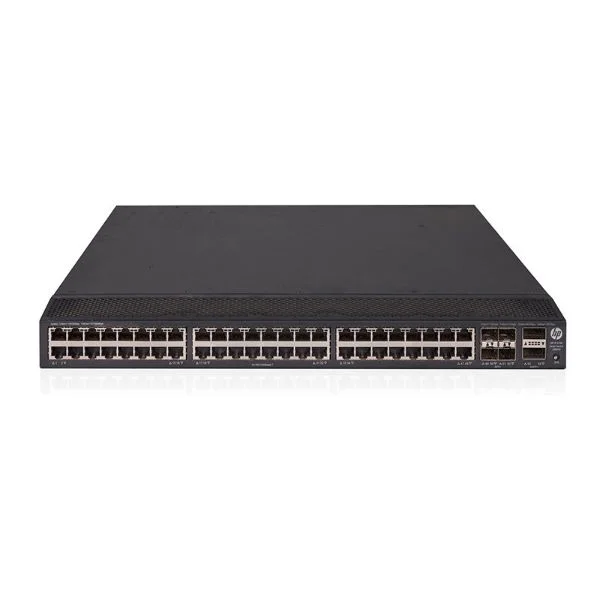
JG894A (HPE FlexFabric 5700 48G 4XG 2QSFP+ Switch)
4.6 (5)- Switch
- Hpe
- Redundant Power Supply / AC Power Supply
- Layer 2 / Layer 3
- Rack-mount
- 120 W
- 24–48 Ports
Est Value $202.64
In stockNewRefurbishedFirst-Time Buyer Discount – Get up to 2% additional off on your first order
ORM Rewards Earn $50 in Rewards + Free Expedited Delivery – Join Now!
Use eCoupon ORMSAVE10
eCoupon limited to 5 units
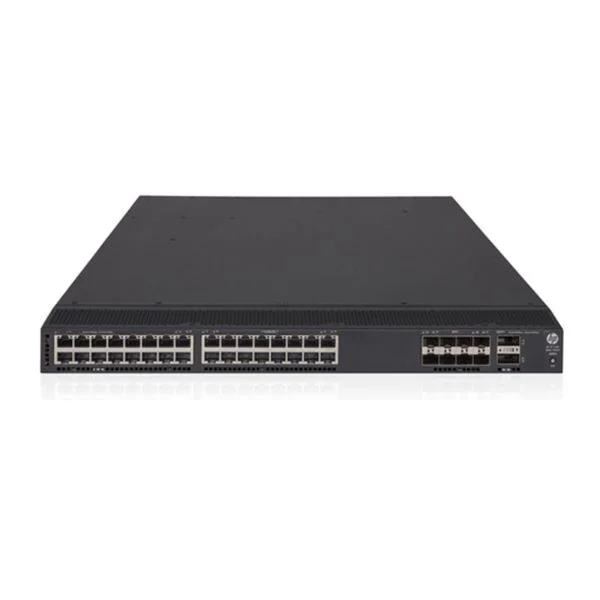
JG898A (HPE FlexFabric 5700 32XGT 8XG 2QSFP+ Switch)
4.2 (5)- Switch
- Hpe
- AC Power Supply, Redundant Power Supply
- Layer 2 / Layer 3
- Rack-mount
- 50 W
- 24–48 Ports
Est Value $493.50
In stockNewRefurbishedFirst-Time Buyer Discount – Get up to 2% additional off on your first order
ORM Rewards Earn $50 in Rewards + Free Expedited Delivery – Join Now!
Use eCoupon ORMSAVE10
eCoupon limited to 5 units

ORM Sales Advisors
Buying for your business? Get a personalised quote in under 2 hours. Talk to an expert
LEARNFilters (3) 
Questions & Answers
What is the HPE FlexFabric 5700 Switch series?
The HPE FlexFabric 5700 Switch series is a family of stackable, high-performance Ethernet switches designed for campus and data center networks, offering advanced Layer 2/3 features and modular uplink options.
What performance features does the HPE FlexFabric 5700 Switch offer?
The HPE FlexFabric 5700 Switch delivers non-blocking line-rate switching with up to 1.44 Tbps switching capacity and 2.16 billion packets per second forwarding performance.
How does the HPE FlexFabric 5700 Switch enhance network scalability?
By stacking up to 12 units with a 480 Gbps virtual backplane, the HPE FlexFabric 5700 Switch enables seamless expansion to support up to 576 ports in a single logical chassis.
What software features are supported on the HPE FlexFabric 5700 Switch?
The HPE FlexFabric 5700 Switch supports advanced Layer 2/3 protocols, IPv4/IPv6 routing, OSPF, BGP, EVPN, VXLAN and industry-standard ACLs for flexible network segmentation.
How does HPE FlexFabric 5700 support virtualization?
The HPE FlexFabric 5700 Switch includes VXLAN gateway and NVGRE support for multi-tenant VXLAN Overlay networks and seamless integration with virtualized data centers.
What management tools are available for HPE FlexFabric 5700 Switch?
Management options include HPE Intelligent Management Center, HPE OneView, web GUI, RESTful APIs and a full-featured CLI for centralized configuration and monitoring.
How does HPE FlexFabric 5700 Switch ensure network security?
The HPE FlexFabric 5700 Switch enforces 802.1X authentication, MAC-based access control, Dynamic ARP Inspection, DHCP snooping and hardware-accelerated ACLs for comprehensive protection.
What power efficiency features are included in the HPE FlexFabric 5700 Switch?
The HPE FlexFabric 5700 Switch features Energy Efficient Ethernet (IEEE 802.3az), variable-speed fans, modular power supplies and SmartRate ports to minimize power consumption.
What deployment options exist for HPE FlexFabric 5700 Switches?
HPE FlexFabric 5700 Switches can be deployed in campus cores, distribution layers, data center leaf/spine architectures and wiring closets with flexible 1/10/40 GbE port modules.
How does HPE FlexFabric 5700 support high availability?
Features include dual hot-swap power supplies, redundant fans, In-Service Software Upgrade (ISSU) and intelligent failover through switch stacking for uninterrupted operations.
What Quality of Service (QoS) capabilities are provided by HPE FlexFabric 5700?
The HPE FlexFabric 5700 Switch offers eight hardware queues per port, traffic shaping, priority queuing, policing and DiffServ support to ensure deterministic application performance.
Which stacking options are available on the HPE FlexFabric 5700 Switch?
The HPE FlexFabric 5700 Switch supports Virtual Connect stacking with up to 12 members and a 480 Gbps backplane for unified management and high throughput.
What are the port configurations offered by HPE FlexFabric 5700?
Models provide 24 or 48-port 1 GbE, optional 10 GbE SFP+, 40 GbE QSFP+ uplinks and modular expansion bays to mix and match interfaces as needed.
How does HPE FlexFabric 5700 Switch integrate with HPE OneView?
Integration with HPE OneView delivers real-time switch monitoring, firmware lifecycle management, configuration templates and automated provisioning within a single pane of glass.
What technical support and warranty options are available for HPE FlexFabric 5700?
HPE FlexFabric 5700 Switches include a standard 3-year warranty, and HPE Foundation Care or HPE Proactive Care services offer 24×7 support, parts replacement and firmware updates.
What is the switching capacity and throughput of HPE FlexFabric 5700?
Each HPE FlexFabric 5700 Switch delivers up to 1.44 Tbps of switching capacity and 2.16 billion packets per second forwarding throughput for demanding network environments.