 United States
Networking Switches Huawei S12700
Empower your enterprise with the industry-leading Huawei S12700 Series Switches that deliver high-performance connectivity, scalable design, and robust security, ensuring seamless digital transformation and future-ready network infrastructure.
Talk to an expert
8 Matching results
- BEST SELLING
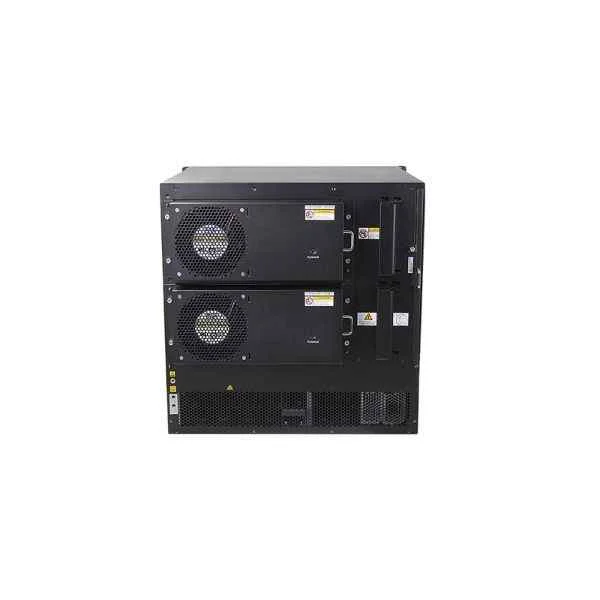
ET1BS12704S0 (Huawei S12704 Assembly Chassis)
4.5 (6)- Switch
- Huawei
- Redundant Power Supply
- Layer 2 / Layer 3
- Rack-mount
- 150 W
- 24–48 Ports
Est Value $9,610.66
$2,018.25
79% offIn stockNewFirst-Time Buyer Discount – Get up to 2% additional off on your first order
ORM Rewards Earn $50 in Rewards + Free Expedited Delivery – Join Now!
Use eCoupon ORMSAVE10
eCoupon limited to 5 units
- BEST SELLING
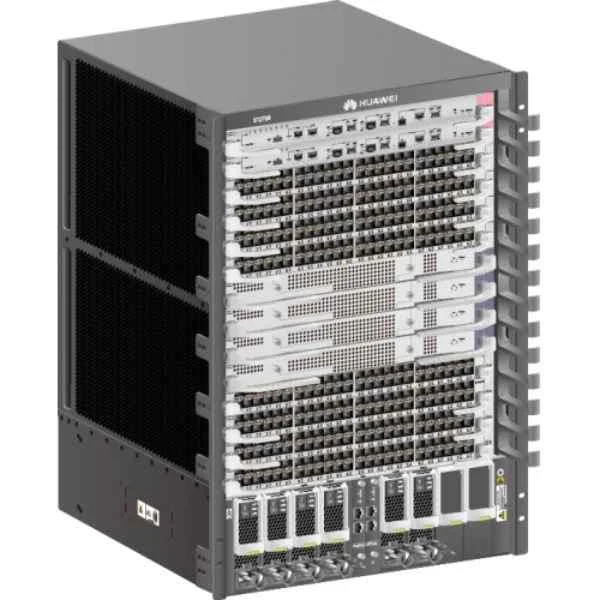
ET1BS12708S0 (S12708 Assembly Chassis, 8 slots)
4.7 (6)- Switch
- Huawei
- Redundant Power Supply / AC Power Supply / N/A
- Layer 3
- Rack-mount
- 24–48 Ports
Est Value $12,038.62$4,803.40
60.1% offIn stockNewFirst-Time Buyer Discount – Get up to 2% additional off on your first order
ORM Rewards Earn $50 in Rewards + Free Expedited Delivery – Join Now!
Use eCoupon ORMSAVE10
eCoupon limited to 5 units
- BEST SELLING
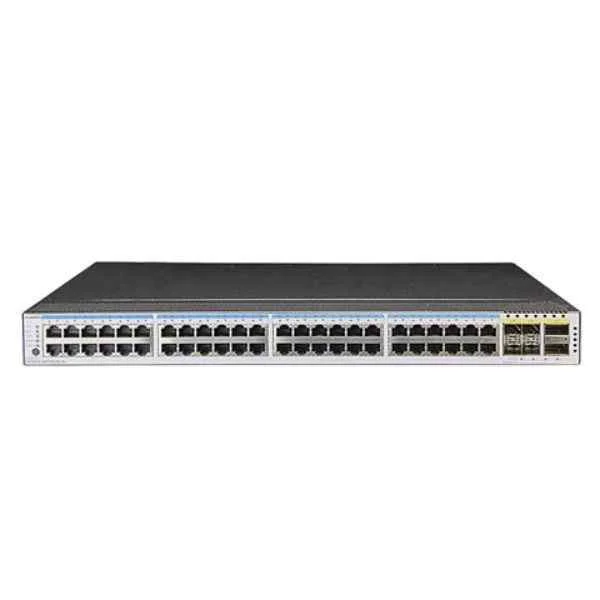
ET1Z04SACA00 (Huawei S12704 Basic Engine AC Bundle(Including Assembly Chassis*1,MPUA Main Board*1,SFUA Switch Fabric Unit*2,800W AC Power*2,Basic Software*1))
4.8 (6)- Switch
- Huawei
- AC Power Supply
- Layer 3
- Rack-mount
- 150 W
- 24–48 Ports
Est Value $19,130.69$4,820.93
74.8% offIn stockNewFirst-Time Buyer Discount – Get up to 2% additional off on your first order
ORM Rewards Earn $50 in Rewards + Free Expedited Delivery – Join Now!
Use eCoupon ORMSAVE10
eCoupon limited to 5 units
- BEST SELLING
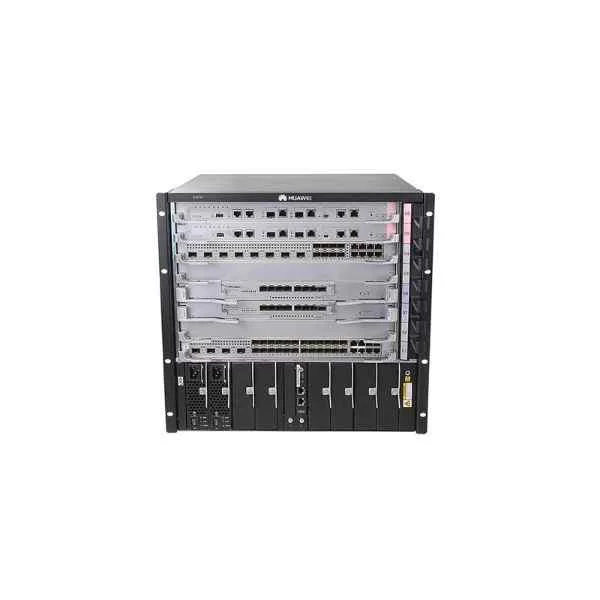
ET1Z04EACC00 (Huawei S12704 Enhanced Engine AC Bundle ET1Z04EACC00 (Including Assembly Chassis*1,MPUA Main Board*1,SFUC Switch Fabric Unit*2,800W AC Power*2,Basic Software*1))
4.7 (6)- Switch
- Huawei
- Redundant Power Supply
- Layer 3
- Rack-mount
- 60 W
- 24–48 Ports
Est Value $25,564.77$6,442.33
74.8% offIn stockNewFirst-Time Buyer Discount – Get up to 2% additional off on your first order
ORM Rewards Earn $50 in Rewards + Free Expedited Delivery – Join Now!
Use eCoupon ORMSAVE10
eCoupon limited to 5 units
- BEST SELLING
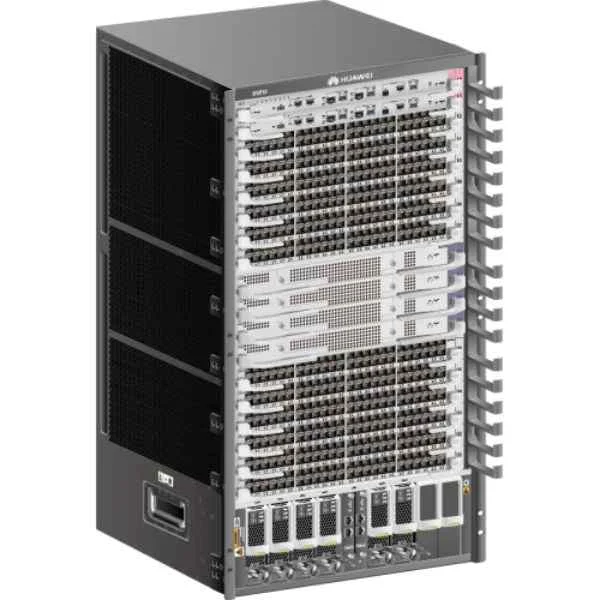
ET1BS12712S0 (S12712 Assembly Chassis, 12 Slots)
4.5 (6)- Switch
- Huawei
- Redundant Power Supply / AC Power Supply
- Layer 2 / Layer 3
- Rack-mount
- 150 W
- 24–48 Ports
Est Value $18,007.35$7,184.93
60.1% offIn stockNewFirst-Time Buyer Discount – Get up to 2% additional off on your first order
ORM Rewards Earn $50 in Rewards + Free Expedited Delivery – Join Now!
Use eCoupon ORMSAVE10
eCoupon limited to 5 units
- FEARURED
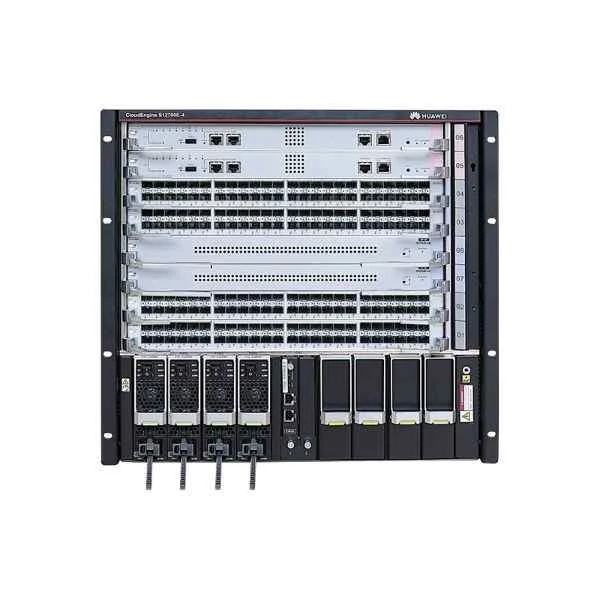
ET1BS12704E0 (Huawei S12700E-4 assembly chassis)
4.2 (6)- Switch
- Huawei
- Redundant Power Supply
- Layer 3
- Rack-mount
- 150W
- 24–48 Ports
Est Value $13,348.00$2,002.35
85% offIn stockNewFirst-Time Buyer Discount – Get up to 2% additional off on your first order
ORM Rewards Earn $50 in Rewards + Free Expedited Delivery – Join Now!
Use eCoupon ORMSAVE10
eCoupon limited to 5 units
- FEARURED
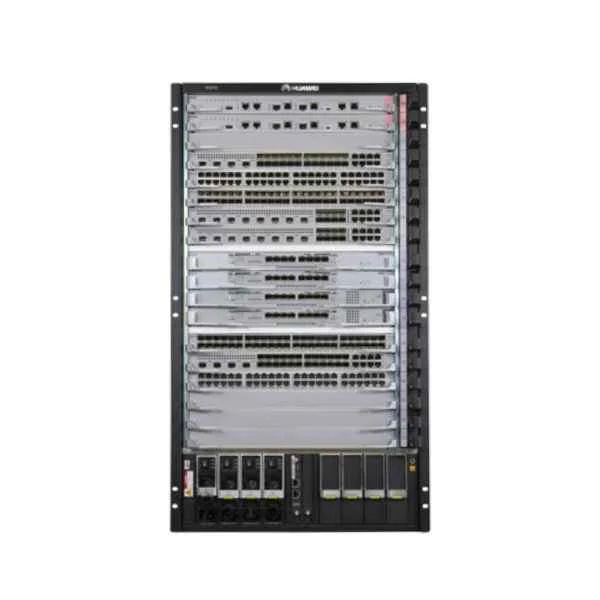
ET1BS12712E1 (Huawei S12700E-12 assembly chassis)
4.7 (6)- Switch
- Huawei
- AC Power Supply
- Layer 3
- Rack-mount
- 120 W
- 12–24 Ports
Est Value $27,264.00$4,089.75
85% offIn stockNewFirst-Time Buyer Discount – Get up to 2% additional off on your first order
ORM Rewards Earn $50 in Rewards + Free Expedited Delivery – Join Now!
Use eCoupon ORMSAVE10
eCoupon limited to 5 units
- FEARURED
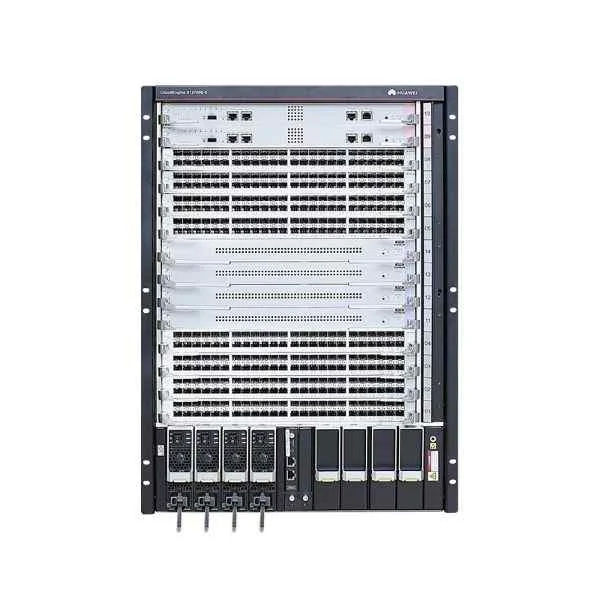
ET1BS12708E0 (Huawei S12700E-8 assembly chassis)
4.8 (6)- Switch
- Huawei
- AC Power Supply
- Layer 2 / Layer 3
- Rack-mount
- 150W
- 24–48 Ports
Est Value $33,579.00$10,754.10
68% offIn stockNewFirst-Time Buyer Discount – Get up to 2% additional off on your first order
ORM Rewards Earn $50 in Rewards + Free Expedited Delivery – Join Now!
Use eCoupon ORMSAVE10
eCoupon limited to 5 units

ORM Sales Advisors
Buying for your business? Get a personalised quote in under 2 hours. Talk to an expert
LEARNFilters (8) 
Questions & Answers
What are the key features of the Huawei S12700 Series Switches?
The Huawei S12700 Series delivers high-density 10/25/40/100 GbE ports, non-blocking architecture, advanced QoS, and modular line cards to support campus core and large data center deployments.
What switching capacity and forwarding performance do S12700 switches offer?
S12700 switches provide up to 25.6 Tbps switching capacity per chassis with 1.2 Bpps forwarding performance, ensuring wire-speed processing for the most demanding networks.
How many ports and uplinks are available on the S12700 Series?
Each S12700 chassis supports up to 384 10 GbE, 192 25 GbE, 48 40 GbE, or 24 100 GbE ports via modular line cards, with flexible uplink options for aggregation and spine-leaf topologies.
Which operating system powers the Huawei S12700 Series?
The S12700 Series runs Huawei’s Versatile Routing Platform (VRP), delivering consistent features, enhanced stability, and unified CLI across Huawei campus and data center switches.
Can Huawei S12700 switches be stacked for scalability?
Yes, S12700 switches support IRF (Intelligent Resilient Framework) stacking, enabling up to four chassis to operate as a single logical device for simplified management and non-stop forwarding.
What high-availability features are supported by the S12700 Series?
S12700 switches offer redundant control engines, dual AC/DC power supplies, hot-swappable line cards, and hitless software upgrades to ensure uninterrupted service.
Are power supplies and fans hot-swappable on the Huawei S12700?
Yes, all power modules and fan trays in the S12700 Series are hot-swappable, allowing maintenance without service interruption.
What VLAN and segmentation capabilities do these switches provide?
The S12700 Series supports up to 16 k VLANs, private VLAN, QinQ, and VXLAN segmentation to meet complex multi-tenant and enterprise campus requirements.
Which Quality of Service (QoS) features are available?
S12700 switches include hierarchical scheduling, traffic shaping, congestion avoidance (WRED/ECN), and intelligent queue management to guarantee service-level agreements.
What security and access control features are built in?
The S12700 Series integrates MACsec, 802.1X authentication, RADIUS/TACACS+, ACLs, DHCP snooping, and ARP inspection for comprehensive threat protection.
Does the Huawei S12700 support virtualization technologies?
Yes, the series supports Virtual Switching Framework (VSF), VRRP, and VXLAN EVPN for network virtualization, multi-tenant cloud, and overlay segmentation.
What management and monitoring options are available?
S12700 switches can be managed via eSight NMS, CLI, Web GUI, SNMP, NETCONF/YANG, and a RESTful API for full lifecycle and policy-based management.
What are the typical deployment scenarios for the S12700 Series?
The Huawei S12700 is ideal as a campus core switch, data center top-of-rack or spine switch, and in high-performance computing clusters requiring low latency.
What environmental and energy-efficiency specifications apply?
The series complies with RoHS, operates between –5 °C and 55 °C, and features Huawei’s Dynamic Energy Saving (DES) technology to reduce power consumption by up to 30%.
What warranty and technical support options are provided?
Huawei offers a lifetime limited warranty with next-business-day spare parts replacement, 24/7 hotline support, and optional Software Support Service for software upgrades.
How does licensing and scalability work on the S12700 Series?
The S12700 Series uses feature-based licenses for advanced functions (e.g., MPLS, VXLAN), and supports in-service modular line-card expansion to scale port capacity.
How does the S12700 integrate with cloud and SDN environments?
S12700 switches support OpenFlow, Huawei CloudFabric, and third-party controllers, enabling automated provisioning and seamless integration into hybrid cloud and SDN architectures.