 United States
Netapp Compatible Sfp High Performance
Elevate your network infrastructure with our Netapp Compatible Sfp range, engineered for seamless integration with NetApp systems, exceptional connectivity performance, and superior reliability for mission-critical operations.
Talk to an expert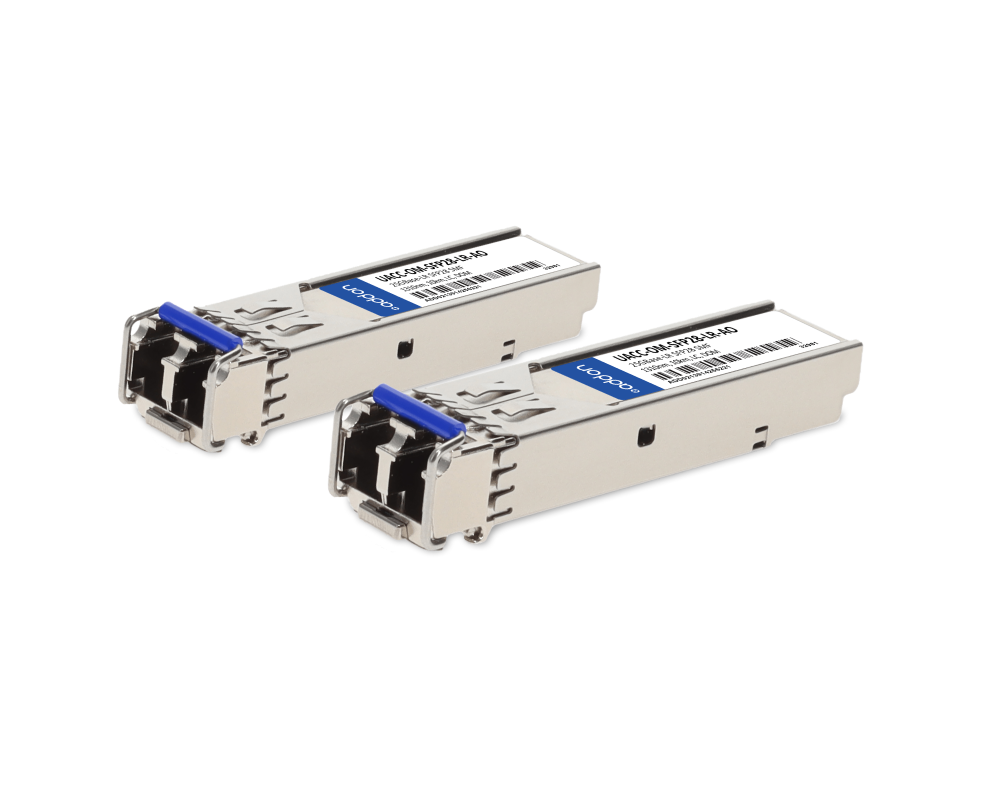
3 Matching results
- BEST SELLING
X6567-R6-C (SFP Optical 1GB Shortwave Multimode NetApp Compatible)
4.8 (6)- Transceiver
- Orm
- QSFP28
- 100G
- LC
- 1310nm
- Long-Range
Est Value In stock
First-Time Buyer Discount – Get up to 2% additional off on your first order
ORM Rewards Earn $50 in Rewards + Free Expedited Delivery – Join Now!
Use eCoupon ORMSAVE10
eCoupon limited to 5 units
- BEST SELLING
X6568-R6-C (SFP Copper 1GB RJ-45 NetApp Compatible)
4.3 (6)- Transceiver
- Orm
- QSFP28
- 100G
- LC
- 1310 nm
- Long-Range
Est Value In stockFirst-Time Buyer Discount – Get up to 2% additional off on your first order
ORM Rewards Earn $50 in Rewards + Free Expedited Delivery – Join Now!
Use eCoupon ORMSAVE10
eCoupon limited to 5 units
X-48896-00-0E-C-C (SFP 1Gb RJ45 iSCSI NetApp E-Series Compatible)
4.7 (6)- Transceiver
- Orm
- SFP+
- 10G
- LC
- 850nm
- Short-Range
Est Value In stockFirst-Time Buyer Discount – Get up to 2% additional off on your first order
ORM Rewards Earn $50 in Rewards + Free Expedited Delivery – Join Now!
Use eCoupon ORMSAVE10
eCoupon limited to 5 units

ORM Sales Advisors
Buying for your business? Get a personalised quote in under 2 hours. Talk to an expert
LEARNFilters (3) 
Questions & Answers
What is a NetApp compatible SFP?
A NetApp compatible SFP is a third-party small form-factor pluggable transceiver designed to match NetApp OEM performance and interoperability standards for Fibre Channel or Ethernet networks.
How do I select the correct NetApp compatible SFP module?
Match the module’s data rate (e.g., 1G, 10G, 16G, 25G), wavelength, distance rating (e.g., 2 km, 10 km, 80 km), and interface type to your NetApp switch or storage shelf specifications.
Are NetApp compatible SFP modules fully interoperable with NetApp devices?
Yes, reputable NetApp compatible SFPs undergo compatibility testing to ensure plug-and-play operation, full feature support, and stable performance in NetApp environments.
What transmission distances do NetApp compatible SFPs support?
Depending on the model, NetApp compatible SFPs support distances from 100 m over multimode fiber to 80 km or more over single-mode fiber, as specified by the module’s optics.
Can I mix NetApp OEM and compatible SFPs in the same network?
Yes, you can deploy OEM and compatible SFPs side by side as long as they share the same speed, wavelength, and fiber type; maintain consistent link parameters to avoid mismatches.
What data rates are available for NetApp compatible SFP transceivers?
NetApp compatible SFPs are available in 1G, 10G, 16G, 25G, 32G, 40G, 100G, and higher data-rate variants, supporting both Ethernet and Fibre Channel protocols.
How do I install a NetApp compatible SFP in a NetApp switch?
Power-down the port or ensure hot-swap support, gently insert the SFP until it clicks, then re-enable the port and verify link status via the NetApp CLI or management GUI.
What fiber types do NetApp compatible SFPs support?
They support multimode fiber (MMF) with LC connectors for short-reach optics and single-mode fiber (SMF) for long-reach optics, all with standard LC or MPO interfaces.
Are NetApp compatible SFP modules performance-tested?
Yes, quality manufacturers perform rigorous electrical, optical and environmental testing to confirm that each NetApp compatible SFP meets or exceeds OEM performance specifications.
Do NetApp compatible SFPs affect my NetApp warranty or support?
Using high-quality, certified compatible SFPs does not void NetApp hardware warranties; however, always verify vendor compliance and maintain documentation for support.
How can I troubleshoot a NetApp SFP link failure?
Check fiber cleanliness, verify module seating, inspect cable polarity, confirm matching data rates and wavelengths, and review interface statistics in the NetApp system logs.
What are the cost benefits of using NetApp compatible SFPs?
Compatible SFPs typically cost 30–60% less than OEM modules while delivering equivalent performance, reducing overall network upgrade and expansion expenses.
Do NetApp compatible SFP modules carry RoHS and CE certifications?
Reputable suppliers provide RoHS, CE, FCC and ISO certifications on NetApp compatible SFPs to ensure environmental compliance and safety standards.
What is the return policy for NetApp compatible SFPs?
Most vendors offer a 30- to 90-day hassle-free return window and lifetime technical support if the module fails to meet performance or compatibility claims.
Can I hot-swap NetApp compatible SFP modules?
Yes, NetApp compatible SFPs support hot-swapping; ensure your switch or storage shelf firmware is up to date and follow NetApp’s hot-swap procedures to avoid disruptions.
How do I verify the part number of a NetApp compatible SFP?
Inspect the module’s label for the vendor part number, NetApp cross-reference code, and serial number, then confirm details against the vendor’s compatibility matrix.