 United States
Voice Cards Vic Vic2 Vic3
Experience exceptional clarity and performance with Vic Vic2 and Vic3 Voice Cards. Engineered for precision and reliability, these advanced audio solutions deliver unmatched sound quality and efficiency for professional use.
Talk to an expert
9 Matching results
- BEST SELLING
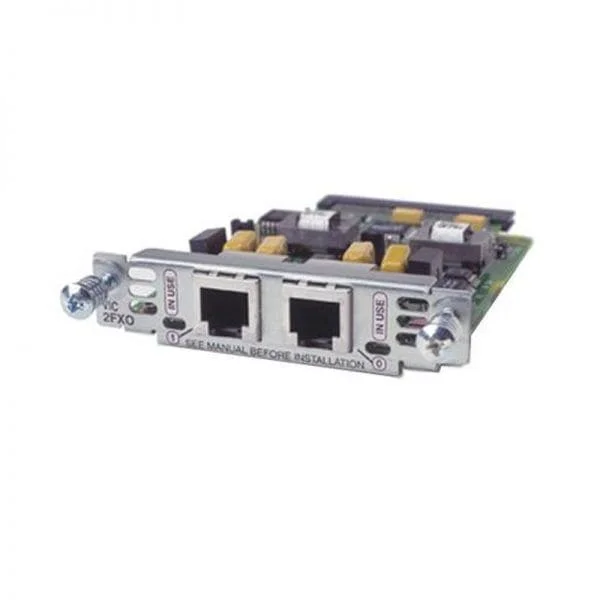
VIC2-2E/M (Two-port Voice Interface Card - FXS)
4.8 (5)- Network Module / Network Card
- Cisco
- Ethernet
- 10G
- SFP+
- TCP/IP
- PCIe
Est Value $400.00
$136.79
65.8% offIn stockNewRefurbishedFirst-Time Buyer Discount – Get up to 2% additional off on your first order
ORM Rewards Earn $50 in Rewards + Free Expedited Delivery – Join Now!
Use eCoupon ORMSAVE10
eCoupon limited to 5 units
- BEST SELLING
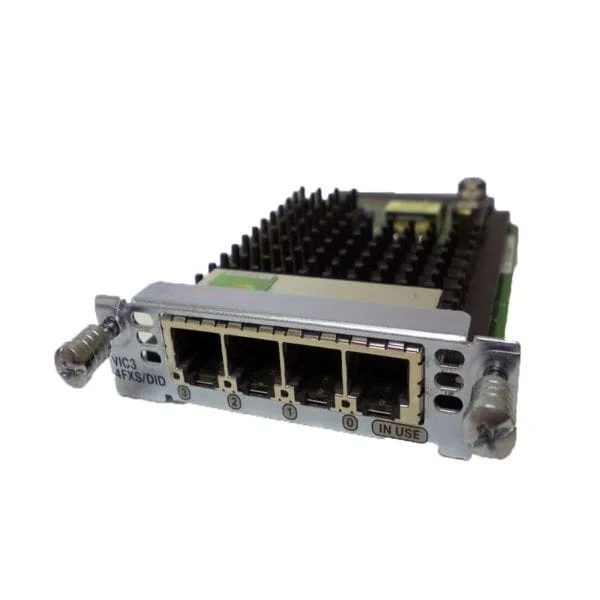
VIC3-4FXS/DID (Four-Port Voice Interface Card - FXS and DID)
4.6 (5)- Voice Interface Card
- Cisco
- FXS/DID
- RJ-11
- SIP/H.323
- Modular
Est Value $714.00$52.50
92.6% offIn stockNewRefurbishedFirst-Time Buyer Discount – Get up to 2% additional off on your first order
ORM Rewards Earn $50 in Rewards + Free Expedited Delivery – Join Now!
Use eCoupon ORMSAVE10
eCoupon limited to 5 units
- BEST SELLING
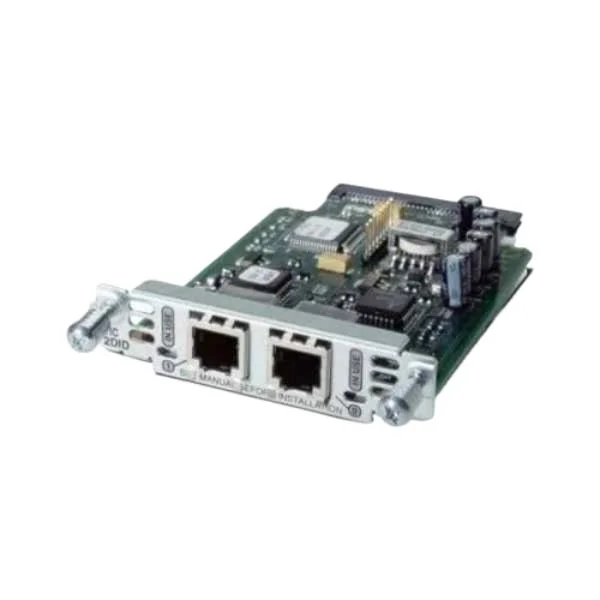
VIC3-2FXS/DID (4 port FXS or DID VIC)
4.8 (5)- Voice Interface Card
- Cisco
- 2-Port FXS/DID
- RJ-11
- SIP
- Modular
Est Value $1,182.72$52.50
95.6% offIn stockNewRefurbishedFirst-Time Buyer Discount – Get up to 2% additional off on your first order
ORM Rewards Earn $50 in Rewards + Free Expedited Delivery – Join Now!
Use eCoupon ORMSAVE10
eCoupon limited to 5 units
- BEST SELLING
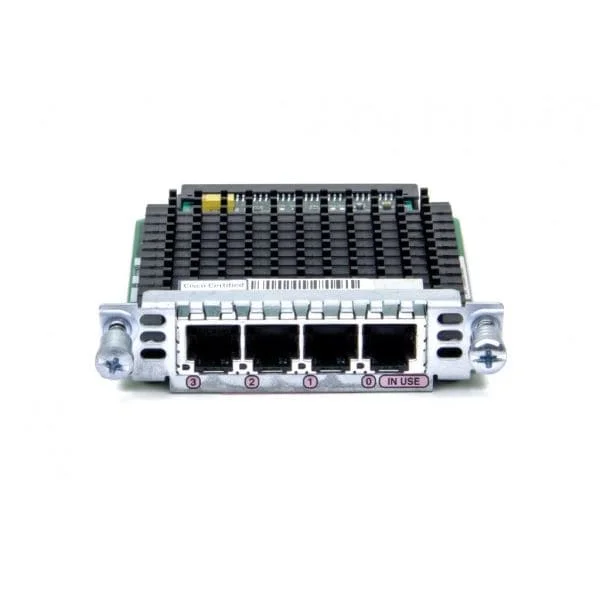
VIC2-4FXO (4PORT VOICE INTERFACE CARD FXO UNIVERSAL)
4.8 (5)- Voice Interface Card
- Cisco
- WAN
- RJ-11
- Analog Telephony
- Modular
Est Value $1,255.00$68.25
94.6% offIn stockNewRefurbishedFirst-Time Buyer Discount – Get up to 2% additional off on your first order
ORM Rewards Earn $50 in Rewards + Free Expedited Delivery – Join Now!
Use eCoupon ORMSAVE10
eCoupon limited to 5 units
- FEARURED
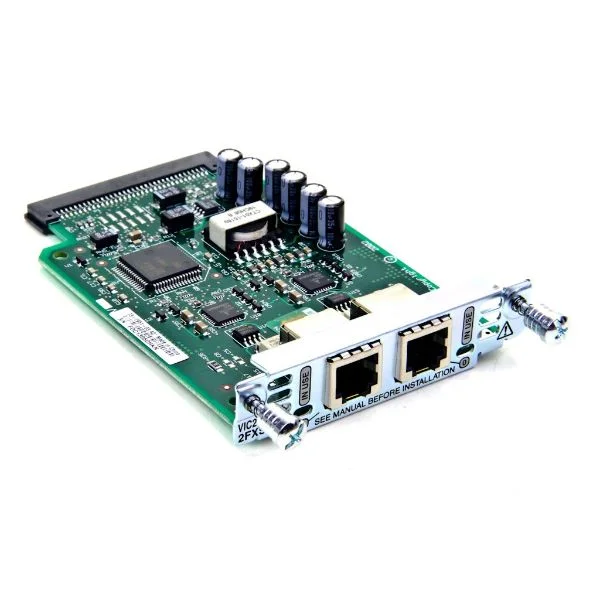
VIC2-2FXS (Two-port Voice Interface Card - FXO (Universal))
4.8 (5)- Voice Interface Card
- Cisco
- FXS
- 2 x FXS
- SIP, H.323, SCCP
- Modular
Est Value $400.00$62.35
84.4% offIn stockNewRefurbishedFirst-Time Buyer Discount – Get up to 2% additional off on your first order
ORM Rewards Earn $50 in Rewards + Free Expedited Delivery – Join Now!
Use eCoupon ORMSAVE10
eCoupon limited to 5 units
- FEARURED
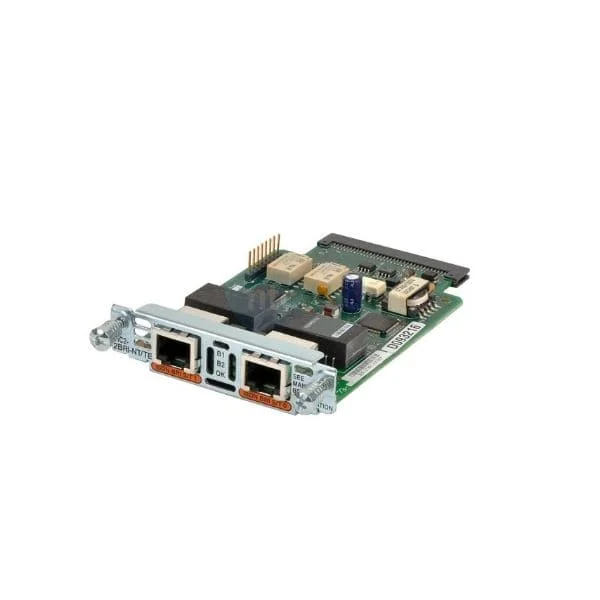
VIC2-2BRI-NT/TE (Four-port Voice Interface Card - FXO (Universal))
4.6 (5)- Network Module / Network Card
- Cisco
- Ethernet
- 1Gbps
- RJ-45
- TCP/IP
- PCIe
Est Value $1,248.00$189.00
84.9% offIn stockNewRefurbishedFirst-Time Buyer Discount – Get up to 2% additional off on your first order
ORM Rewards Earn $50 in Rewards + Free Expedited Delivery – Join Now!
Use eCoupon ORMSAVE10
eCoupon limited to 5 units
- FEARURED
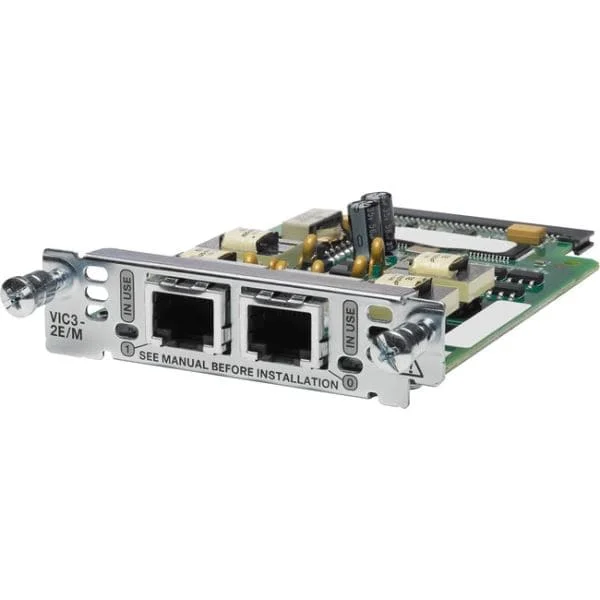
VIC3-2E/M (Two-port Voice Interface Card - BRI (NT and TE))
4.6 (5)- Network Module
- Cisco
- Ethernet
- 10Gbps
- SFP+
- TCP/IP
- PCIe
Est Value $500.00$139.63
72.1% offIn stockNewRefurbishedFirst-Time Buyer Discount – Get up to 2% additional off on your first order
ORM Rewards Earn $50 in Rewards + Free Expedited Delivery – Join Now!
Use eCoupon ORMSAVE10
eCoupon limited to 5 units
- FEARURED
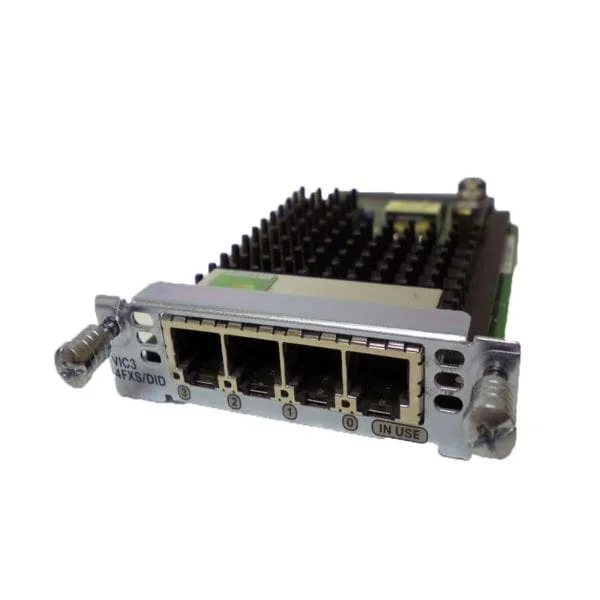
VIC-4FXS/DID (Two-port Voice Interface Card - E and M)
4.4 (5)- Voice Interface Card
- Cisco
- Telephony Module
- RJ-11
- SIP/H.323/MGCP
- PCIe
Est Value $800.00$114.58
85.7% offIn stockNewRefurbishedFirst-Time Buyer Discount – Get up to 2% additional off on your first order
ORM Rewards Earn $50 in Rewards + Free Expedited Delivery – Join Now!
Use eCoupon ORMSAVE10
eCoupon limited to 5 units
- BEST SELLING
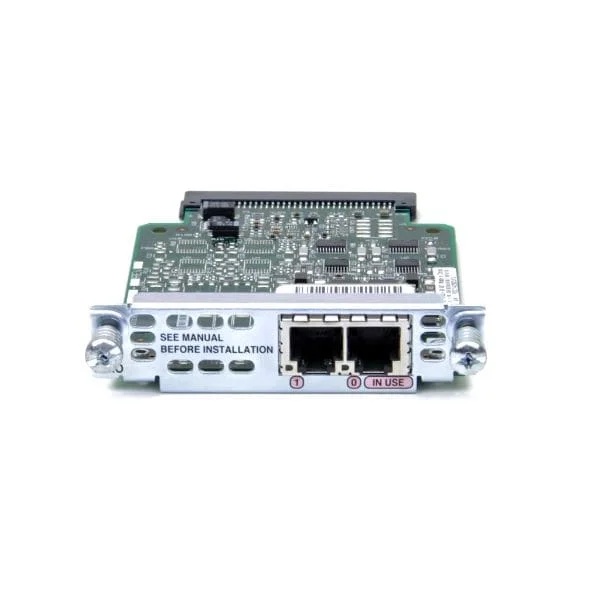
VIC2-2FXO (Two-Port Voice Interface Card- FXS and DID)
4.8 (5)- Voice Interface Card
- Cisco
- RJ-11
- SIP, SS7
- Modular
Est Value $506.00$52.50
89.6% offIn stockNewRefurbishedFirst-Time Buyer Discount – Get up to 2% additional off on your first order
ORM Rewards Earn $50 in Rewards + Free Expedited Delivery – Join Now!
Use eCoupon ORMSAVE10
eCoupon limited to 5 units

ORM Sales Advisors
Buying for your business? Get a personalised quote in under 2 hours. Talk to an expert
LEARNFilters (9) 
Questions & Answers
What are Vic, Vic2, and Vic3 Voice Cards?
Vic, Vic2, and Vic3 Voice Cards are modular telephony interfaces that enable high-quality voice processing, codec support, and seamless integration with PBX and VoIP systems.
What are the key differences between Vic, Vic2, and Vic3 Voice Cards?
Vic2 adds enhanced DSP performance and additional channel density over Vic, while Vic3 further improves echo cancellation, supports advanced codecs like G.729, and offers gigabit Ethernet connectivity.
Which telephony platforms are compatible with Vic series Voice Cards?
Vic series Voice Cards are compatible with major Asterisk-based PBX distributions, Linux telephony servers, and leading SIP/PRI gateways that support standard TDM or VoIP interfaces.
How do I install a Vic, Vic2, or Vic3 Voice Card?
Power down your server, insert the Vic series card into an available PCIe slot, secure the bracket, power on, and install the vendor drivers following the included quick-start guide.
What audio codecs are supported by Vic3 Voice Cards?
Vic3 Voice Cards support G.711, G.722, G.729, iLBC, GSM codecs and hardware-accelerated transcoding for hybrid TDM/VoIP deployments.
Can Vic series Voice Cards be hot-swapped?
No, Vic, Vic2, and Vic3 Voice Cards require a system reboot for safe recognition and initialization of hardware resources.
How do I update the firmware on a Vic Voice Card?
Download the latest firmware from the vendor support site, upload via CLI or GUI tool, and follow on-screen prompts to complete the secure update.
What network interfaces do Vic2 and Vic3 Voice Cards support?
Vic2 provides multiple T1/E1/J1 ports, while Vic3 adds Gigabit Ethernet for SIP trunking alongside the existing TDM interfaces.
How do I troubleshoot connectivity issues on a Vic series Voice Card?
Verify physical cabling, check port LEDs, review system logs for driver errors, ensure firmware and driver versions match, then reboot the host server.
What warranty and support options are available for Vic Voice Cards?
All Vic series cards include a one-year hardware warranty, with optional extended support plans offering next-business-day replacement and 24/7 technical assistance.
Where can I purchase genuine Vic, Vic2, and Vic3 Voice Cards?
Authorized resellers and the official vendor online store sell genuine Vic series Voice Cards with full warranty and support coverage.
Are Vic series Voice Cards suitable for high-density VoIP applications?
Yes, Vic2 and Vic3 deliver high channel densities, advanced DSP, and robust SIP support ideal for large-scale VoIP deployments.
What are the power requirements for Vic Voice Cards?
Vic series cards draw up to 15 W from the PCIe slot; verify your chassis power budget supports additional expansion cards before installation.
How can I optimize audio quality on Vic2 and Vic3 Voice Cards?
Enable hardware echo cancellation, select the appropriate codec profile, adjust gain settings, and apply quality-of-service policies on your network.
Do Vic series Voice Cards support SIP trunking out of the box?
Vic3 includes native SIP trunking over Gigabit Ethernet; Vic and Vic2 require an external gateway or software SIP stack for trunking functionality.
How do I verify the serial number and authenticity of my Vic Voice Card?
Check the printed serial on the card bracket, cross-reference it on the vendor portal, and scan the included QR code to confirm genuine product status.