United States
QK737A
$292.00$198.45
SAVE $93.55

Featured Deal
Hand-picked by our procurement team for standout value. This unit is offered at our sharpest price on current stock, verified against live market rates.
Name:

Added to cart 28 times recently
Ready to Ship
Certified Refurbished
Professionally inspected, bench-tested, and firmware-verified, with configurations wiped. Restored to full working order and backed by our warranty.

$1,078.65
$787.5027% off
Quantity:


3 Year Extended Warranty


Same-day Shipping

30-Day Money Back Guarantee
Shipping:
Payment:
3 Year Extended Warranty
Same-day Shipping
30-Day Money Back Guarantee
Need Additional Discount on Product?
Request a quote below - Get Exclusive Pricing and Support.
Shipping:
Payment:
SAVE $93.55
SAVE $30.16
SAVE $241.25
SAVE $54.16
SAVE $2,020.73
SAVE $2,284.70
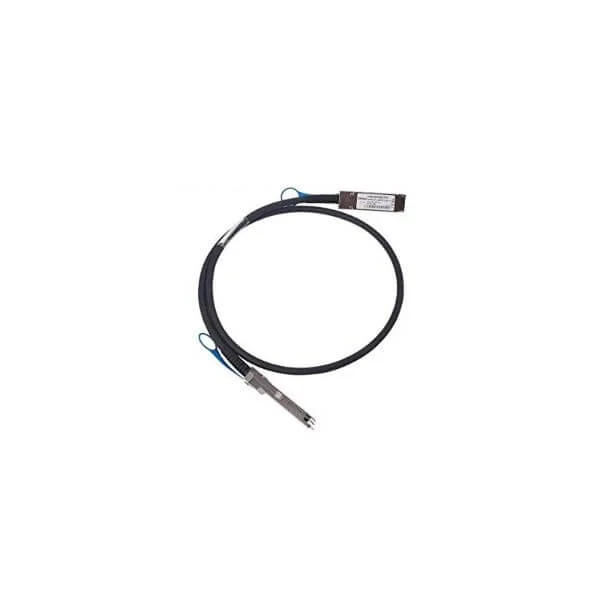
SAVE $194.00
QSFP-100G-SR1.2
Cisco QSFP-100G SR1.2 BiDi QSFP28 Transceiver, 100GbE SR-BiD...
Trusted by the Highest-Stakes Buyers
Federal agencies and Fortune 500 operations source through ORM Systems.
US Government & Defense




Enterprise Clients



Built Global. Stocked Local.
Regional teams and 25+ distribution partners keep stock near you and accountability in your time zone.
Buyer Protection on Every Order
Pay by PayPal or Revolut with full chargeback rights. Order on PO terms, Net-30 for government.
Verified By Federal Bodies
Every registration we claim is public record — check our federal contractor status yourself before you spend a dollar.



Since 2016, Enterprise-Trusted
Ten years serving buyers who audit their vendors. From federal agencies to 20,000+ enterprise clients worldwide.
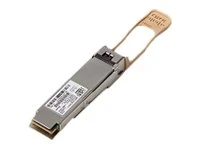
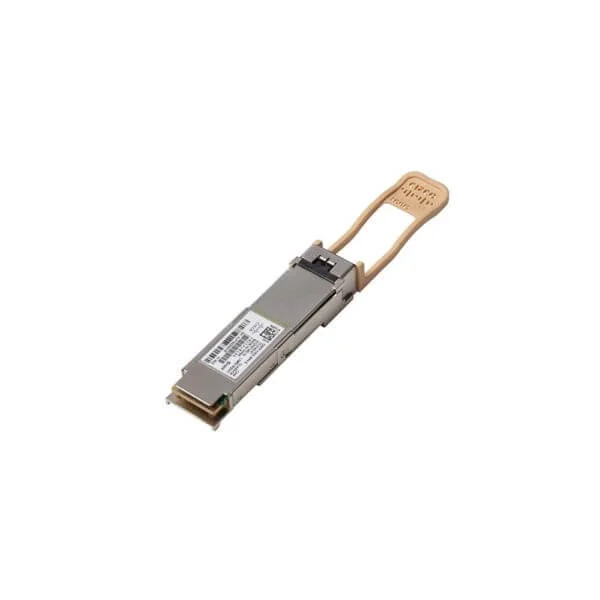
QSFP-100G-SR1.2 is a Cisco QSFP28 SR-BiDi optical transceiver for 100 Gigabit Ethernet short-reach links. It uses multimode fiber, duplex LC connectivity, and 855 nm plus 908 nm bidirectional wavelengths. The module supports 70 m over OM3, 100 m over OM4, and 150 m over OM5. Its two optical lanes carry 50 Gb PAM4 channels across a two-strand MMF plant. Cisco positions the optic for data center, enterprise core, distribution, and service provider access designs. This hot-swappable form factor plugs into Cisco 100G QSFP ports without replacing LC fiber trunks. Commercial temperature class operation suits controlled rack environments and planned refresh windows. Digital diagnostic monitoring works through the QSFP management interface for optical and module telemetry. Its LC interface keeps patching familiar for existing multimode distribution frames. QSFP-100G-SR1.2 helps teams reuse 10G, 40G, and 100G duplex MMF cabling during speed upgrades.
VCSEL transmitter lanes deliver short-wave bidirectional signaling across 855 nm and 908 nm windows. PIN receiver lanes deliver optical recovery from the paired MMF channel with 4 dBm overload tolerance. QSFP-100G-SR1.2 specifies -6 dBm to +4 dBm transmit power per lane at 100G. Receiver input requires -7.9 dBm minimum power per lane for the published optical budget. The electrical host interface follows IEEE 802.3bm 100GBASE-SR4 behavior through four 25G electrical lanes. PAM4 encoding maps two 50 Gb optical lanes into the aggregate 100GbE link. KP4 FEC reduces transmission errors at the 100Gbps data rate. The optical budget supports 1.9 dB link loss for OM3, OM4, and OM5 at 100G. Average optical power values guide acceptance testing. SFF-8665 defines the QSFP28 mechanical solution, while SFF-8636 defines common management access. The module draws 3.9 W maximum from a 3.3 V QSFP supply during operation. Cisco lists IEEE 802.3-2022, IEEE 802.3ba, IEEE 802.3bm, GR-20-CORE, GR-468-CORE, and RoHS 6 alignment.
QSFP-100G-SR1.2 fits Cisco QSFP-100G portfolios across validated switches and routers listed in Cisco compatibility tools. Network teams deploy it in leaf-spine fabrics, top-of-rack uplinks, aggregation layers, and 400G SR4.2 breakout designs. OM4 cabling supports the common 100 m target, while OM3 and OM5 cover shorter or extended SR-BiDi runs. ORM Systems offers this Cisco transceiver in new and refurbished condition for upgrade, sparing, and lifecycle programs. Each supplied unit receives compatibility screening, optical inspection, and serialized handling before dispatch. Procurement teams gain tested inventory, responsive sourcing support, and straightforward replacement planning. Project buyers receive practical condition choices, quote traceability, and support for standardized sparing lists. Engineering teams keep fiber maps stable while moving access and aggregation ports toward higher speed. Buy QSFP-100G-SR1.2 from ORM Systems when you need LC duplex 100GbE without new MPO trunks. Request a quote for single replacements, matched pairs, or volume procurement across multi-site refresh projects.
QSFP-100G-SR1.2 price for new stock is $997.50, a 7.5% saving from the Cisco list price of $1,078.65. QSFP-100G-SR1.2 refurb price is $787.50. QSFP-100G-SR1.2 is in stock and available for next-day dispatch. (terms applied)
Request bulk order quote for QSFP-100G-SR1.2 for additional pricing. Browse the full Cisco 100G Optical Modules series or explore all Cisco products.
Network architects place QSFP-100G-SR1.2 between leaf and spine switches where 100GbE bandwidth rides existing duplex LC multimode trunks. The SR-BiDi design avoids MPO conversion work, preserves OM4 patching, and keeps rack projects focused on port upgrades. PAM4 lanes and KP4 FEC maintain signal quality across the short-reach fiber budget. Operations teams standardize spare optics across validated Cisco QSFP ports, reduce cabling disruption, and deliver predictable east-west throughput for virtualized, AI, and storage traffic across the data center fabric with consistent operational telemetry.
Infrastructure teams deploy QSFP-100G-SR1.2 on top-of-rack uplinks that aggregate dense server traffic over duplex LC MMF. The optic supports 100 m over OM4, matching many row and pod layouts without changing patch panels. Cisco QSFP28 compatibility, DOM telemetry, and tested ORM Systems supply support controlled turn-up and spare pool management. The design strengthens rack-level bandwidth, keeps migration windows shorter, and delivers stable north-south paths for compute, storage, and virtualization clusters. Teams preserve cable maps, simplify rollback plans, and deliver tested 100G uplink capacity per rack.
Network planners use QSFP-100G-SR1.2 as the 100G endpoint in validated 400G SR4.2 breakout projects. A spine or top-of-rack 400G port fans out to four 100G SR-BiDi links, while LC multimode cabling remains in service. The approach phases bandwidth growth by rack, link group, or site. Procurement teams source matched optics through ORM Systems, align spares with Cisco platforms, and deliver measured 400G migration outcomes without broad fiber replacement. Operations teams preserve LC workflows, reduce patching risk, and document repeatable upgrade results.
Mon–Fri: [09:00-16:00]
Avg. response under 30 mins

| QSFP-100G-SR1.2 | 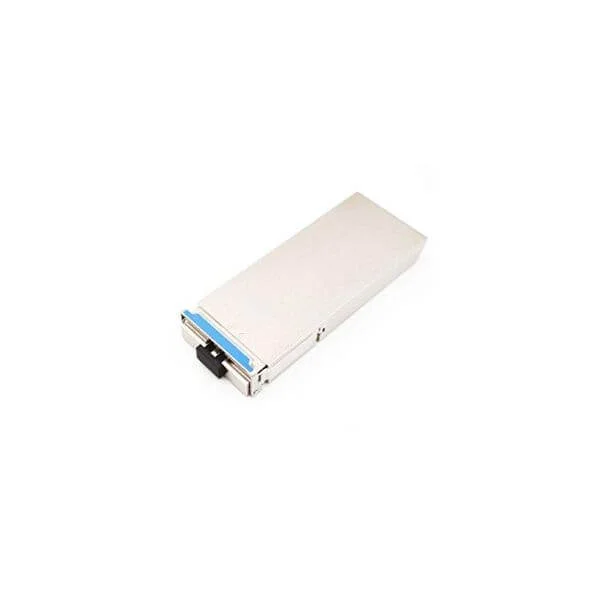 CFP2-100G-ER4 CFP2-100G-ER4 |  QSFP-100G-SM-SR QSFP-100G-SM-SR | 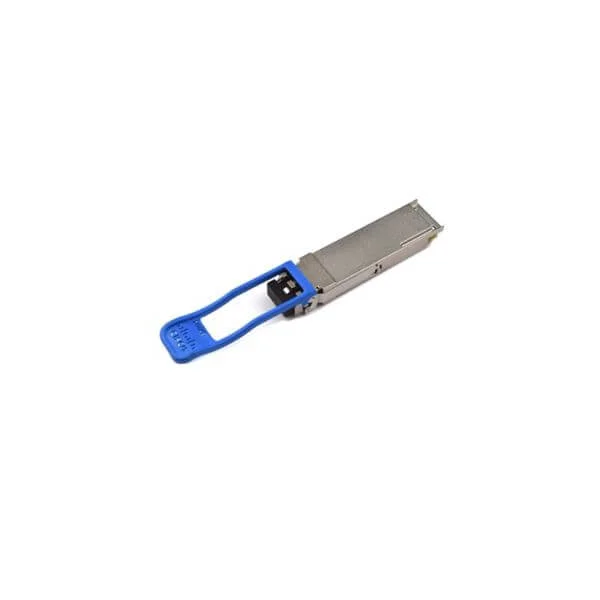 QSFP-100G-FR-S QSFP-100G-FR-S | QSFP-100G-SR4-S | |
|---|---|---|---|---|---|
| Product Type | Optical Transceiver | Transceiver | Transceiver | Transceiver | Optical Transceiver |
| Form Factor | QSFP28 | CFP2 | QSFP | QSFP28 | QSFP28 |
| Data Rate | 100 Gbps | 100G | 100G | 100G | 100 Gbps |
| Connector Type | Duplex LC | LC | MPO | LC | MPO-12 |
| Fiber Type | Multimode Fiber (MMF) | Single-mode | Multi-mode | Single-mode | Multi-Mode (MMF) |
| Operating Temperature | Commercial (+10 C to +60 C) | 0 to 70°C | 0 to 70°C | 0 to 70°C | Commercial (0°C to 70°C) |


Every unit is authentic, sourced through trusted and authorised channels, and serial-verified on request. Genuine networking and IT hardware, guaranteed, or your money back.

New products are backed by up to 3 years of extended warranty, and certified refurbished units by up to 3 months, for dependable protection on every order. Coverage is clear, honoured in full, and confirmed on each product page.

If a unit ever falls short, our streamlined RMA process gets a replacement to you fast, with advance replacement available to keep your network running. No jargon, no runaround.

Every device is inspected, bench-tested, and firmware-verified, with configurations wiped before dispatch. Additional testing can be arranged to confirm full working condition on request.

Our specialists assist with compatibility, configuration, licensing, and installation, before and after you buy. Real hardware expertise, whenever you need it.

dispatched quickly and shipped worldwide from regional hubs, fully tracked and insured.
Reviewed on the 27 August 2017

Clean LC upgrade path for our Cisco fabric. The optics arrived tested and labeled.
Reviewed on the 9 October 2018
Worked well for 100G BiDi links over existing OM4 trunks.
Reviewed on the 25 July 2018
Quote response was clear, and the matched pairs simplified deployment.
Reviewed on the 27 June 2018
Solid option for avoiding MPO changes during a 100G refresh.
Reviewed on the 24 January 2020
Good refurbished availability with useful compatibility checks before shipping.
Reviewed on the 11 July 2017
Lead time shifted slightly, but the modules passed turn-up without issues.
Reviewed on the 17 March 2019
Reliable Cisco SR-BiDi optics. Documentation and warranty details were handled well.
Pricing depends on condition, sourcing channel, requested quantity, and current Cisco optics availability. ORM Systems quotes QSFP-100G-SR1.2 after checking new and refurbished inventory, compatibility requirements, and delivery timing. Share the target quantity, destination, and required warranty preference so the sales team returns a practical price for your procurement plan.
Yes, ORM Systems sources new QSFP-100G-SR1.2 units when channel availability supports the request. New condition suits active refreshes, warranty-sensitive deployments, and environments with strict procurement controls. The team confirms Cisco part identity, packaging status, lead time, and commercial terms before issuing a quote for purchase approval.
Refurbished QSFP-100G-SR1.2 is often a practical option for spares, expansion, and lifecycle extension projects. ORM Systems checks tested refurbished stock, validates optical performance, and confirms cosmetic and warranty expectations before quoting. This route helps teams control budget while maintaining compatible 100G SR-BiDi connectivity across Cisco environments.
ORM Systems supports volume procurement for QSFP-100G-SR1.2 across data center refreshes, multi-site rollouts, and spare pool builds. Bulk quoting accounts for matched quantities, delivery phasing, warranty coverage, and condition mix. Provide the bill of materials and target deployment schedule so the team aligns sourcing with the project timeline.
Lead time varies with market supply, requested condition, and order size. ORM Systems checks available new and refurbished QSFP-100G-SR1.2 inventory before confirming dispatch timing. For urgent replacement needs, include required arrival dates, destination details, and platform context so the team prioritizes compatible stock and realistic shipping options.
Warranty coverage depends on the quoted condition, stock source, and commercial package. ORM Systems supplies tested QSFP-100G-SR1.2 units with warranty terms stated on the quote, with coverage options that reach up to three years. Confirm any support, replacement, or compliance requirements before purchase order release.
Yes, ORM Systems reviews the target Cisco platform, software context, and port type before quoting QSFP-100G-SR1.2. Compatibility checks reduce ordering errors, especially when teams mix 100G SR-BiDi, 40/100G BiDi, and 400G breakout optics. Share the switch or router model and intended link partner for review.
Matched pairs simplify deployment when both link ends require Cisco 100G SR-BiDi optics. Cisco states that QSFP-100G-SR1.2 operates with another QSFP-100G-SR1.2 for 100G connectivity. ORM Systems quotes pairs or project quantities with consistent condition, warranty terms, and delivery timing for cleaner rollout control during staging and support review.
QSFP-100G-SR1.2 focuses on 100G SR-BiDi service, while QSFP-40/100-SRBD supports dual 40G and 100G operation. Cisco notes that QSFP-100G-SR1.2 does not interoperate with QSFP-40/100-SRBD. Choose the SR1.2 optic for 100G-only BiDi links and planned 400G SR4.2 breakout alignment. Verify both endpoints and software support before scheduling maintenance.
QSFP-100G-SR1.2 uses SR-BiDi operation over duplex LC multimode fiber at 855 nm and 908 nm. QSFP-100G-SR-S uses a 100GBASE-SR1 approach over duplex LC with a single short-wavelength optical lane. Select QSFP-100G-SR1.2 where BiDi reuse and SR4.2 breakout plans drive the design. This choice protects the intended cabling design.
QSFP-100G-SR1.2 uses a duplex LC connection over two-strand MMF, which helps preserve existing LC cabling. QSFP-100G-SR4-S uses MPO-12 parallel fiber for 100GBASE-SR4 service. Teams choosing between them usually decide around installed fiber type, patching standards, and migration plans. That difference affects patch-panel planning and spare strategy.
QSFP-100G-SR1.2 provides a single 100G SR-BiDi link. Cisco states it also connects to 400G SR4.2 BiDi optics in a four-by-100G breakout model. Use it for leaf or server-side 100G endpoints when a 400G spine or top-of-rack port breaks into four optical channels. This pairing supports staged fabric upgrades.
QSFP-100G-SR1.2 uses the QSFP28 form factor for Cisco 100G QSFP ports. The module is hot swappable and follows the QSFP mechanical ecosystem referenced by SFF-8665. It fits short-reach 100GbE designs that need a pluggable optic instead of a fixed active cable assembly. Confirm port support through Cisco tools.
QSFP-100G-SR1.2 supports 100 Gigabit Ethernet operation. Cisco describes the module as a 100G SR-BiDi transceiver that aggregates two optical lanes for a 100Gbps link. The design maps host electrical lanes into 50 Gb PAM4 optical channels, aligning the optic with modern short-reach fabric requirements. It remains a 100G optic, not a 40G module.
QSFP-100G-SR1.2 requires laser-optimized multimode fiber. Cisco lists support for OM3, OM4, and OM5 MMF with 50 micron core specifications. The optic targets existing duplex LC multimode plants, making it useful for upgrades from 10G SR, 40G BiDi, and previous 100G duplex designs. Confirm fiber grade before installation.
QSFP-100G-SR1.2 uses a duplex LC optical connector. That connector choice separates it from MPO-based SR4 optics and supports reuse of two-strand multimode fiber runs. Cisco recommends compliant patch cords with PC or UPC connector finishes for these QSFP optics, except where specific products require APC MPO.
Cisco lists QSFP-100G-SR1.2 reach at 70 meters over OM3, 100 meters over OM4, and 150 meters over OM5 laser-optimized multimode fiber. The 100G link budget is 1.9 dB for OM3, OM4, and OM5 cases, including specified connector loss assumptions. Clean LC ends protect that budget.
QSFP-100G-SR1.2 uses bidirectional short-wave operation at nominal 855 nm and 908 nm. Cisco describes each module as having two transmit and receive channels across the 832 nm to 918 nm range. This wavelength pairing enables 100G traffic across a two-strand MMF connection. Match the far-end optic carefully.
QSFP-100G-SR1.2 supports digital diagnostics through the QSFP management interface, with monitoring functions aligned to the common management model used by QSFP28 optics. ORM Systems treats DOM and DDM verification as part of compatibility screening when preparing units for customer deployment or spare inventory. Telemetry helps confirm optical margins.
Cisco lists QSFP-100G-SR1.2 power consumption at 3.9 watts. This value helps planners calculate port-level power budgets, thermal loading, and spare capacity in high-density 100G switching platforms. Always verify the host platform optical power limits before finalizing large quantities for a populated chassis or fabric. Dense deployments need thermal review.
Cisco lists QSFP-100G-SR1.2 as an exception to the general commercial range, with operation from +10 C to +60 C. That range suits controlled data center and enterprise rack environments. Select a different industrial-temperature optic when the deployment involves outdoor cabinets or wider thermal exposure. Validate rack airflow during planning.
Cisco lists QSFP-100G-SR1.2 transmit power per lane from -6 dBm minimum to +4 dBm maximum at 100G. These values support link-budget planning for SR-BiDi MMF runs. Keep patching loss, connector condition, and fiber grade within the stated budget before placing the link into production. Record baseline power after turn-up.
Cisco lists QSFP-100G-SR1.2 receive power per lane down to -7.9 dBm at 100G, with +4 dBm as the maximum receive power. Treat the receive range as an optical budget requirement, then validate actual levels through platform telemetry after installation and link turn-up. Stable margins support reliable service.
Cisco references IEEE 802.3-2022, IEEE 802.3ba, IEEE 802.3bm, SFF-8665, SFF-8636, GR-20-CORE, GR-468-CORE, and RoHS 6 in the QSFP-100G module datasheet. The SR1.2 at-a-glance material also describes IEEE 802.3bm 100GBASE-SR4 compliance for the BiDi implementation. Use it alongside Cisco platform guidance during design reviews and acceptance testing.
Cisco highlights KP4 Forward Error Correction for reducing transmission errors at the 100Gbps data rate. PAM4-based short-reach designs rely on FEC behavior to preserve link quality across supported fiber budgets. Confirm the host port profile and platform software settings before activating production links. Keep settings consistent across paired endpoints.
Yes, Cisco states that the QSFP-100G-SR1.2 BiDi transceiver operates with another Cisco QSFP-100G-SR1.2 BiDi for 100G connectivity. Use the same optic type at both ends unless a validated 400G SR4.2 breakout design defines the far-end optic and fiber mapping. Label both link ends clearly before production turn-up.
Cisco states that QSFP-100G-SR1.2 operates with the same Cisco 100G SR1.2 BiDi optic for direct 100G connectivity. It also works in validated 400G SR4.2 breakout layouts where the far end maps four 100G BiDi channels correctly. Keep unvalidated BiDi families out of the link design.
OM4 is the common planning grade for QSFP-100G-SR1.2 because Cisco lists 100 meters over OM4. OM3 supports 70 meters, while OM5 supports 150 meters. Use clean, tested duplex LC patching and confirm modal bandwidth before relying on the full stated reach. Document fiber type in records.
QSFP-100G-SR1.2 suits leaf-spine networks that need short-reach 100G links over existing duplex LC MMF. It supports dense 100G fabric connections without converting the plant to MPO. The optic also aligns with future 400G SR4.2 breakout designs when validated platform combinations support that topology. This helps preserve cabling standards.
QSFP-100G-SR1.2 suits top-of-rack uplinks, server aggregation, and adjacent rack connections where duplex LC multimode runs already exist. The 100 m OM4 reach covers many rack-row layouts. Teams gain a 100G upgrade path while retaining familiar LC patching and short-reach operational practices. Verify switch optics support first.
Cisco states that QSFP modules are supported on Cisco switches and routers, with exact support controlled by the Cisco compatibility matrix. Platform validation depends on hardware family, software release, port capability, and optic interoperability rules. Check the target Cisco platform before ordering production quantities. ORM Systems assists with review.
Cisco lists QSFP-100G-SR1.2 as Laser Class 1M in the QSFP-100G module datasheet. The broader module family follows laser safety requirements under IEC 60825-1, IEC 60825-2, and applicable 21 CFR references. Follow site fiber safety practices whenever inspecting or patching active optical ports. Keep dust caps installed.
Cisco lists maximum outer dimensions for QSFP connector modules as 13.5 mm high, 18.4 mm wide, and 72.4 mm deep. It also states that Cisco QSFP connector modules typically weigh 100 grams or less. These values support asset records, spares storage, and logistics planning. Track serial numbers with shipments.
QSFP-100G-SR1.2 preserves duplex LC multimode cabling while delivering 100GbE short-reach bandwidth. That helps teams avoid MPO trunk changes during migration from 10G SR, 40G BiDi, or earlier 100G LC infrastructure. The result is a cleaner upgrade path with less patch-panel disruption. Existing fiber maps remain useful.
Provide quantity, preferred condition, destination country, target delivery date, Cisco platform model, software release if known, and intended link partner. Include whether the design uses 100G point-to-point SR-BiDi or 400G SR4.2 breakout. ORM Systems uses those details to align price, compatibility, and availability. Add warranty preferences for accuracy.