United States
AJ836A
$95.00$64.84
SAVE $30.16

Featured Deal
Hand-picked by our procurement team for standout value. This unit is offered at our sharpest price on current stock, verified against live market rates.
Name:

Added to cart 28 times recently
Ready to Ship
Certified Refurbished
Professionally inspected, bench-tested, and firmware-verified, with configurations wiped. Restored to full working order and backed by our warranty.

$335.00
$50.4085% off
Quantity:


3 Year Extended Warranty


Same-day Shipping

30-Day Money Back Guarantee
Shipping:
Payment:
3 Year Extended Warranty
Same-day Shipping
30-Day Money Back Guarantee
Need Additional Discount on Product?
Request a quote below - Get Exclusive Pricing and Support.
Shipping:
Payment:
SAVE $30.16
SAVE $93.55
SAVE $226.28
SAVE $54.16
SAVE $445.25
SAVE $302.45
SAVE $44.27
QSFP-40G-SR-BD
Cisco 40GBASE-SR BiDi QSFP+ Transceiver Module, 100m OM3 / 1...
Trusted by the Highest-Stakes Buyers
Federal agencies and Fortune 500 operations source through ORM Systems.
US Government & Defense




Enterprise Clients



Built Global. Stocked Local.
Regional teams and 25+ distribution partners keep stock near you and accountability in your time zone.
Buyer Protection on Every Order
Pay by PayPal or Revolut with full chargeback rights. Order on PO terms, Net-30 for government.
Verified By Federal Bodies
Every registration we claim is public record — check our federal contractor status yourself before you spend a dollar.



Since 2016, Enterprise-Trusted
Ten years serving buyers who audit their vendors. From federal agencies to 20,000+ enterprise clients worldwide.
QSFP-40G-SR-BD is a Cisco QSFP+ optical transceiver built for 40 Gigabit Ethernet host ports and optical uplinks. The module uses multimode fiber as its optical media for the transmitted and received light across short-distance links. Its front interface uses a duplex LC connector for the two-strand fiber termination at the panel. Transmit and receive operation uses the 832 to 918 nm wavelength range across both optical directions. The maximum documented reach is 150 m across supported laser-optimized multimode cabling. Commercial temperature class applies to this module under Cisco environmental operating conditions. DOM support provides digital optical monitoring through supported Cisco host software and interface commands. The hot-swappable hardware plugs directly into a Cisco QSFP port without powering down the platform. Cisco assigns a gray pull tab color to this bidirectional optic for visual module identification.
QSFP-40G-SR-BD uses two 20 Gbps transmit channels and two 20 Gbps receive channels. TX power range delivers -4 dBm to +5 dBm per lane. RX sensitivity reaches -6 dBm per lane. RX overload point is +5 dBm per lane. With IEEE 802.3ba compliance, the electrical interface follows 40 Gigabit Ethernet signaling requirements. At SFF-8436 compliance, the low-speed electrical interface follows the QSFP MSA management model. Through the QSFP MSA model, host communication uses a two-wire I2C interface. At 3.5 W, power consumption matches the Cisco QSFP cabling specification. Average transmitter power and receiver power apply per lane across the bidirectional optical design. Each optical direction separates send and receive traffic through assigned wavelength bands. Bit-error performance reaches better than 1E-15 under the documented short-reach condition. The longest engineered condition carries a 1E-12 BER guarantee. Optical specifications use average power values rather than peak readings. The BiDi channel structure aggregates paired transmit and receive paths inside the module.
Compatibility data maps this optic to Cisco Nexus 3000 Series, Nexus 5000 Series, and Nexus 6000 Series platforms. Cisco Nexus 7000 Series and Nexus 9000 Series platform families also appear in compatibility entries. It also maps to Cisco Catalyst 9300 Series, Catalyst 9400 Series, and Catalyst 9500 Series platforms. Deployment roles include data centre interconnect, campus backbone, aggregation, and edge uplink designs. OM3, OM4, and OM5 grades provide the required cabling options for documented link planning. These cable grades align with short structured links inside closets, rows, and campus aggregation rooms. Buy QSFP-40G-SR-BD from ORM Systems in new and certified refurbished condition. Certified refurbished stock is tested before dispatch for host recognition and optical operation. Order QSFP-40G-SR-BD online from ORM Systems to check price and request a quote. ORM Systems provides bulk quotation support for enterprise and volume buyers globally.
QSFP-40G-SR-BD price for new stock is $147.00, a 88.6% saving from the Cisco list price of $1,292.00. QSFP-40G-SR-BD refurb price is $50.40. QSFP-40G-SR-BD is in stock and available for next-day dispatch. (terms applied)
Request bulk order quote for QSFP-40G-SR-BD for additional pricing. Browse the full Cisco 40G Optical Modules series or explore all Cisco products.
QSFP-40G-SR-BD sits in a distribution-facing QSFP+ port and carries 40G traffic from an access switch or collapsed access block over duplex LC multimode fiber. Engineers use the module when the closet already has two-fiber OM3 or OM4 cabling and the supported reach stays within 100m on OM3 or 150m on OM4. DOM readings expose optical levels from the Cisco host during acceptance checks. The result is a 40G access-to-distribution handoff without rebuilding the fiber plant around MPO trunks, with documented operational visibility.
The transceiver occupies a 40G QSFP+ leaf or spine interface inside a short-reach data center fabric. QSFP-40G-SR-BD transports high-volume switch-to-switch traffic across duplex LC OM3 or OM4 patching, matching the BiDi optic at the opposite end of the link. Network teams validate Cisco platform support, fiber distance, link errors, and DOM values before adding the port to routed fabric links or aggregated uplinks. The result is predictable 40G fabric capacity over existing LC multimode cabling during steady-state production fabric operations.
QSFP-40G-SR-BD operates as the optical refresh point when a network moves selected short runs from 10G LC multimode links to 40G QSFP+ interfaces. The BiDi design keeps transmission on a duplex LC fiber pair, so engineers focus the migration on host ports, optics, software support, and fiber distance rather than replacing patch panels with MPO infrastructure. Matched modules at both ends establish the 40G link. The result is a controlled bandwidth upgrade that preserves usable OM3 or OM4 cabling cleanly.
Mon–Fri: [09:00-16:00]
Avg. response under 30 mins

| QSFP-40G-SR-BD |  CVR-CFP-4SFP10G CVR-CFP-4SFP10G |  QSFP-40GE-LR4-S QSFP-40GE-LR4-S |  QSFP-40G-BD-RX QSFP-40G-BD-RX | |
|---|---|---|---|---|
| Product Type | Optical Transceiver | Transceiver | Transceiver | Transceiver |
| Form Factor | QSFP+ | CFP | QSFP | QSFP |
| Data Rate | 40 Gbps | 10G | 40G | 40G |
| Connector Type | LC Duplex | LC | LC | LC |
| Operating Temperature | Commercial (+10°C to 70°C) | 0 to 70°C | 0 to 70°C | 0 to 70°C |


Every unit is authentic, sourced through trusted and authorised channels, and serial-verified on request. Genuine networking and IT hardware, guaranteed, or your money back.

New products are backed by up to 3 years of extended warranty, and certified refurbished units by up to 3 months, for dependable protection on every order. Coverage is clear, honoured in full, and confirmed on each product page.

If a unit ever falls short, our streamlined RMA process gets a replacement to you fast, with advance replacement available to keep your network running. No jargon, no runaround.

Every device is inspected, bench-tested, and firmware-verified, with configurations wiped before dispatch. Additional testing can be arranged to confirm full working condition on request.

Our specialists assist with compatibility, configuration, licensing, and installation, before and after you buy. Real hardware expertise, whenever you need it.

dispatched quickly and shipped worldwide from regional hubs, fully tracked and insured.
Reviewed on the 23 May 2020

Installed this QSFP40G BiDi for short-reach MMF links. Stable 40G throughput and reduced fiber usage significantly.
Reviewed on the 9 April 2017
Reliable short-range 40G connectivity with consistent signal quality across our data center.
Reviewed on the 23 November 2022
Seamless compatibility with existing OM3 fiber. Clean and stable performance.
Reviewed on the 5 November 2019
Perfect for fiber optimization projects. Maintains steady bandwidth.
Reviewed on the 8 June 2018
Dependable 40G BiDi optics with low latency and easy setup.
Reviewed on the 13 July 2017
Strong performance in high-density switching environments.
Reviewed on the 17 April 2026
Efficient and reliable QSFP solution for short-range deployments.
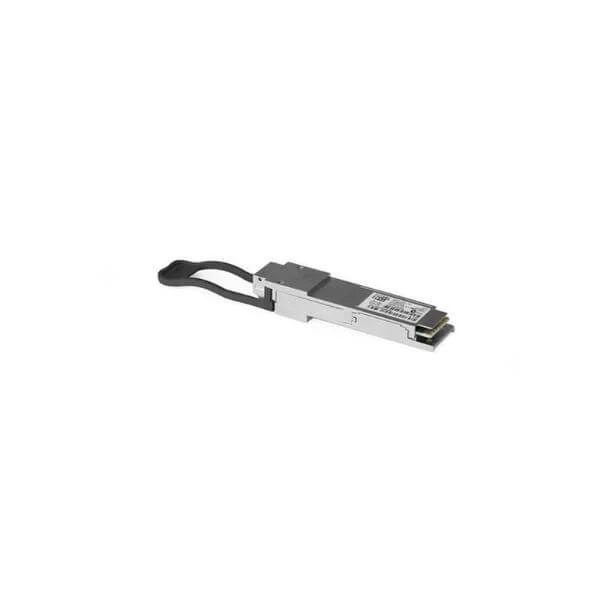
Cisco QSFP-40G-SR-BD is a 40GBASE-SR BiDi QSFP+ optical transceiver for short-reach multimode fiber links. It uses a duplex LC connector instead of an MPO/MTP parallel fiber interface, which helps reuse existing two-fiber MMF cabling. The module supports 40 Gigabit Ethernet over 100m OM3 or 150m OM4 fiber with DOM monitoring.
QSFP-40G-SR-BD identifies a Cisco QSFP+ form-factor module for 40 Gigabit Ethernet short-reach BiDi operation. QSFP refers to the Quad Small Form-factor Pluggable interface, 40G identifies the Ethernet speed, SR indicates short reach over multimode fiber, and BD identifies bidirectional transmission over a duplex LC fiber pair.
QSFP-40G-SR-BD is an optical transceiver module, not a switch, router, cable, or license. It plugs into a compatible Cisco 40G QSFP+ port and converts the electrical signal from the host platform into optical transmission over multimode fiber. Buyers usually order it when a 40G short-reach LC fiber connection is required.
QSFP-40G-SR-BD sits in Cisco's 40G QSFP+ optics family as the short-reach BiDi option for multimode fiber. It is positioned for 40G links where existing duplex LC cabling is preferred over MPO cabling. Adjacent Cisco 40G options include QSFP-40G-SR4 for MPO MMF, QSFP-40G-CSR4 for longer MMF reach, and QSFP-40G-LR4 for SMF.
QSFP-40G-SR-BD uses the QSFP+ form factor and supports 40 Gigabit Ethernet operation. It is designed for 40GBASE-SR BiDi links, where bidirectional optical lanes operate over a duplex multimode fiber pair. The module fits compatible Cisco QSFP+ ports on switches and routers that support this specific Cisco optic and software release.
QSFP-40G-SR-BD is a BiDi short-reach optical module that uses two wavelengths over the same duplex multimode fiber pair. Cisco 40G SR BiDi optics are commonly associated with 832nm and 918nm bidirectional operation. This design separates transmit and receive paths optically while keeping the physical cabling to a standard duplex LC connection.
QSFP-40G-SR-BD supports short-reach 40G connectivity over multimode fiber, with 100m reach on OM3 MMF and 150m reach on OM4 MMF. The module is intended for data center, campus, and wiring-closet distances where LC multimode fiber is already installed and the link budget matches Cisco 40GBASE-SR BiDi requirements.
QSFP-40G-SR-BD uses a duplex LC connector. That connector choice is a major distinction from Cisco QSFP-40G-SR4 and QSFP-40G-CSR4 modules, which use MPO/MTP parallel fiber connections. The duplex LC interface helps network teams move to 40G while retaining common two-fiber multimode cabling already used for many 10G links.
QSFP-40G-SR-BD includes DOM, also called digital optical monitoring, for supported Cisco platforms. DOM allows the host device to report operational values such as optical transmit power, receive power, temperature, and voltage where supported by software. These readings help operations teams check link health before troubleshooting fiber, patch panels, or the host port.
QSFP-40G-SR-BD requires duplex multimode fiber with LC connectors and the correct OM3 or OM4 rating for the target distance. OM3 supports up to 100m and OM4 supports up to 150m for this 40GBASE-SR BiDi optic. Patch leads, panels, and installed trunks should be checked for fiber grade, polarity, and loss budget before ordering.
QSFP-40G-SR-BD is used for short-distance 40G Ethernet links over duplex multimode fiber. Common roles include switch-to-switch uplinks, aggregation links, data center interconnects inside the same facility, and high-speed campus backbone segments. It is selected when 40G performance is needed without replacing existing LC MMF cabling with MPO parallel fiber infrastructure.
QSFP-40G-SR-BD fits small to large enterprise networks where 40G links stay within 100m on OM3 or 150m on OM4 fiber. It is practical for top-of-rack, end-of-row, aggregation, and campus distribution areas that already use multimode LC fiber. Longer campus or metro links normally require SMF optics such as Cisco QSFP-40G-LR4.
QSFP-40G-SR-BD suits high-throughput east-west and north-south traffic within short fiber runs. Examples include storage traffic, virtualization clusters, aggregation uplinks, dense access-layer uplinks, and data center leaf-to-spine links where 40G bandwidth is sufficient. The module's duplex LC BiDi design supports those workloads while avoiding an MPO cabling change.
QSFP-40G-SR-BD is often suitable for 10G to 40G refresh projects that already have duplex LC multimode fiber in place. Network teams still need compatible 40G QSFP+ ports at both ends, supported Cisco software, and verified fiber distance. The buying advantage is reduced cabling disruption compared with deploying MPO-based QSFP-40G-SR4 links.
QSFP-40G-SR-BD is associated with Cisco platforms that provide supported 40G QSFP+ interfaces, including selected Cisco Nexus 3000, Nexus 9000, Catalyst 9500, and modular Catalyst or aggregation platforms. Exact support depends on the hardware model, line card, and software release, so the Cisco compatibility matrix should be checked before final procurement.
QSFP-40G-SR-BD works with selected Cisco Nexus switches that support Cisco 40G QSFP+ BiDi optics, such as relevant Nexus 3000 and Nexus 9000 models. Compatibility should be matched to the exact switch SKU, NX-OS release, and port configuration. This check is especially important when mixing Cisco original optics with existing data center platforms.
QSFP-40G-SR-BD works with selected Cisco Catalyst platforms that include supported 40G QSFP+ ports, such as appropriate Catalyst 9500 models and modular Catalyst systems with compatible 40G interfaces. The switch model and IOS XE release determine support. Buyers should validate the platform in Cisco's transceiver compatibility tools before ordering production quantities.
QSFP-40G-SR-BD is tied to 40 Gigabit Ethernet operation and short-reach bidirectional optical transmission over multimode fiber. It participates in normal Ethernet switching or routing through the host Cisco platform rather than adding a separate protocol. Link planning should account for 40G interface mode, fiber loss, LC patching, DOM visibility, and platform support.
QSFP-40G-SR-BD uses duplex LC multimode fiber, while Cisco QSFP-40G-SR4 uses MPO/MTP parallel multimode fiber. Both target short-reach 40G links, but the cabling design is different. QSFP-40G-SR-BD is usually chosen when existing two-fiber LC infrastructure should remain in service, while QSFP-40G-SR4 fits sites already built around parallel fiber.
QSFP-40G-SR-BD focuses on duplex LC short-reach 40G connectivity over OM3 or OM4 MMF. Cisco QSFP-40G-CSR4 is also a 40G multimode optic, but it uses MPO/MTP parallel fiber and supports extended MMF reach compared with standard SR optics. QSFP-40G-SR-BD fits LC reuse, while QSFP-40G-CSR4 fits longer parallel-fiber runs.
QSFP-40G-SR-BD is for short-reach multimode fiber over duplex LC, with 100m OM3 and 150m OM4 distances. Cisco QSFP-40G-LR4 is for long-reach single-mode fiber over duplex LC, commonly used for 10km links. The right choice depends on fiber type first, then required distance and supported platform compatibility.
QSFP-40G-SR-BD is an alternative to QSFP-40G-SR4 in designs that prefer duplex LC cabling, but it is not a like-for-like cabling replacement. QSFP-40G-SR4 uses parallel MPO/MTP fiber and QSFP-40G-SR-BD uses BiDi optics over duplex LC. Existing cabling, patch panels, and transceiver support determine the correct replacement path.
QSFP-40G-SR-BD is commonly sourced through reseller channels in new, refurbished, or surplus condition depending on market availability. ORM Systems lists enterprise hardware for buyers comparing condition, warranty, and project budget. Availability should be checked at quote stage because Cisco optics supply changes by region, batch, and current demand.
QSFP-40G-SR-BD price is affected by condition, Cisco original sourcing, warranty term, available quantity, and urgency of delivery. Refurbished units normally cost less than new units, while large project quantities often qualify for better unit pricing. Buyers should compare the optic against QSFP-40G-SR4 and QSFP-40G-LR4 only after confirming cabling and distance requirements.
ORM Systems can quote bulk orders for QSFP-40G-SR-BD when multiple 40G BiDi optics are needed for refresh, migration, or spare inventory planning. Quantity, condition preference, target delivery date, and warranty expectations influence the final quote. Bulk pricing is especially relevant when matching transceivers across both ends of many switch-to-switch links.
QSFP-40G-SR-BD lead time depends on current stock, requested condition, order quantity, destination, and any required testing before dispatch. Reseller availability changes faster than manufacturer datasheet details, so lead time should be confirmed during quoting. Project buyers should include spare optics and fiber patch requirements in the same procurement request.
QSFP-40G-SR-BD remains a practical purchase when the network still uses 40G QSFP+ ports and duplex LC multimode fiber. It is less appropriate for new builds standardizing on 100G QSFP28, but it remains useful for extending existing Cisco 40G platforms, adding spares, and avoiding cabling replacement during staged upgrades.
ORM Systems offers warranty options for QSFP-40G-SR-BD based on product condition, sourcing, and order terms. Cisco original optics are typically handled as tested enterprise hardware, with warranty coverage confirmed at quote stage. Buyers should align warranty expectations with deployment criticality, spare requirements, and whether the order is new, refurbished, or surplus.
Refurbished QSFP-40G-SR-BD modules should be tested before dispatch to confirm physical condition, host recognition, optical operation, and DOM visibility where supported. Testing reduces the risk of failed deployment caused by damaged connectors, weak optical power, or unsupported inventory. ORM Systems positions refurbished enterprise hardware for buyers that need cost control with operational confidence.
QSFP-40G-SR-BD buyers should look for Cisco original identification, IEEE 40 Gigabit Ethernet alignment, laser safety compliance, and platform recognition through supported Cisco software. Optical modules should also meet the environmental and regulatory markings required for the deployment region. For production networks, compatibility validation matters as much as the transceiver's printed compliance label.
QSFP-40G-SR-BD is installed by inserting the module into a supported Cisco QSFP+ port, connecting duplex LC multimode fiber, and verifying that the host interface detects the optic. The link should then be checked for speed, port status, DOM readings, errors, and fiber distance. Standard ESD handling and clean LC connectors are important during installation.
QSFP-40G-SR-BD does not normally require a separate license by itself, but the host Cisco platform must support the 40G interface and transceiver type in its installed software image. Some switches also require the correct port mode or network license for interface operation. The platform, not the optic alone, determines licensing requirements.
QSFP-40G-SR-BD deployments require compatible Cisco 40G QSFP+ ports, duplex LC OM3 or OM4 multimode fiber, clean patch panels, and matching optics at both ends of the link. Useful operational tools include fiber cleaning kits, optical inspection tools, DOM commands on the Cisco platform, and documented switch software compatibility checks.
UK buyers can purchase QSFP-40G-SR-BD through ORM Systems for Cisco 40G BiDi transceiver sourcing, quote comparison, and project procurement. The order request should include required quantity, condition preference, delivery location, target date, and host Cisco platform. That information helps match price, availability, warranty, and lead time to the deployment.
ORM Systems supports international procurement requests for QSFP-40G-SR-BD, subject to availability, shipping destination, order value, and applicable export or carrier requirements. International buyers should confirm quantity, condition, delivery deadline, and destination details during quoting. For multi-site rollouts, consolidated sourcing helps standardize optics across the same Cisco 40G environment.