 United States
Router Solutions Cisco ASR 5000
Optimize your network with the Cisco ASR 5000 router. Delivering robust performance, superior security, and seamless integration for enterprise connectivity, it is engineered for reliability, scalability and efficiency.
Talk to an expert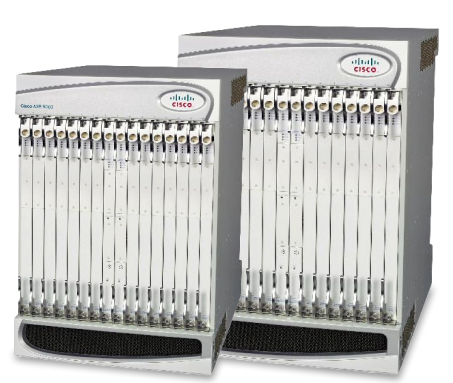
3 Matching results
- BEST SELLING
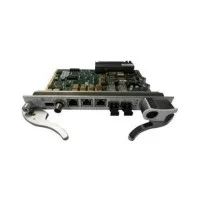
ASR5K-SPS3-3PN-K9 (Switch Processor I/O, 3-Pin BITS with Stratum 3)
4.4 (5)- Enterprise Router
- Cisco
- IPSec / SSL VPN / GRE / DMVPN / FlexVPN
- AC Power Supply / Redundant
- OSPF / BGP / EIGRP / MPLS / IS-IS / RIP / Static Routing
- Modular
Est Value $12,500.00
$6,172.04
50.6% offIn stockNewRefurbishedFirst-Time Buyer Discount – Get up to 2% additional off on your first order
ORM Rewards Earn $50 in Rewards + Free Expedited Delivery – Join Now!
Use eCoupon ORMSAVE10
eCoupon limited to 5 units
- BEST SELLING
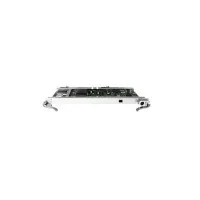
ASR5K-0110G-MM-K9 (XGLC 1-Port 10 Gigabit Ethernet Line Card w/MM SFP+)
4.8 (5)- Enterprise Router
- Cisco
- IPSec / SSL VPN
- AC Power Supply / Redundant
- OSPF / BGP / IS-IS / Static Routing
- Modular
Est Value $45,000.00$623.44
98.6% offIn stockNewRefurbishedFirst-Time Buyer Discount – Get up to 2% additional off on your first order
ORM Rewards Earn $50 in Rewards + Free Expedited Delivery – Join Now!
Use eCoupon ORMSAVE10
eCoupon limited to 5 units
- BEST SELLING
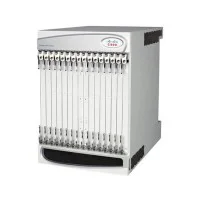
ASR5000-CHS-SYS-K9 (ASR-5000 Multimedia Core Platform Complete Chassis)
0 (0)- Aggregation Services Router
- Cisco
- IPSec / SSL VPN / GRE / DMVPN / FlexVPN
- AC Power Supply / DC Power Supply / Redundant
- OSPF / BGP / EIGRP / MPLS / IS-IS / RIP / Static Routing
- Fiber Optic
- Modular
Est Value $164,314.50$82,157.25
50% offIn stockNewRefurbishedFirst-Time Buyer Discount – Get up to 2% additional off on your first order
ORM Rewards Earn $50 in Rewards + Free Expedited Delivery – Join Now!
Use eCoupon ORMSAVE10
eCoupon limited to 5 units

ORM Sales Advisors
Buying for your business? Get a personalised quote in under 2 hours. Talk to an expert
LEARNFilters (3) 
Questions & Answers
What is the Cisco Router ASR 5000?
The Cisco ASR 5000 is a high-performance service router designed for 4G/5G mobile core and fixed-line service provider networks, delivering scalable control-plane and data-plane functions.
What are the key features of the Cisco ASR 5000?
Key features include sub-microsecond deep packet inspection, multi-terabit throughput, subscriber session scale to millions, integrated security, and support for virtualized network functions (VNFs).
What performance throughput does the ASR 5000 deliver?
The ASR 5000 platform supports up to 960 Gbps of sustained throughput per chassis with line-rate session processing and low latency for real-time services.
Which use cases does the ASR 5000 address?
It addresses mobile packet core, broadband aggregation, policy enforcement, subscriber management, and virtualized service chaining for Tier 1 service providers.
How does the ASR 5000 ensure scalability?
The modular chassis supports N+1 slot expansion for line cards and control blades, enabling seamless scale-out without service interruption.
What high-availability features are included?
It offers redundant control and data-plane modules, non-disruptive software upgrades, stateful switchover, and hot-swappable components to guarantee 5-9s availability.
Which security capabilities are integrated?
Integrated features include deep packet inspection, DDoS mitigation, subscriber and application firewalling, and secure management with role-based access control.
What interface options are available on the ASR 5000?
It supports 100-Gbps QSFP28, 40-Gbps QSFP+, 10-Gbps SFP+, and 1-Gbps SFP interfaces, plus dedicated management and synchronization ports.
What software powers the ASR 5000?
The platform runs Cisco’s Network Services Manager (NSM) software with real-time analytics, policy control, and support for NFV orchestration frameworks.
How is licensing managed on the ASR 5000?
It uses a flexible, on-demand licensing model based on throughput, feature sets, and subscriber scale, all managed centrally via Cisco Prime or NSM.
What are the environmental specifications?
The chassis operates in temperatures from 0–45 °C, supports NEBS Level 3, ETSI standards, and features front-to-back air cooling for data-center efficiency.
What are the physical installation requirements?
It fits a standard 19-inch rack, requires 50 A at 12 VDC or 100 A at ‑48 VDC, with redundant power-feed units and cable clearance per Cisco installation guidelines.
How can operators monitor the ASR 5000?
Operators can use Cisco Prime, SNMP, NetFlow, syslog, and REST-based APIs for real-time performance, fault, and configuration monitoring.
What support and maintenance options are available?
Cisco offers Smart Net Total Care, software updates, 24x7 technical support, advanced hardware replacement, and access to online resources and TAC.
How does the ASR 5000 differ from the ASR 9000 series?
The ASR 5000 targets mobile-core and policy enforcement at scale, while the ASR 9000 focuses on edge aggregation, MPLS, and optical transport services.
What is the migration path after ASR 5000 end-of-sale?
Cisco recommends migration to the ASR 5000v virtualized platform or the Cisco Network Convergence System (NCS) series with automated transition tools for minimal downtime.