 United States
Servers HPE Apollo 4530
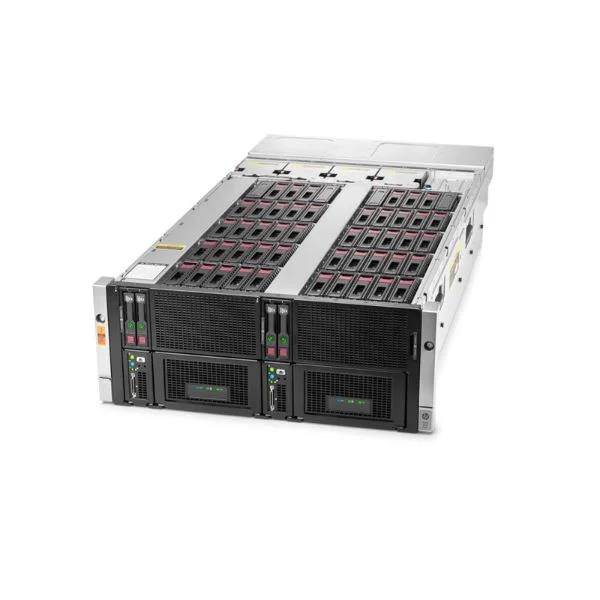
Engineered for optimized performance, the HPE Apollo 4530 Servers deliver unparalleled scalability and reliability, empowering enterprise data centers with advanced compute, storage, and management capabilities.
Talk to an expert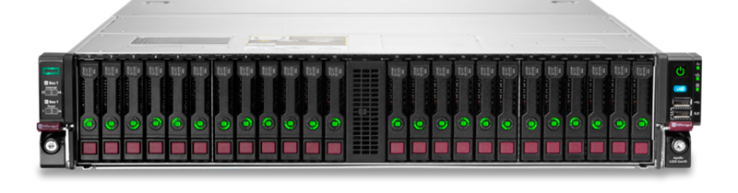
1 Matching results
799581-B23 (HPE Apollo 4530 Servers)
4.6 (5)- Server
- Hpe
- Rackmount
- 2U
- Intel
- Intel Xeon Scalable
- Xeon 3rd Gen
Est Value $1,146.69
$978.88
14.6% offIn stockRefurbishedFirst-Time Buyer Discount – Get up to 2% additional off on your first order
ORM Rewards Earn $50 in Rewards + Free Expedited Delivery – Join Now!
Use eCoupon ORMSAVE10
eCoupon limited to 5 units

ORM Sales Advisors
Buying for your business? Get a personalised quote in under 2 hours. Talk to an expert
LEARNFilters (1) 
Questions & Answers
What is the HPE Apollo 4530 Server?
The HPE Apollo 4530 Server is a purpose-built, high-density storage node designed for data-intensive workloads such as Big Data, HPC, and analytics, delivering up to 720 TB in a 2U form factor.
What are the key specifications of the HPE Apollo 4530?
The Apollo 4530 features dual Intel Xeon Scalable processors, up to 3 TB of DDR4 memory, 24 hot-swap 3.5″ drive bays, HPE Smart Array controllers, and flexible networking options up to 100 GbE.
Which workloads are best suited for the HPE Apollo 4530?
The server is optimized for Big Data, HPC, AI/ML training, software-defined storage, and mass data repositories where high capacity, throughput, and dense form factors are critical.
How much raw storage capacity does the HPE Apollo 4530 support?
The HPE Apollo 4530 supports up to 24 hot-swap 3.5″ SAS/SATA drives for a maximum of 720 TB raw capacity per 2U node using 30 TB drives.
Which processors are supported by the Apollo 4530?
It supports dual Intel Xeon Scalable processors (up to 28 cores each) for high parallel compute performance in data-intensive environments.
What memory configurations are available on the Apollo 4530?
The server offers 24 DIMM slots with up to 3 TB of DDR4 SmartMemory, delivering balanced memory bandwidth and capacity for demanding workloads.
How does remote management work on the HPE Apollo 4530?
Integrated HPE iLO 5 provides secure remote management with scripting, firmware updates, health monitoring, and out-of-band access for zero-touch provisioning.
What networking options are available for the Apollo 4530?
Choose from onboard FlexLOM and PCIe networking up to 100 GbE, including 10/25/40/50 GbE adapters, to match your data-center fabric requirements.
How energy efficient is the HPE Apollo 4530?
The server features HPE Flexible Slot power supplies with up to 94% efficiency, advanced thermal design, and dynamic power capping to minimize PUE and operating costs.
Which operating systems are supported on the Apollo 4530?
Supported OSes include RHEL, CentOS, Ubuntu, SUSE, VMware ESXi, Microsoft Windows Server, and other certified Linux distributions for storage and compute.
How scalable is the storage in the Apollo 4530?
Scale out by deploying multiple nodes in an HPE 4U chassis or HPE Synergy, or integrate with HPE StorageWorks arrays to expand capacity and performance seamlessly.
What security features are included with the Apollo 4530?
Built-in security includes Secure Boot, Silicon Root of Trust, optional self-encrypting drives, iLO authentication, and chassis intrusion detection for data protection.
How does the Apollo 4530 integrate with HPE OneView?
HPE OneView provides unified infrastructure automation, firmware baseline management, and policy-based provisioning for rapid deployment and lifecycle control.
What warranty and support options are available for the Apollo 4530?
Standard warranty is 3 years next business day hardware support; optional Care Pack services include 24×7 coverage, proactive management, and performance optimization.
Can the Apollo 4530 handle virtualization workloads?
Yes. With dual Xeon CPUs, large memory footprints, and high I/O density, it supports enterprise virtualization with VMware vSphere, Microsoft Hyper-V, and KVM.
What is the typical price range for the HPE Apollo 4530?
Pricing varies by configuration but typically starts around $20,000 USD for entry-level nodes and scales with CPU, memory, storage, and networking options.