 United States
Servers HPE Apollo 6000 Performance
Engineered for enterprise-grade computing, the HPE Apollo 6000 delivers unparalleled performance, scalability, and reliability while optimizing infrastructure with robust processing power, energy efficiency, and advanced virtualization capabilities.
Talk to an expert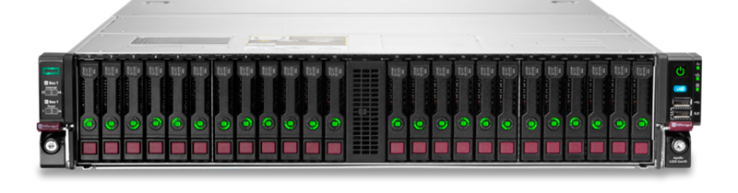
1 Matching results
859362-B21 (HPE Apollo 6000 Servers)
4.6 (5)- Server
- Hpe
- Rackmount
- 2U
- Intel
- Intel Xeon Scalable
- Xeon 3rd Gen
Est Value $1,418.64
$1,211.03
14.6% offIn stockRefurbishedFirst-Time Buyer Discount – Get up to 2% additional off on your first order
ORM Rewards Earn $50 in Rewards + Free Expedited Delivery – Join Now!
Use eCoupon ORMSAVE10
eCoupon limited to 5 units

ORM Sales Advisors
Buying for your business? Get a personalised quote in under 2 hours. Talk to an expert
LEARNFilters (1) 
Questions & Answers
What is the HPE Apollo 6000 Server?
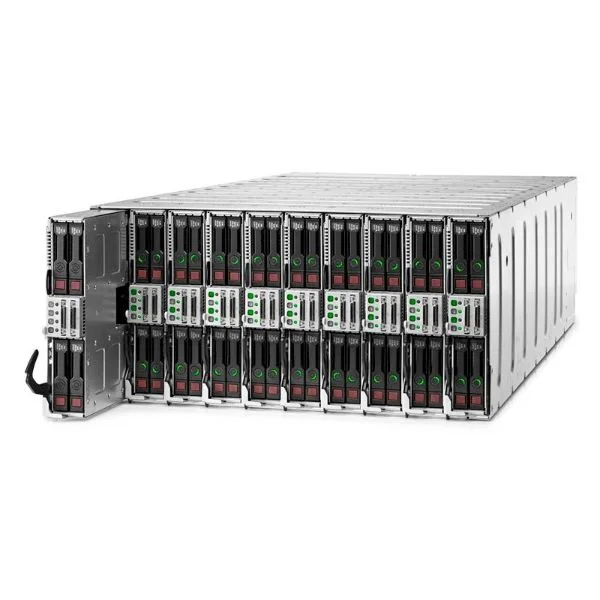
The HPE Apollo 6000 Servers are high-density, high-performance computing systems engineered for demanding workloads such as high-performance computing (HPC), artificial intelligence (AI) training, and big data analytics.
Which processors power HPE Apollo 6000 Servers?
HPE Apollo 6000 Servers support dual 3rd Gen Intel Xeon Scalable processors with up to 40 cores per socket, delivering industry-leading compute performance for parallel workloads.
How much memory can I install in an HPE Apollo 6000 Server?
Each HPE Apollo 6000 node accommodates up to 24 DDR4 DIMM slots, supporting up to 6 TB of memory per two-node chassis for in-memory analytics and large dataset processing.
What storage options are available on HPE Apollo 6000 Servers?
HPE Apollo 6000 Servers offer flexible drive bays for up to 24 SFF NVMe, SAS, or SATA drives per chassis, plus optional high-capacity HDD or NVMe flash modules for tiered storage.
What are the key features of HPE Apollo 6000 Servers?
Key features include ultra-dense compute design, advanced liquid or air cooling, integrated HPE OneView management, flexible storage expansion, and support for GPU-accelerated workloads.
What are the primary use cases for HPE Apollo 6000 Servers?
HPE Apollo 6000 Servers excel in HPC simulation, AI/ML model training, genomics sequencing, weather forecasting, and oil & gas seismic processing.
How do HPE Apollo 6000 Servers differ from HPE ProLiant Servers?
Unlike general-purpose ProLiant servers, HPE Apollo 6000 Servers are optimized for maximum compute density, advanced cooling, and scale-out performance in HPC and big data environments.
Are HPE Apollo 6000 Servers suitable for high-performance computing?
Yes, HPE Apollo 6000 Servers are specifically designed for HPC workloads, offering optimized network fabrics, high-core CPUs, GPU support, and efficient cooling for 24/7 operation.
Can I install GPUs in an HPE Apollo 6000 Server?
HPE Apollo 6000 Servers support up to eight single-width or four double-width GPUs per chassis, enabling accelerated AI training and inference at scale.
What management tools are available for HPE Apollo 6000 Servers?
Management is streamlined with HPE Integrated Lights-Out (iLO) for remote management, HPE OneView for infrastructure automation, and optional HPE InfoSight for AI-driven operations.
What networking options do HPE Apollo 6000 Servers support?
These servers support onboard 10/25/100 GbE and optional HDR InfiniBand adapters, providing low-latency, high-bandwidth connectivity for clustered environments.
Which operating systems are compatible with HPE Apollo 6000 Servers?
HPE Apollo 6000 Servers support major Linux distributions (RHEL, SLES, Ubuntu) and Windows Server, with validated drivers and firmware for peak performance.
How reliable are HPE Apollo 6000 Servers?
HPE Apollo 6000 Servers feature redundant power supplies, hot-plug fans, ECC memory, and advanced error-correction to ensure continuous operation and data integrity.
What are the power and cooling requirements for HPE Apollo 6000 Servers?
Designed for up to 9 kW per rack, HPE Apollo 6000 Servers support both air-cooled and direct liquid-cooled configurations to optimize data center efficiency.
How scalable are HPE Apollo 6000 Server deployments?
HPE Apollo 6000 Servers scale from a single chassis to multi-rack HPC clusters, with unified management and flexible network expansion for growing computational demands.
What warranty and support options are available for HPE Apollo 6000 Servers?
HPE offers a 3-year parts, labor, and travel warranty with 24×7 phone support, plus optional HPE Foundation Care and HPE Proactive Care for accelerated issue resolution.