 United States
Servers Hpe Apollo K6000
Engineered for superior efficiency and robust performance, the Hpe Apollo K6000 servers deliver unparalleled scalability and reliability for mission-critical applications, ensuring optimal data center productivity.
Talk to an expert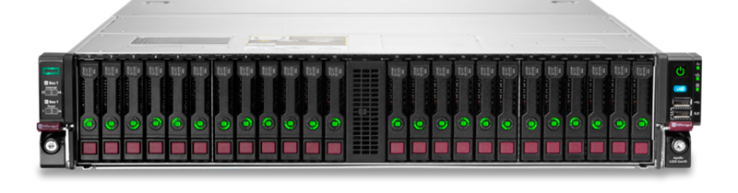
1 Matching results
847077-B21 (HPE Apollo k6000 Servers)
5 (5)- Server
- Hpe
- Rackmount
- 2U
- Intel
- Intel Xeon Scalable
- Xeon 3rd Gen
Est Value $1,378.12
$689.06
50% offIn stockRefurbishedFirst-Time Buyer Discount – Get up to 2% additional off on your first order
ORM Rewards Earn $50 in Rewards + Free Expedited Delivery – Join Now!
Use eCoupon ORMSAVE10
eCoupon limited to 5 units

ORM Sales Advisors
Buying for your business? Get a personalised quote in under 2 hours. Talk to an expert
LEARNFilters (1) 
Questions & Answers
What are the key features of HPE Apollo K6000 Servers?
HPE Apollo K6000 Servers deliver high-density storage with up to 12 Direct-to-Node cartridges, dual Intel Xeon Scalable processors, 6 TB memory per node, and advanced thermal design for maximizing data center efficiency.
Which workloads are best suited for HPE Apollo K6000 Servers?
HPE Apollo K6000 Servers excel in high-performance computing, big data analytics, machine learning, and software-defined storage environments requiring dense I/O and cost-effective scalability.
How does HPE Apollo K6000 optimize storage density?
By supporting 12 Direct-to-Node cartridges per server chassis, HPE Apollo K6000 achieves up to 345 TB raw capacity in 2U, enabling industry-leading storage density without sacrificing performance.
Which processors and memory configurations are supported?
HPE Apollo K6000 Servers support dual Intel Xeon Scalable processors up to 205W TDP and six DDR4 DIMM slots per node, providing up to 6 TB of memory per node for demanding workloads.
What storage options are available on HPE Apollo K6000 Servers?
HPE Apollo K6000 offers NVMe SSDs, SAS HDDs, and optional NVMe caching per cartridge, enabling tiered storage performance from archival to ultra-low latency.
How energy efficient are HPE Apollo K6000 Servers?
With advanced liquid-cooled options and optimized airflow, HPE Apollo K6000 Servers reduce cooling costs by up to 30% and improve power usage effectiveness (PUE) in hyperscale data centers.
What networking capabilities does the Apollo K6000 offer?
HPE Apollo K6000 supports up to two on-board 25/100 Gb Ethernet ports and multiple PCIe 3.0 slots for InfiniBand or additional NICs, ensuring low-latency, high-throughput connectivity.
How scalable is the HPE Apollo K6000 platform?
Designed for horizontal scaling, HPE Apollo K6000 chassis can be clustered into 10s or 100s of nodes, delivering petabyte-scale storage and multi-PFLOPS compute in a single rack.
What management tools are included with HPE Apollo K6000?
HPE Apollo K6000 integrates with HPE OneView for automated provisioning, firmware management, and health monitoring, reducing deployment time and operational complexity.
Can HPE Apollo K6000 Servers support virtualization?
Yes. HPE Apollo K6000 Servers are certified for VMware vSphere, Microsoft Hyper-V, and KVM, enabling efficient VM consolidation and dynamic resource allocation.
Which operating systems are compatible with HPE Apollo K6000?
HPE Apollo K6000 Servers support Red Hat Enterprise Linux, SUSE Linux Enterprise Server, CentOS, Ubuntu, VMware ESXi, and Microsoft Windows Server for broad application coverage.
What security features are built into HPE Apollo K6000?
HPE Apollo K6000 includes silicon root of trust, secure firmware validation, optional self-encrypting drives, and role-based access control to safeguard data and hardware integrity.
What warranty and support options are available?
HPE offers a 3-year parts, labor, and onsite support warranty for Apollo K6000, with optional HPE Foundation Care and Proactive Care Service Packs for accelerated response and preventive maintenance.
How do I integrate HPE Apollo K6000 into my data center?
HPE Apollo K6000 uses standard 19-inch rack mounting, Converged System architecture, and HPE OneView API for seamless integration with existing power, cooling, and network infrastructures.
What is the expected ROI of deploying HPE Apollo K6000 Servers?
By increasing compute and storage density while lowering TCO through efficient cooling and automated management, HPE Apollo K6000 typically achieves ROI in under 12 months for data-intensive enterprises.
What are typical use cases for HPE Apollo K6000 in HPC and big data?
HPE Apollo K6000 Servers power genomics sequencing, seismic processing, financial risk analysis, and distributed file systems like HDFS and Ceph, delivering high throughput and scalable capacity.