 United States
Network Switches HPE FlexFabric 5930
Experience unmatched enterprise-grade performance with HPE FlexFabric 5930 Switches delivering robust, scalable connectivity, enhanced security, and superior management capabilities for optimized, future-ready network infrastructure deployments ensuring unparalleled efficiency.
Talk to an expert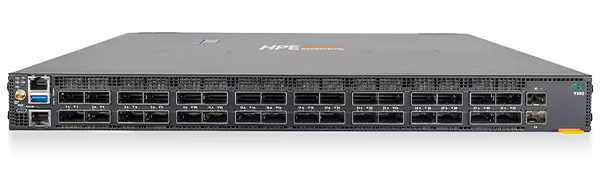
5 Matching results
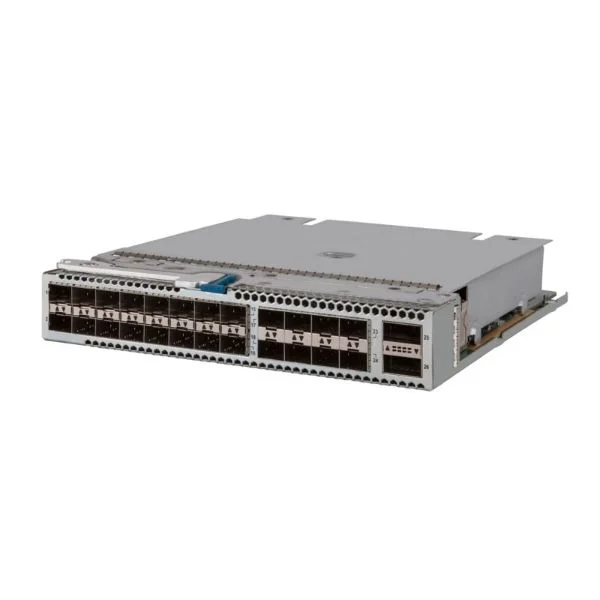
JH180A (5930 24P SFP+ AND 2P QSFP+ MOD PL-NC)
4.8 (5)- Switch
- Hpe
- AC Power Supply
- Layer 2 / Layer 3
- Rack-mount
- 120 W
- 24–48 Ports
Est Value $518.13
$53.55
89.7% offIn stockNewRefurbishedFirst-Time Buyer Discount – Get up to 2% additional off on your first order
ORM Rewards Earn $50 in Rewards + Free Expedited Delivery – Join Now!
Use eCoupon ORMSAVE10
eCoupon limited to 5 units
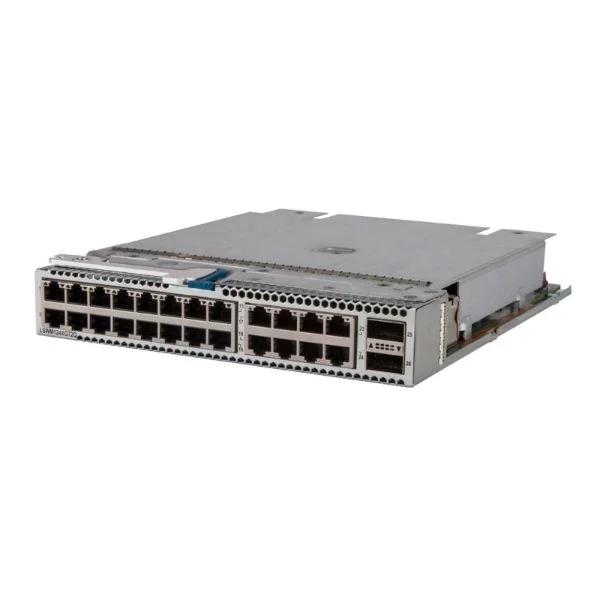
JH182A (5930 24P 10GBASE-T AND 2P QSFP+ MOD PL-NC)
4.6 (5)- Switch
- Hpe
- AC Power Supply with optional redundant module
- Layer 2 / Layer 3
- Rack-mount
- 65 W
- 24–48 Ports
Est Value $378.00$179.83
52.4% offIn stockNewRefurbishedFirst-Time Buyer Discount – Get up to 2% additional off on your first order
ORM Rewards Earn $50 in Rewards + Free Expedited Delivery – Join Now!
Use eCoupon ORMSAVE10
eCoupon limited to 5 units
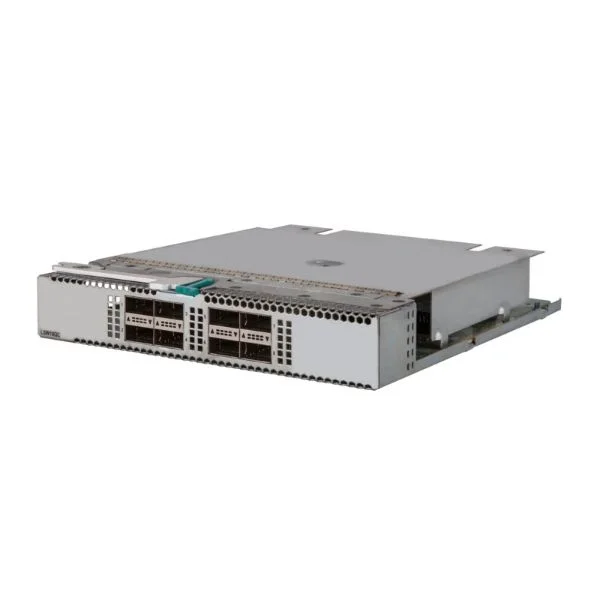
JH183A (5930 8PORT QSFP+ MODULE PL-NC)
4.4 (5)- Switch
- Hpe
- Redundant Power Supply / AC Power Supply
- Layer 2 / Layer 3
- Rack-mount
- 60 W
- 24–48 Ports
Est Value $709.78$56.24
92.1% offIn stockNewRefurbishedFirst-Time Buyer Discount – Get up to 2% additional off on your first order
ORM Rewards Earn $50 in Rewards + Free Expedited Delivery – Join Now!
Use eCoupon ORMSAVE10
eCoupon limited to 5 units
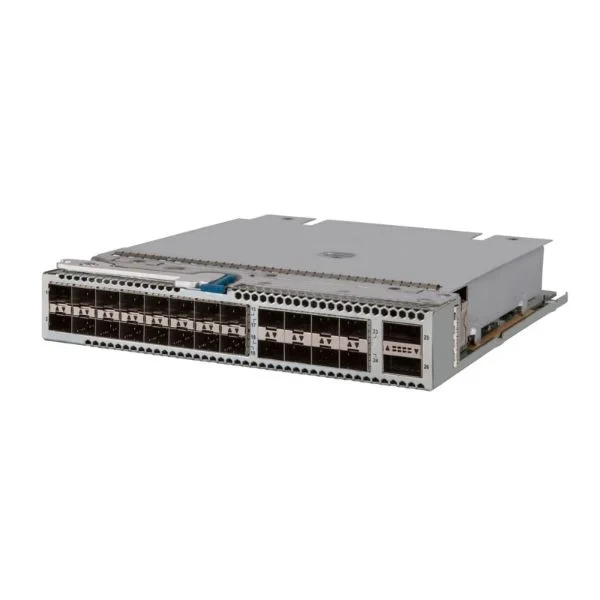
JH181A (5930 24P SFP+ AND 2P QSFP+ MOD W MSEC PL-NC)
4.4 (5)- Switch
- Hpe
- AC Power Supply
- Layer 2 / Layer 3
- Rack-mount
- 120 W
- 24–48 Ports
Est Value $723.12$617.31
14.6% offIn stockRefurbishedFirst-Time Buyer Discount – Get up to 2% additional off on your first order
ORM Rewards Earn $50 in Rewards + Free Expedited Delivery – Join Now!
Use eCoupon ORMSAVE10
eCoupon limited to 5 units
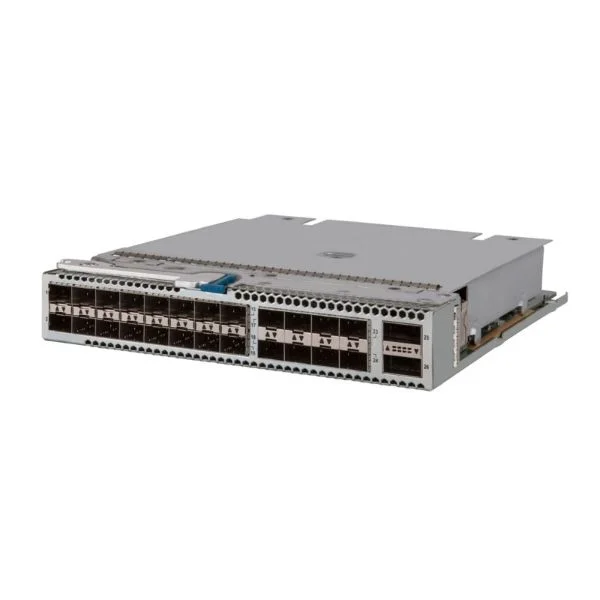
JH184A (5930 24P CONV PORT AND 2P QSFP+ MOD PL-NC)
4.6 (5)- Switch
- Hpe
- Redundant Power Supply / AC Power Supply
- Layer 3
- Rack-mount
- 60 W
- 24–48 Ports
Est Value $836.73$538.65
35.6% offIn stockNewRefurbishedFirst-Time Buyer Discount – Get up to 2% additional off on your first order
ORM Rewards Earn $50 in Rewards + Free Expedited Delivery – Join Now!
Use eCoupon ORMSAVE10
eCoupon limited to 5 units

ORM Sales Advisors
Buying for your business? Get a personalised quote in under 2 hours. Talk to an expert
LEARNFilters (5) 
Questions & Answers
What are the main features of the HPE FlexFabric 5930 Switch series?
The HPE FlexFabric 5930 Switch series delivers fixed-port Layer 3 aggregation with up to 48 1/10GbE ports, 4 or 8 10/25/40GbE uplinks, high-performance forwarding, virtualization readiness, advanced security, and energy-efficient operation.
What port configurations and speeds does the HPE FlexFabric 5930 support?
It supports 24 or 48 SFP+ (1/10GbE) ports plus 4 or 8 QSFP+ ports that natively handle 10/25/40GbE speeds, enabling flexible access and uplink options.
Can I stack multiple HPE FlexFabric 5930 switches, and if so, how?
Yes. You can stack up to 8 units using the built-in QSFP+ stacking ports and stacking cables, providing up to 3.2 Tbps of switching bandwidth in a single logical chassis.
What is the switching capacity and forwarding rate of the HPE FlexFabric 5930?
A 48-port model offers up to 1.28 Tbps of switching capacity and a forwarding rate of up to 952 Mpps, ensuring wire-rate performance at all port speeds.
Which management interfaces and software are available for the HPE FlexFabric 5930?
Management options include a CLI, web GUI, HPE Intelligent Management Center (IMC), SNMP, RESTful APIs, and seamless integration with HPE OneView for unified monitoring and automation.
Does the HPE FlexFabric 5930 series support PoE or PoE+?
No. The FlexFabric 5930 series does not provide PoE/PoE+ ports. For Power over Ethernet requirements, consider the HPE FlexNetwork 5940 series.
What Layer 3 routing capabilities are supported on the HPE FlexFabric 5930?
It supports static routes, RIP, OSPF, BGP, VRRP, policy-based routing (PBR), and Equal-Cost Multi-Path (ECMP) for flexible, resilient network designs.
How many VLANs and advanced VLAN features does the HPE FlexFabric 5930 support?
The switch supports up to 4,096 VLAN IDs, plus private VLAN (PVLAN), QinQ, and voice VLAN for scalable traffic segmentation and multi-tenant isolation.
Which SFP, SFP+ and QSFP+ transceivers are compatible with the HPE FlexFabric 5930?
It is compatible with HPE-branded 1GbE/10GbE SFP/SFP+ and 40GbE QSFP+ modules, including long-reach, short-reach, and CWDM/DWDM options for media flexibility.
What redundancy and high availability features are included in the HPE FlexFabric 5930?
Features include VRRP, MLAG (Multi-Chassis Link Aggregation), IPv6 Fast Reroute, dual firmware images, and redundant fans and power supplies on select models.
What are the typical power consumption and energy-efficiency features?
Depending on configuration, the 5930 consumes 150–200 W (max). It supports Energy Efficient Ethernet (EEE), fan speed optimization, and low-power components for reduced OPEX.
How does the HPE FlexFabric 5930 integrate with SDN environments?
It supports OpenFlow, vENM for HPE SDN, plug-and-play fabric automation, and APIs for seamless orchestration within SDN and SD-WAN deployments.
What security features are available on the HPE FlexFabric 5930?
Security includes 802.1X port authentication, ACLs, DHCP snooping, IP source guard, dynamic ARP inspection, port security, storm control, and TACACS+/RADIUS integration.
What warranty and support options are offered for the HPE FlexFabric 5930?
HPE provides a 1-year warranty with next-business-day hardware replacement. Optional CarePack services extend coverage up to 5 years with 24×7 support and onsite response.
How scalable is the HPE FlexFabric 5930 for growing networks?
You can stack up to 8 switches for 384 access ports, aggregate through 25/40 GbE uplinks, and deploy multi-site fabrics – all without service interruption or re-cabling.
What is the process to upgrade firmware on an HPE FlexFabric 5930 switch?
Use the web GUI, CLI (copy ftp/tftp/USB), or HPE IMC to upload the new firmware image. Activate it and reboot; the switch supports dual images for safe rollback.