 United States
WLAN Controller 5500 Series
Discover enterprise-grade network management with the 5500 Series WLAN Controller. Offering advanced security, optimized performance, seamless integration and scalable connectivity, it elevates operations and drives unparalleled business growth.
Talk to an expert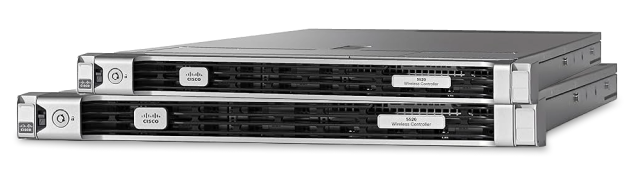
5 Matching results
- BEST SELLING
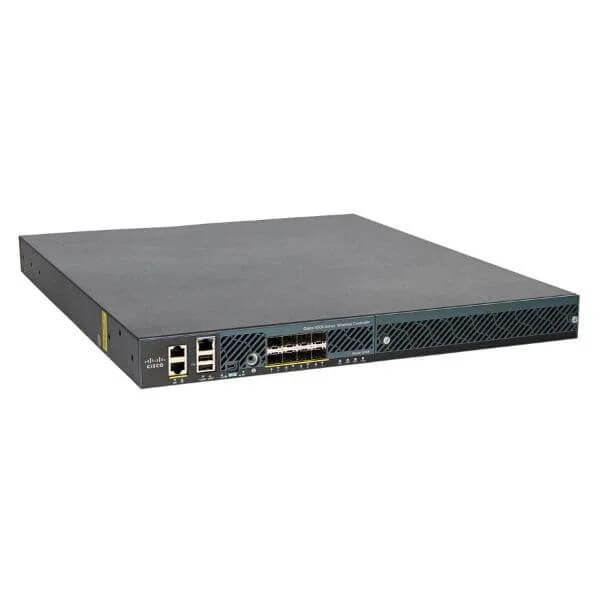
AIR-CT5508-HA-K9 (5508 SERIES WL CONTROLLER FOR HIGH AVAILABILITY)
4.6 (5)- Wireless Product
- Cisco
- Access Point
- Wi‑Fi 5
- 2.4GHz/5GHz
- 1Gbps
Est Value $22,256.28
$273.00
98.8% offIn stockNewRefurbishedFirst-Time Buyer Discount – Get up to 2% additional off on your first order
ORM Rewards Earn $50 in Rewards + Free Expedited Delivery – Join Now!
Use eCoupon ORMSAVE10
eCoupon limited to 5 units
AIR-CT5508FIPSKIT (AIR-CT5508 FIPS KIT)
4.6 (5)- Wireless Product
- Cisco
- Access Point
- Wi-Fi 6
- 2.4GHz / 5GHz
- 1Gbps
Est Value $303.50$134.66
55.6% offIn stockNewRefurbishedFirst-Time Buyer Discount – Get up to 2% additional off on your first order
ORM Rewards Earn $50 in Rewards + Free Expedited Delivery – Join Now!
Use eCoupon ORMSAVE10
eCoupon limited to 5 units
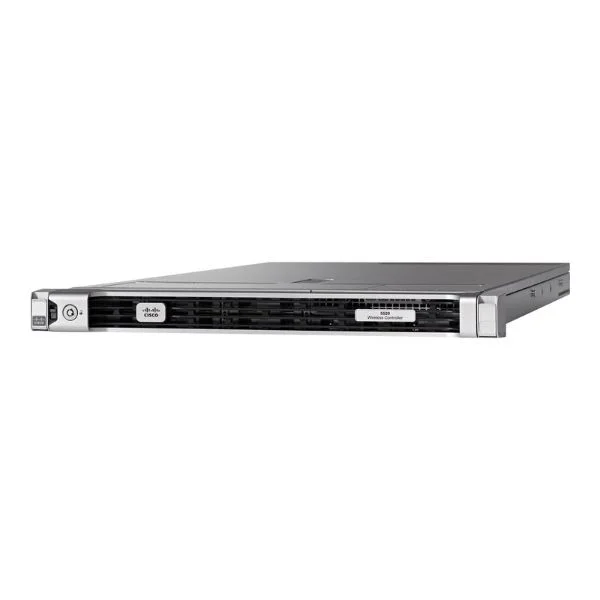
AIR-CT5520-50-K9 (5520 WIRELESS CONTROLLER SUPPORTING 50 APS W/ RACK KIT)
4.4 (5)- Wireless Controller
- Cisco
- 802.11ac
- 2.4GHz / 5GHz
Est Value $25,508.25$7,608.30
70.2% offIn stockNewRefurbishedFirst-Time Buyer Discount – Get up to 2% additional off on your first order
ORM Rewards Earn $50 in Rewards + Free Expedited Delivery – Join Now!
Use eCoupon ORMSAVE10
eCoupon limited to 5 units
- BEST SELLING
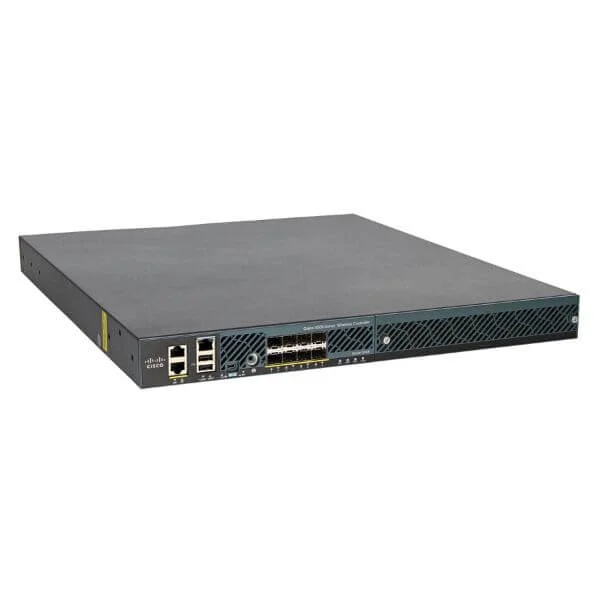
AIR-CT5508-500-2PK (TWO 5508 SERIES CONTROLLER FOR UP TO 500 APS)
4.4 (5)- Wireless Access Point
- Cisco
- Access Point
- Wi-Fi 6
- 2.4GHz / 5GHz
- 500Mbps
- 150 feet
Est Value In stockFirst-Time Buyer Discount – Get up to 2% additional off on your first order
ORM Rewards Earn $50 in Rewards + Free Expedited Delivery – Join Now!
Use eCoupon ORMSAVE10
eCoupon limited to 5 units
AIR-PSU-BLKP1U (PWR SUP BLANKING PANEL FOR C220 M4 SVR)
5 (5)- Wireless Access Point
- Cisco
- Access Point
- Wi-Fi 6
- 2.4GHz / 5GHz
- 1Gbps
- 120 meters
Est Value In stockFirst-Time Buyer Discount – Get up to 2% additional off on your first order
ORM Rewards Earn $50 in Rewards + Free Expedited Delivery – Join Now!
Use eCoupon ORMSAVE10
eCoupon limited to 5 units

ORM Sales Advisors
Buying for your business? Get a personalised quote in under 2 hours. Talk to an expert
LEARNFilters (5) 
Questions & Answers
What is the Cisco 5500 Series WLAN Controller?
The Cisco 5500 Series WLAN Controller is a high-performance, enterprise-grade device designed to centrally manage and secure thousands of Access Points and wireless clients with advanced RF and policy controls.
What are the key features of the 5500 Series WLAN Controller?
Key features include centralized RF management, policy enforcement, deep packet inspection, seamless roaming, high-availability clustering, and integrated security services like rogue detection and intrusion prevention.
How many Access Points can a single 5500 Series Controller support?
A single Cisco 5500 Series Controller supports up to 1500 Access Points, enabling scalable deployments for large campuses and distributed enterprises.
What is the maximum number of concurrent client sessions?
The 5500 Series WLAN Controller supports up to 20,000 concurrent client sessions, ensuring reliable connectivity and performance in high-density environments.
Does the 5500 Series support high availability?
Yes. The 5500 Series offers N+1 and 1+1 high-availability modes with stateful failover, providing uninterrupted wireless services during controller maintenance or hardware failures.
Which security protocols are supported by the 5500 Series?
The 5500 Series supports WPA2-Enterprise, WPA3-Enterprise, 802.1X authentication, MAC filtering, rogue AP detection, and integrated IDS/IPS for comprehensive wireless security.
What deployment models are available for the 5500 Series?
Deployment models include standalone mode, Mobility Express for lightweight branch deployments, and integrated Cisco Prime Infrastructure management for large campuses and data centers.
How do I manage and configure the 5500 Series Controller?
Management is performed via a web-based GUI, CLI, SNMP, or Cisco Prime Infrastructure, allowing streamlined configuration, monitoring, and policy enforcement across multiple controllers.
What licensing options are offered for the 5500 Series?
The 5500 Series uses device-based and feature-based licensing, including Base, Advance, and Apex tiers, to match performance and feature requirements with predictable subscription and perpetual models.
Can the 5500 Series integrate with cloud management platforms?
Yes. It integrates with Cisco Meraki Cloud and Cisco DNA Center, enabling centralized policy, analytics, and automation for hybrid on-premises and cloud-managed networks.
What network interfaces and throughput does the 5500 Series provide?
The 5500 Series offers multiple 1/10 Gbps SFP+ uplinks, redundant management ports, and up to 40 Gbps throughput to accommodate high-bandwidth wireless traffic.
How do I upgrade the firmware on a 5500 Series Controller?
Firmware can be upgraded through the web GUI or CLI by uploading the Cisco IOS image; the controller supports rolling upgrades with minimal service interruption.
What redundancy features are built into the 5500 Series?
Redundancy features include dual power supplies, redundant fans, hot-swappable modules, and stateful controller clustering to ensure continuous wireless service.
What common use cases does the 5500 Series address?
Typical use cases include large enterprise campuses, higher education, hospitality, healthcare, and retail environments requiring high-density coverage, security, and seamless mobility.
What are the power and environmental specifications?
The 5500 Series consumes up to 200W, supports AC inputs, operates at 0–40°C ambient temperature, and meets NEBS and ETSI standards for enterprise and service-provider environments.
What warranty and support options are available?
Cisco offers a one-year limited hardware warranty, with optional SMARTnet Service for 24x7 hardware replacement, software updates, and technical support.