 United States
Routers Juniper MX204/240/480 Series
Engineered for superior performance and secure, scalable routing, Juniper MX204/MX240/MX480 routers provide reliable connectivity and advanced features to meet the complex demands of enterprise networks.
Talk to an expert
34 Matching results
- BEST SELLING
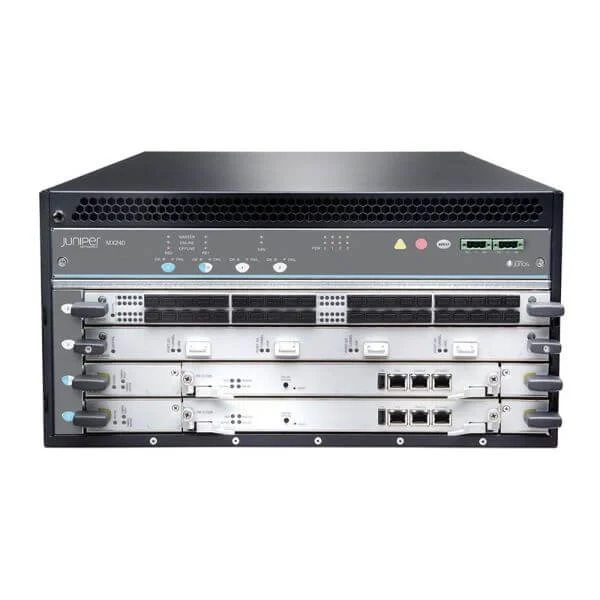
CHAS-BP-MX240-S (MX240 WITH INSTALLED BACKPLANE SPARE)
5 (5)- Enterprise Router
- Juniper
- IPSec / SSL VPN / GRE / DMVPN / N/A
- AC Power Supply / Redundant
- OSPF / BGP / EIGRP / RIP / Static Routing
- Modular
Est Value $31,505.00
$4,725.82
85% offIn stockNewRefurbishedFirst-Time Buyer Discount – Get up to 2% additional off on your first order
ORM Rewards Earn $50 in Rewards + Free Expedited Delivery – Join Now!
Use eCoupon ORMSAVE10
eCoupon limited to 5 units
- BEST SELLING
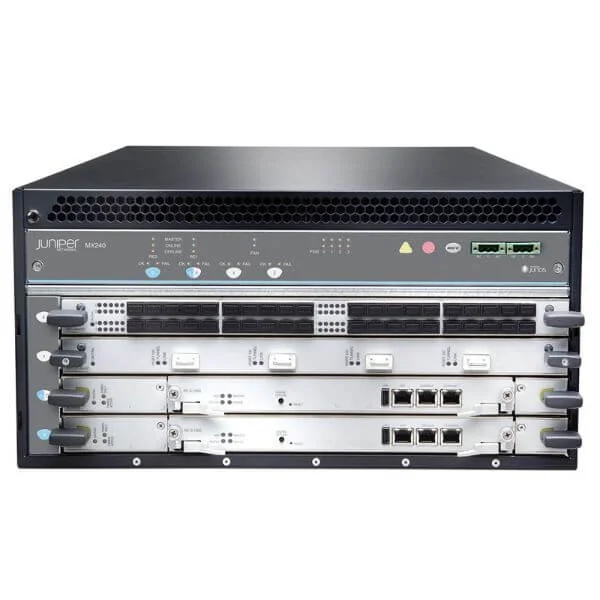
MX240BASE-AC-HIGH (MX240 4 Slot Base Chassis with 1 AC Power Supply)
4.6 (5)- Enterprise Router
- Juniper
- IPSec / SSL VPN
- AC Power Supply / Redundant
- OSPF / BGP / EIGRP / Static Routing
- Modular
Est Value $32,745.00$4,911.90
85% offIn stockNewRefurbishedFirst-Time Buyer Discount – Get up to 2% additional off on your first order
ORM Rewards Earn $50 in Rewards + Free Expedited Delivery – Join Now!
Use eCoupon ORMSAVE10
eCoupon limited to 5 units
- BEST SELLING
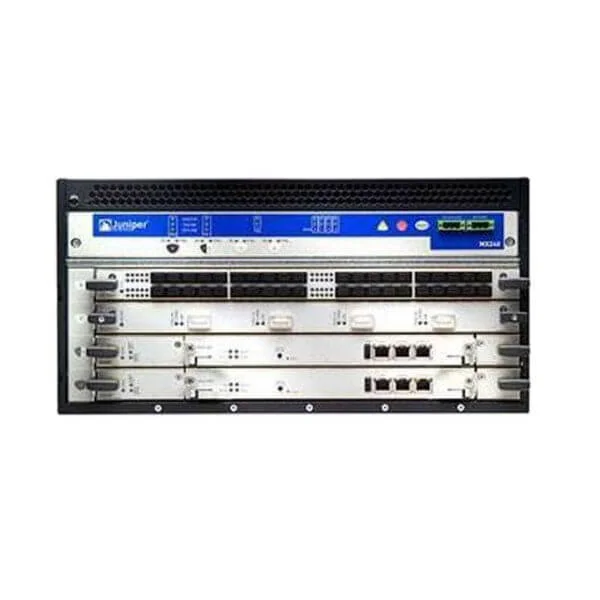
MX240BASE-AC-LOW (CHASSIS MIDPLANE 1 RE 1 SCB 2 AC PEMS)
4.6 (5)- Cloud-Managed Security Appliance
- Juniper
- IPSec / Auto VPN
- AC Power Supply
- Static Routing
- Fixed
Est Value $28,069.00$4,210.50
85% offIn stockNewRefurbishedFirst-Time Buyer Discount – Get up to 2% additional off on your first order
ORM Rewards Earn $50 in Rewards + Free Expedited Delivery – Join Now!
Use eCoupon ORMSAVE10
eCoupon limited to 5 units
- BEST SELLING
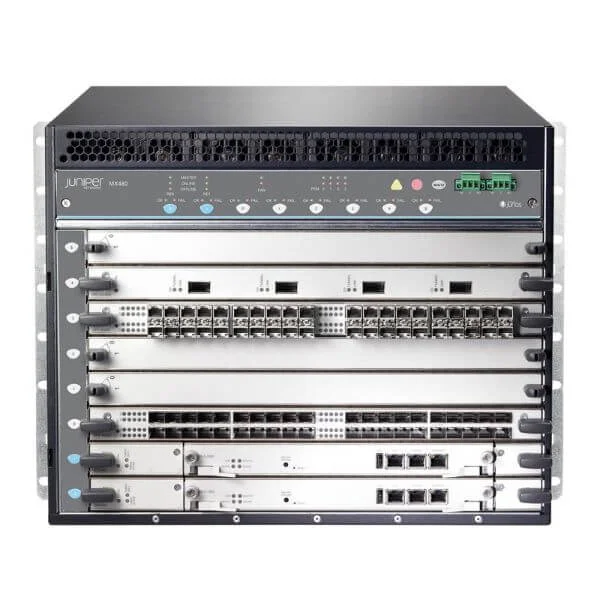
MX480-PREMIUM2-AC (CONFIG ONLY SKU MX480-BASE-AC CONFIGURABLE REDUNDANT RE SCBS/PEM)
4.4 (5)- Enterprise Router
- Juniper
- IPSec / SSL VPN
- AC Power Supply
- Static Routing
- Fixed
Est Value $137,135.00$88,654.65
35.4% offIn stockNewFirst-Time Buyer Discount – Get up to 2% additional off on your first order
ORM Rewards Earn $50 in Rewards + Free Expedited Delivery – Join Now!
Use eCoupon ORMSAVE10
eCoupon limited to 5 units
- BEST SELLING
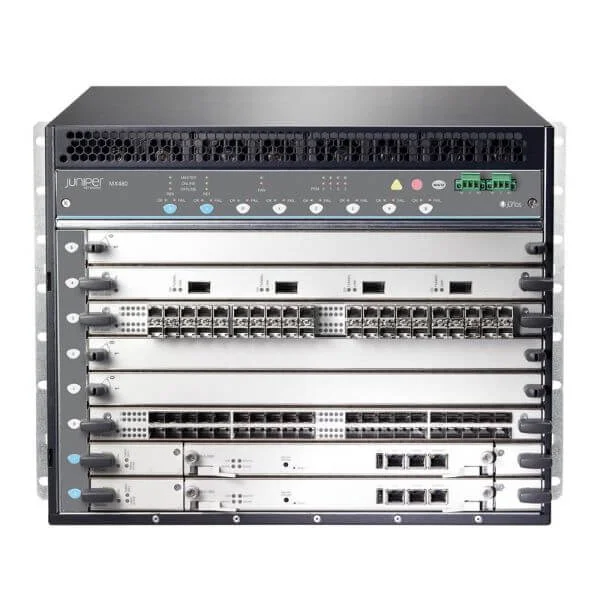
MX480-PREM3-AC (MX480 AC Premium Fully Redundant "Built to Stock" System with dual Switch control board (SCBE), dual RE-S-1800X4-16G, redundant AC Power and Fan trays)
4.2 (5)- Enterprise Router
- Juniper
- IPSec / SSL VPN
- AC Power Supply
- Static Routing
- Modular
Est Value $134,852.00$20,878.20
84.5% offIn stockNewRefurbishedFirst-Time Buyer Discount – Get up to 2% additional off on your first order
ORM Rewards Earn $50 in Rewards + Free Expedited Delivery – Join Now!
Use eCoupon ORMSAVE10
eCoupon limited to 5 units
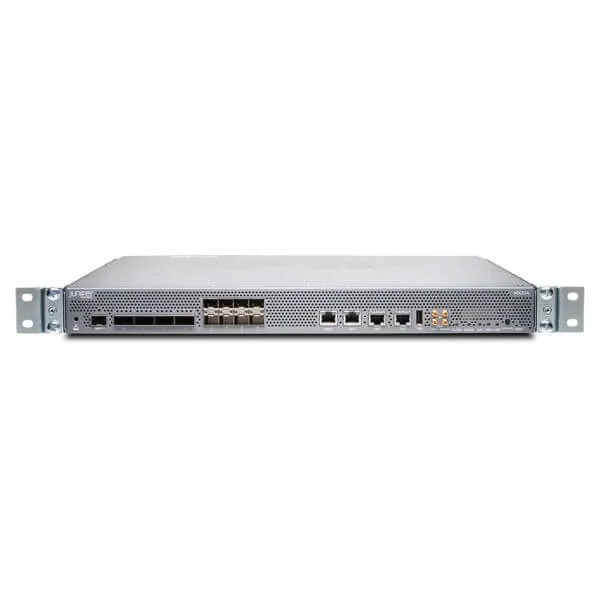
JNP204-CHAS-BB (JNP204 Universal Chassis Base)
4.6 (5)- Enterprise Router
- Juniper
- IPSec / SSL VPN / DMVPN
- AC Power Supply / Redundant
- OSPF / BGP / EIGRP / Static Routing
- Fiber Optic / DSL
- Modular
Est Value $9,035.00$8,061.90
10.8% offIn stockRefurbishedFirst-Time Buyer Discount – Get up to 2% additional off on your first order
ORM Rewards Earn $50 in Rewards + Free Expedited Delivery – Join Now!
Use eCoupon ORMSAVE10
eCoupon limited to 5 units
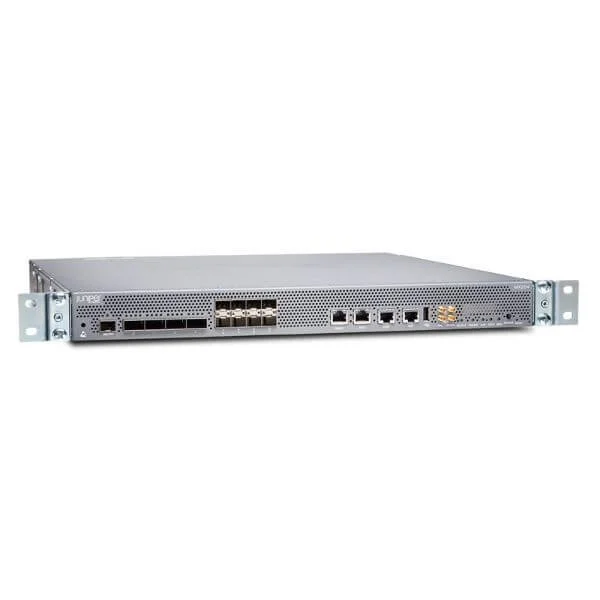
MX204 (MX204 chassis with 3 fan trays and 2 power supplies incl. Junos)
4.8 (5)- Universal Edge Router
- Juniper
- IPSec / SSL VPN
- Dual AC Power Supply / Redundant
- OSPF / BGP / MPLS / IS-IS / RIP / Static Routing
- Modular
Est Value $40,350.00$22,807.05
43.5% offIn stockNewRefurbishedFirst-Time Buyer Discount – Get up to 2% additional off on your first order
ORM Rewards Earn $50 in Rewards + Free Expedited Delivery – Join Now!
Use eCoupon ORMSAVE10
eCoupon limited to 5 units
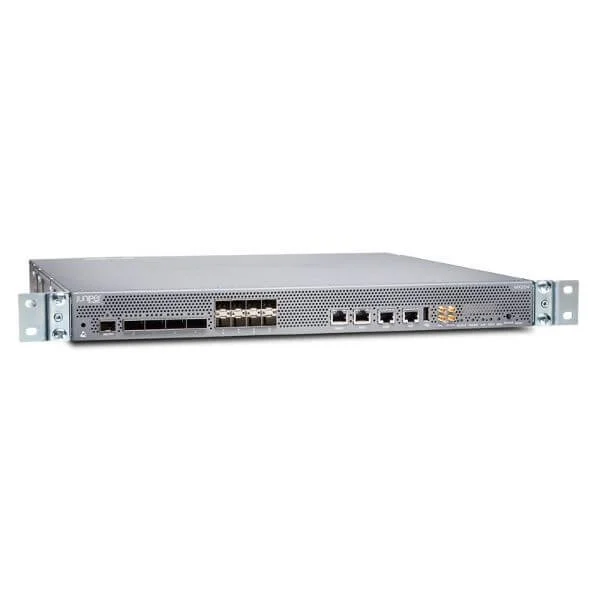
MX204-R (MX204 chassis with 3 fan trays and 2 power supplies, R mode. incl. Junos)
4.8 (5)- Enterprise Router
- Juniper
- IPSec / SSL VPN
- AC Power Supply with Redundancy
- OSPF / BGP / Static Routing
- Fiber Optic / DSL
- Modular
Est Value $64,350.00$29,422.05
54.3% offIn stockNewRefurbishedFirst-Time Buyer Discount – Get up to 2% additional off on your first order
ORM Rewards Earn $50 in Rewards + Free Expedited Delivery – Join Now!
Use eCoupon ORMSAVE10
eCoupon limited to 5 units
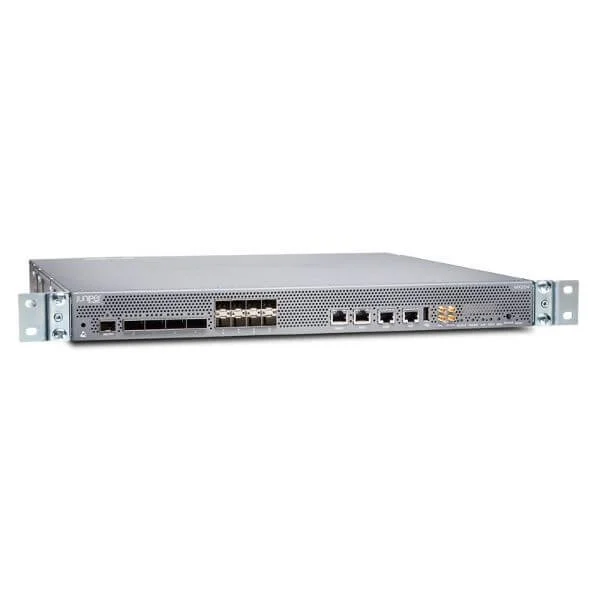
MX204-IR (MX204 chassis with 3 fan trays and 2 power supplies, IR mode. incl. Junos)
4.4 (5)- Enterprise Router
- Juniper
- IPSec / GRE / DMVPN / FlexVPN
- AC Power Supply / Redundant
- OSPF / BGP / IS-IS / MPLS / Static Routing
- Fiber Optic
- Modular
Est Value $48,350.00$13,959.75
71.1% offIn stockNewFirst-Time Buyer Discount – Get up to 2% additional off on your first order
ORM Rewards Earn $50 in Rewards + Free Expedited Delivery – Join Now!
Use eCoupon ORMSAVE10
eCoupon limited to 5 units
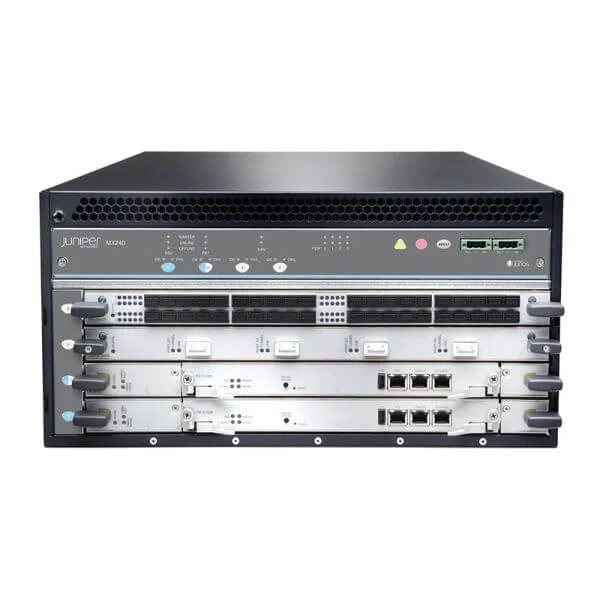
MX240-PREM3-AC (MX240 AC Premium Fully Redundant "Built to Stock" System with dual Switch control board (SCBE), dual RE-S-1800X4-16G, redundant AC Power and Fan trays)
5 (5)- Enterprise Router
- Juniper
- IPSec / SSL VPN
- AC Power Supply with Redundant Options
- OSPF / BGP / Static Routing
- Modular
Est Value $36,050.00$17,031.00
52.8% offIn stockRefurbishedFirst-Time Buyer Discount – Get up to 2% additional off on your first order
ORM Rewards Earn $50 in Rewards + Free Expedited Delivery – Join Now!
Use eCoupon ORMSAVE10
eCoupon limited to 5 units
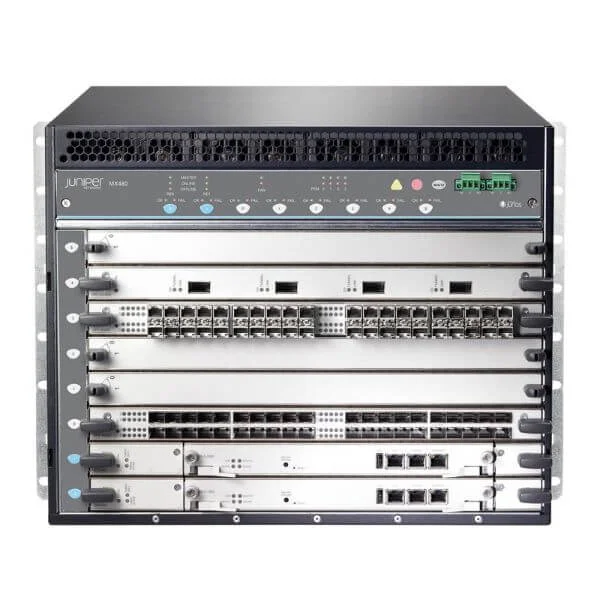
CHAS-BP3-MX480-S (MX480 WITH INSTALLED BACKPLANE SPARE)
4.6 (5)- Enterprise Router
- Juniper
- IPSec / SSL VPN
- AC Power Supply / DC Power Supply / Redundant
- OSPF / BGP / EIGRP / Static Routing
- Modular
Est Value $31,920.00$23,625.00
26% offIn stockNewRefurbishedFirst-Time Buyer Discount – Get up to 2% additional off on your first order
ORM Rewards Earn $50 in Rewards + Free Expedited Delivery – Join Now!
Use eCoupon ORMSAVE10
eCoupon limited to 5 units
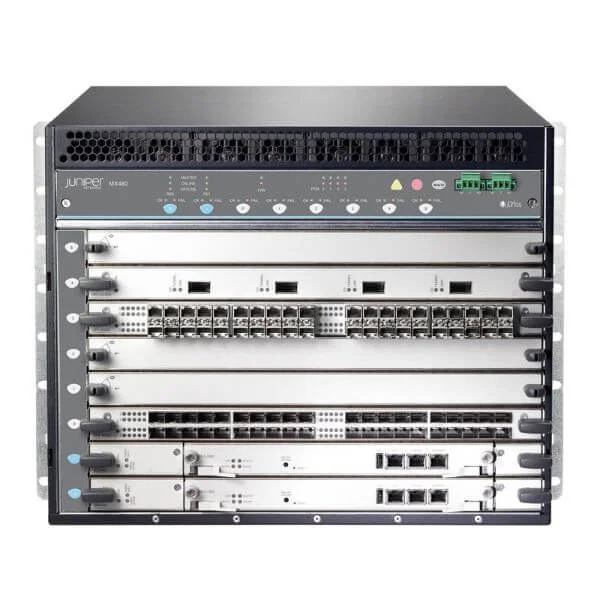
CHAS-BP-MX480-S (MX480 W/ INSTALLED BACKPLANE SPARE)
4.6 (5)- Enterprise Router
- Juniper
- IPSec / SSL VPN
- Redundant AC/DC Power Supply
- OSPF / BGP / EIGRP / Static Routing
- Fiber Optic / DSL
- Modular
Est Value $19,638.00$2,945.82
85% offIn stockNewRefurbishedFirst-Time Buyer Discount – Get up to 2% additional off on your first order
ORM Rewards Earn $50 in Rewards + Free Expedited Delivery – Join Now!
Use eCoupon ORMSAVE10
eCoupon limited to 5 units
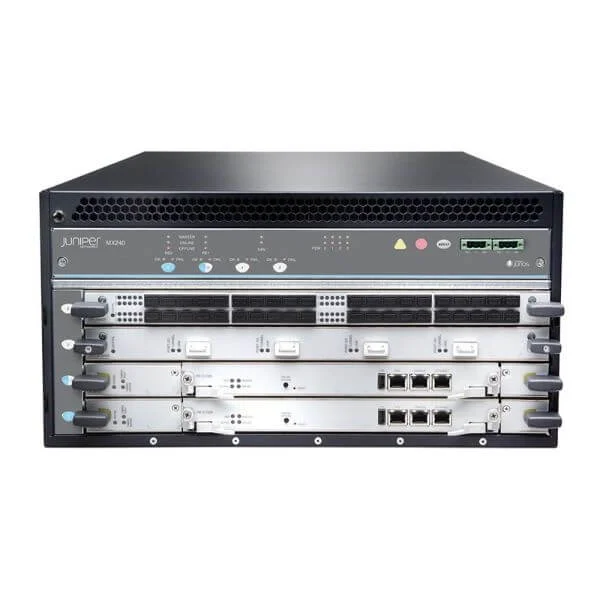
CHAS-BP3-MX240-S (MX240 with installed backplane, Spare)
4.6 (5)- Enterprise Router
- Juniper
- IPSec / SSL VPN
- AC Power Supply / DC Power Supply / Redundant
- OSPF / BGP / Static Routing
- Fiber Optic
- Modular
Est Value $73,489.50$36,744.75
50% offIn stockNewRefurbishedFirst-Time Buyer Discount – Get up to 2% additional off on your first order
ORM Rewards Earn $50 in Rewards + Free Expedited Delivery – Join Now!
Use eCoupon ORMSAVE10
eCoupon limited to 5 units
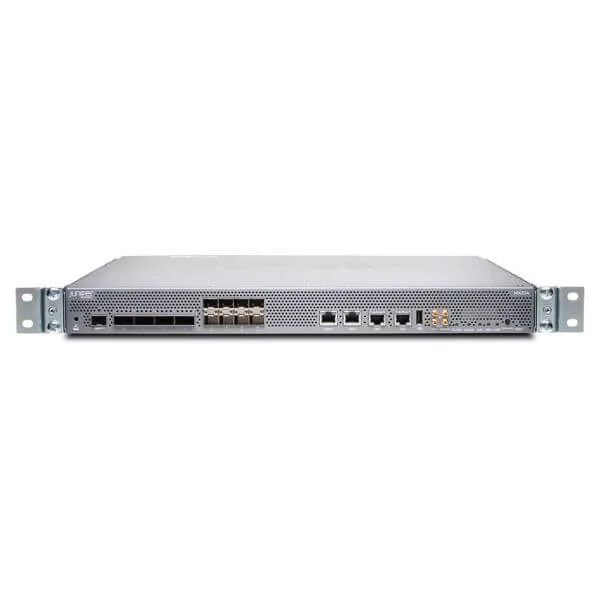
JNP204-CHAS (Universal Chassis, 1RU)
4.6 (5)- Enterprise Router
- Juniper
- IPSec / SSL VPN
- AC Power Supply / Redundant
- OSPF / BGP / EIGRP / MPLS / Static Routing
- Fiber Optic / DSL
- Modular
Est Value $60,205.00$38,920.35
35.4% offIn stockNewFirst-Time Buyer Discount – Get up to 2% additional off on your first order
ORM Rewards Earn $50 in Rewards + Free Expedited Delivery – Join Now!
Use eCoupon ORMSAVE10
eCoupon limited to 5 units
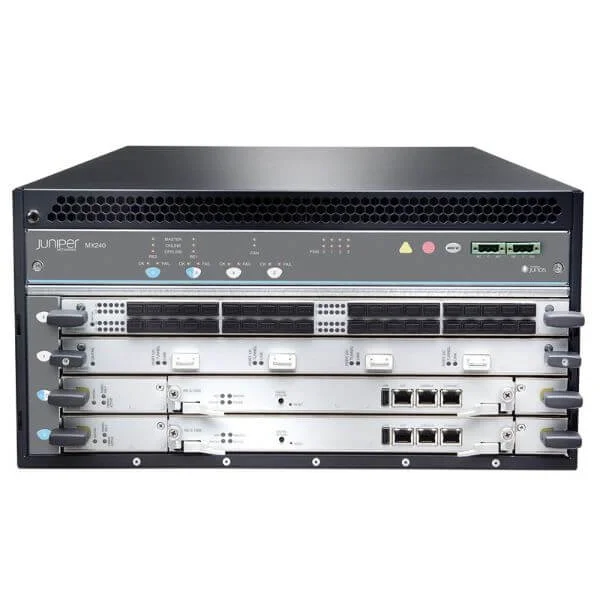
MX240BASE3-DC (MX240 4 Slot Base 3 Chassis with DC Power Supply)
4.6 (5)- Enterprise Router
- Juniper
- IPSec / SSL VPN
- DC Power Supply / Redundant
- OSPF / BGP / EIGRP / Static Routing
- Fixed
Est Value $70,930.00$45,855.60
35.4% offIn stockNewFirst-Time Buyer Discount – Get up to 2% additional off on your first order
ORM Rewards Earn $50 in Rewards + Free Expedited Delivery – Join Now!
Use eCoupon ORMSAVE10
eCoupon limited to 5 units
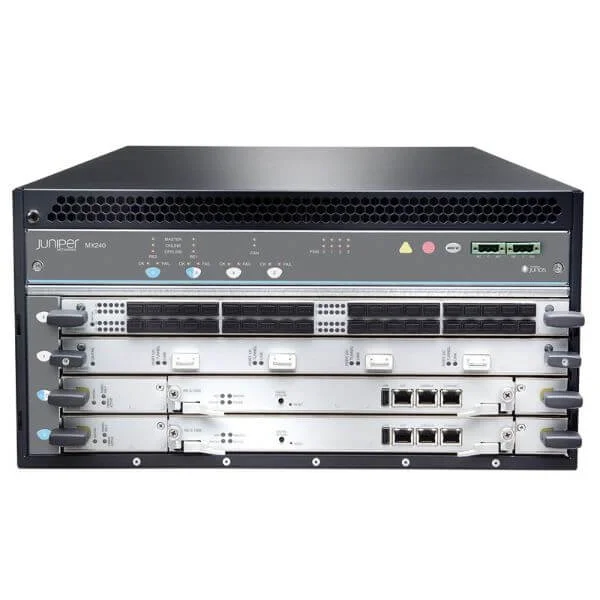
MX240BASE-DC (MX240 4 Slot Base Chassis with 1 Fan Tray, 1 DC Power Supply, 1 SCB)
5 (5)- Enterprise Router
- Juniper
- IPSec / SSL VPN
- DC Power Supply / Redundant
- OSPF / BGP / Static Routing
- Modular
Est Value $70,930.00$22,090.66
68.9% offIn stockNewRefurbishedFirst-Time Buyer Discount – Get up to 2% additional off on your first order
ORM Rewards Earn $50 in Rewards + Free Expedited Delivery – Join Now!
Use eCoupon ORMSAVE10
eCoupon limited to 5 units
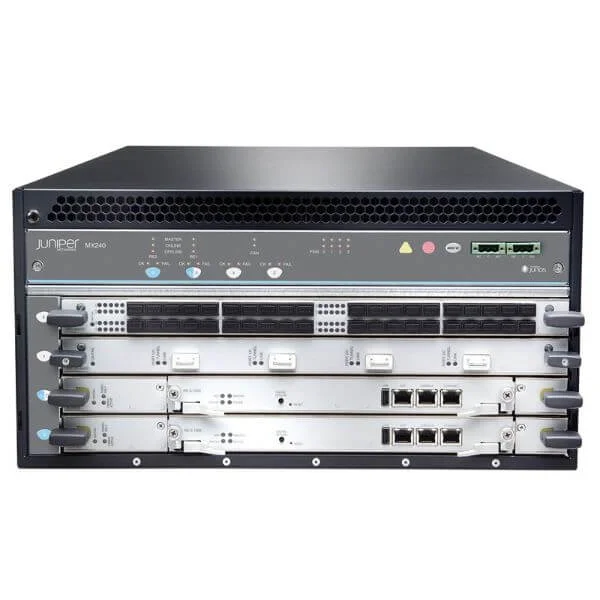
MX240BASE3-ACH (MX240 4 Slot Base 3 Chassis with Highline AC Power)
4.4 (5)- Enterprise Router
- Juniper
- IPSec / SSL VPN / GRE
- AC Power Supply / Redundant
- OSPF / BGP / EIGRP / Static Routing
- Fiber Optic
- Modular
Est Value $70,930.00$45,855.60
35.4% offIn stockNewFirst-Time Buyer Discount – Get up to 2% additional off on your first order
ORM Rewards Earn $50 in Rewards + Free Expedited Delivery – Join Now!
Use eCoupon ORMSAVE10
eCoupon limited to 5 units
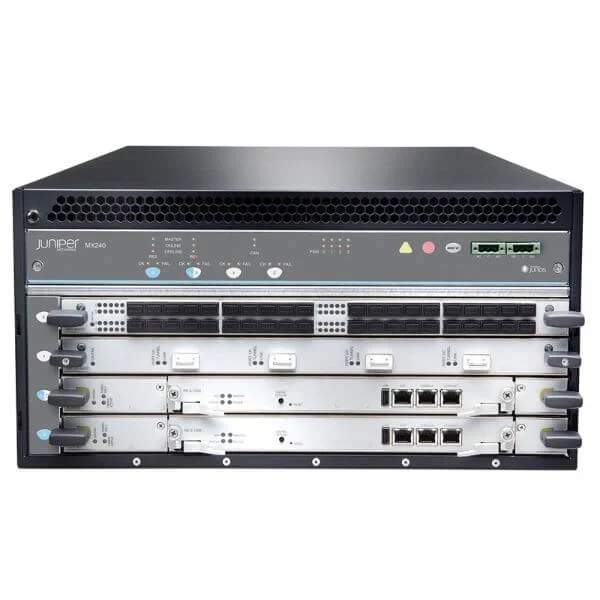
MX240BASE3-ACL (MX240 4 Slot Base 3 Chassis with Lowline AC Power)
4.8 (5)- Enterprise Router
- Juniper
- IPSec / SSL VPN
- AC Power Supply / Redundant
- OSPF / BGP / Static Routing
- Fiber Optic
- Modular
Est Value $70,930.00$45,855.60
35.4% offIn stockNewFirst-Time Buyer Discount – Get up to 2% additional off on your first order
ORM Rewards Earn $50 in Rewards + Free Expedited Delivery – Join Now!
Use eCoupon ORMSAVE10
eCoupon limited to 5 units
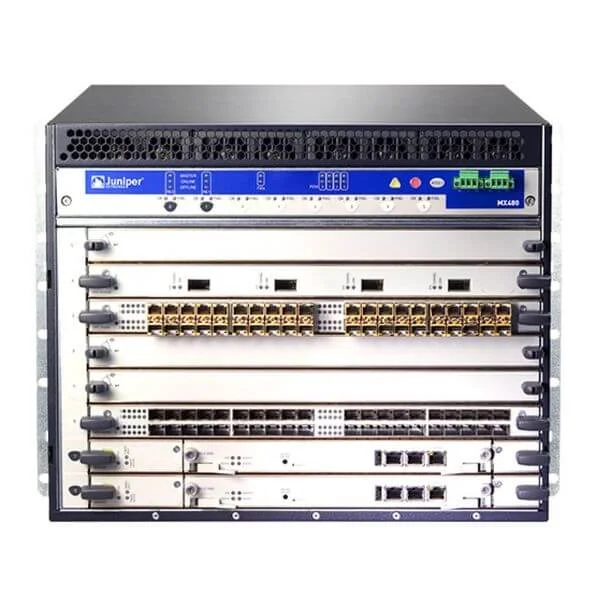
MX480BASE-AC (CHASSIS MIDPLANE RE 1-SCB 3 AC PEM)
4.8 (5)- Security Appliance
- Juniper
- IPSec VPN (Meraki Auto VPN)
- AC Power Supply
- Static Routing
- Fixed
Est Value $83,935.00$26,098.66
68.9% offIn stockNewRefurbishedFirst-Time Buyer Discount – Get up to 2% additional off on your first order
ORM Rewards Earn $50 in Rewards + Free Expedited Delivery – Join Now!
Use eCoupon ORMSAVE10
eCoupon limited to 5 units
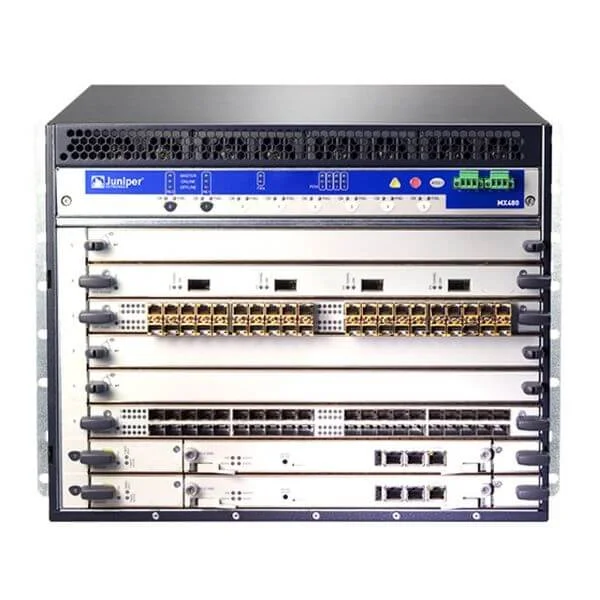
MX480BASE3-AC (MX480 BASE BNDL AC POWER)
5 (5)- Enterprise Router
- Juniper
- IPSec / SSL VPN / MPLS VPN
- AC Power Supply with Redundant Option
- OSPF / BGP / IS-IS / Static Routing
- Modular Chassis
Est Value $83,935.00$12,610.50
85% offIn stockNewRefurbishedFirst-Time Buyer Discount – Get up to 2% additional off on your first order
ORM Rewards Earn $50 in Rewards + Free Expedited Delivery – Join Now!
Use eCoupon ORMSAVE10
eCoupon limited to 5 units

ORM Sales Advisors
Buying for your business? Get a personalised quote in under 2 hours. Talk to an expert
LEARNFilters (34) 
Questions & Answers
What throughput do the Juniper MX204, MX240, and MX480 routers support?
The MX204 delivers up to 1.6 Tbps, the MX240 delivers up to 6.4 Tbps, and the MX480 delivers up to 11.4 Tbps of system capacity.
What port densities are available on the MX204, MX240, and MX480?
The MX204 supports up to 20×10/25 GbE or 6×40/100 GbE, the MX240 supports up to 72×10/25 GbE or 18×100 GbE, and the MX480 supports up to 144×10/25 GbE or 36×100 GbE.
Which use cases are best suited for the MX204, MX240, and MX480?
The MX204 is ideal for space- and power-constrained sites, the MX240 is optimal for medium-scale aggregation, and the MX480 serves large-scale edge and core deployments.
What software features do MX204, MX240, and MX480 routers support?
All models run Juniper’s Junos OS, providing advanced features such as MPLS, EVPN-VXLAN, Segment Routing, and carrier-grade NAT.
How do MX204, MX240, and MX480 routers ensure high availability?
They offer redundant Routing Engines, hot-swappable power supplies and fans, and non-stop active routing with hitless software upgrades.
What are the power consumption and cooling specifications?
Power consumption ranges from approximately 450 W (MX204) to 1,300 W (MX480) with AC and DC options; all models support front-to-back or back-to-front airflow.
What licensing is required for advanced routing features?
Junos OS Base includes core routing; advanced features like MPLS, Segment Routing, and EVPN require feature licenses for Trio or AFX line cards.
How do these routers support automation and programmability?
They integrate with Juniper PyEZ, NETCONF, REST APIs, Ansible, and Puppet for zero-touch provisioning, configuration and monitoring.
What are the physical dimensions and form factors?
The MX204 is a 1U fixed system (17\
What operating temperature range do these routers support?
All models operate between 0 °C and 40 °C (32 °F to 104 °F) and store between –40 °C and 70 °C (–40 °F to 158 °F).
How many subscriber sessions can MX204, MX240, and MX480 handle?
They support up to one million active sessions per system with scalable subscriber management for broadband, mobile, and enterprise environments.
How do Juniper MX routers support network slicing and virtualization?
They offer logical systems and Junos Fusion for multi-tenancy, plus EVPN-VXLAN overlays for secure tenant isolation and virtual network segmentation.
What scalability features do these routers provide?
They scale from compact edge (MX204) to high-capacity aggregation (MX240) and dense core routing (MX480), supporting up to two million routes and full Internet BGP tables.
What integrated security features are included?
They include control-plane protection, firewall filters, MACsec encryption, DHCP snooping, and uRPF for DDoS mitigation and secure packet forwarding.
How can I monitor and manage MX204, MX240, and MX480 routers?
They integrate with Junos Telemetry Interface, Junos Space, and third-party NMS via SNMP, sFlow, and real-time streaming telemetry.
What support and warranty options are available for Juniper MX routers?
Juniper provides a one-year limited hardware warranty with next-business-day replacement and optional Juniper Care service for 24×7 support and software upgrades.