 United States
Cisco Compatible Sfp Modules
Enhance network performance with our Cisco compatible Sfp modules. Achieve superior operational efficiency, robust connectivity, and seamless integration for your evolving critical networking infrastructure.
Talk to an expert
48 Matching results
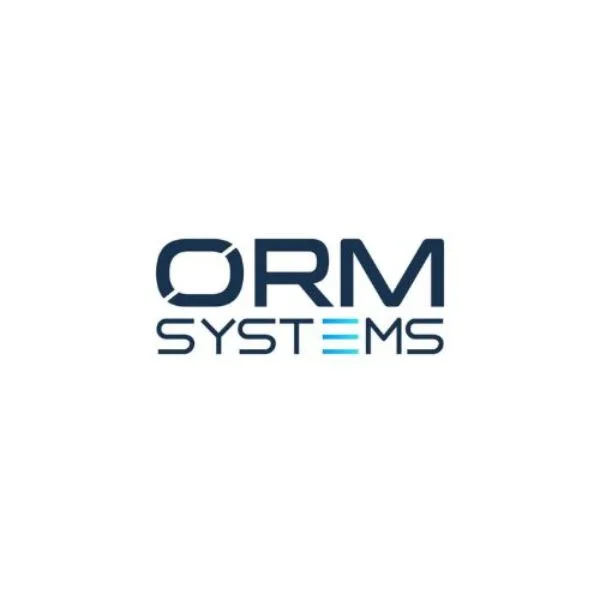
GLC-ZX-SM-C (GE SFP LC connector ZX transceiver Cisco Compatible)
4.8 (8)- Transceiver
- Orm
- SFP
- 1G
- LC
- 1310 nm
- Long-Range
Est Value $256.28
$128.14
50% offIn stockRefurbishedFirst-Time Buyer Discount – Get up to 2% additional off on your first order
ORM Rewards Earn $50 in Rewards + Free Expedited Delivery – Join Now!
Use eCoupon ORMSAVE10
eCoupon limited to 5 units
- FEARURED
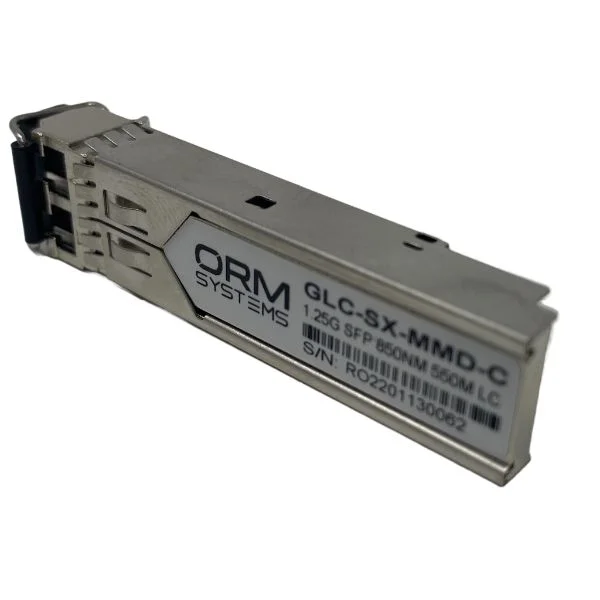
GLC-SX-MMD-C (1000BASE-SX SFP MMF E-Temp DOM Cisco Compatible)
4.6 (8)- Transceiver
- Orm
- SFP
- 1G
- LC
- 850 nm
- Short-Range
Est Value In stockFirst-Time Buyer Discount – Get up to 2% additional off on your first order
ORM Rewards Earn $50 in Rewards + Free Expedited Delivery – Join Now!
Use eCoupon ORMSAVE10
eCoupon limited to 5 units
- FEARURED
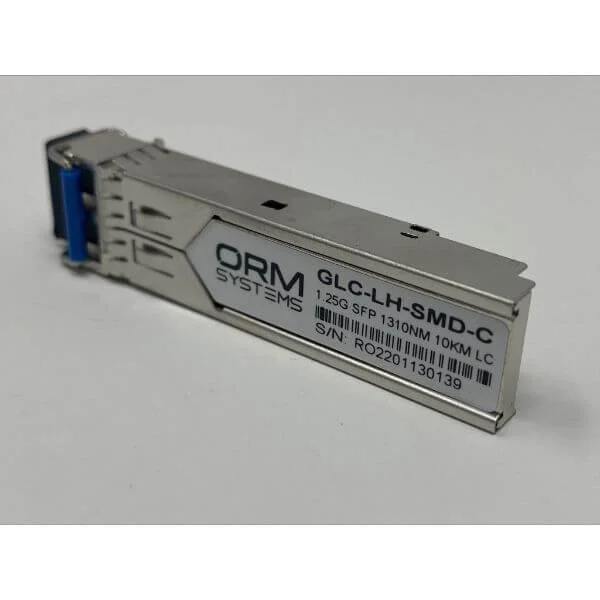
GLC-LH-SMD-C (1000BASE-LX SFP SMF E-Temp DOM Cisco Compatible)
4.8 (8)- Transceiver
- Orm
- SFP
- 1G
- LC
- 1310 nm
- Long-Range
Est Value In stockFirst-Time Buyer Discount – Get up to 2% additional off on your first order
ORM Rewards Earn $50 in Rewards + Free Expedited Delivery – Join Now!
Use eCoupon ORMSAVE10
eCoupon limited to 5 units
- FEARURED
GLC-ZX-SMD-C (1000BASE-ZX SFP SMF E-Temp 1550NM DOM Cisco Compatible)
4.4 (8)- Transceiver
- Orm
- SFP
- 1G
- LC
- 1550nm
- Long-Range
Est Value In stockFirst-Time Buyer Discount – Get up to 2% additional off on your first order
ORM Rewards Earn $50 in Rewards + Free Expedited Delivery – Join Now!
Use eCoupon ORMSAVE10
eCoupon limited to 5 units
- FEARURED
SFP-GE-S-C (1000Base-SX SFP MMF 850-NM DOM Cisco Compatible)
4.9 (8)- Transceiver
- Orm
- SFP
- 1G
- SC
- 850nm
- Short-Range
Est Value In stockFirst-Time Buyer Discount – Get up to 2% additional off on your first order
ORM Rewards Earn $50 in Rewards + Free Expedited Delivery – Join Now!
Use eCoupon ORMSAVE10
eCoupon limited to 5 units
- FEARURED
SFP-GE-L-C (1000Base-LX/LH SFP MMF/SMF 1310-NM DOM Cisco Compatible)
4.5 (8)- Transceiver
- Orm
- SFP
- 1G
- LC
- 1310nm
- Long-Range
Est Value In stockFirst-Time Buyer Discount – Get up to 2% additional off on your first order
ORM Rewards Earn $50 in Rewards + Free Expedited Delivery – Join Now!
Use eCoupon ORMSAVE10
eCoupon limited to 5 units
GLC-EX-SMD-C (1000BASE-EX SFP SMF E-Temp 1310NM DOM Cisco Compatible)
4.8 (8)- Transceiver
- Orm
- SFP
- 1G
- LC
- 1310 nm
- Long-Range
Est Value In stockFirst-Time Buyer Discount – Get up to 2% additional off on your first order
ORM Rewards Earn $50 in Rewards + Free Expedited Delivery – Join Now!
Use eCoupon ORMSAVE10
eCoupon limited to 5 units
GLC-EZX-SMD-C (1000BASE-EZX SFP SMF E-Temp 1550NM 120KM DOM Cisco Compatible)
4.6 (8)- Transceiver
- Orm
- SFP
- 1G
- LC
- 1310 nm
- Extended-Range
Est Value In stockFirst-Time Buyer Discount – Get up to 2% additional off on your first order
ORM Rewards Earn $50 in Rewards + Free Expedited Delivery – Join Now!
Use eCoupon ORMSAVE10
eCoupon limited to 5 units
GLC-XZX-SMD-C (1000BASE-XZX SFP SMF E-Temp 1550NM 160KM DOM Cisco Compatible)
4.6 (8)- Transceiver
- Orm
- SFP
- 1G
- LC
- 1310nm
- Long-Range
Est Value In stockFirst-Time Buyer Discount – Get up to 2% additional off on your first order
ORM Rewards Earn $50 in Rewards + Free Expedited Delivery – Join Now!
Use eCoupon ORMSAVE10
eCoupon limited to 5 units
GLC-SX-MM-C (GE SFP LC connector SX transceiver Cisco Compatible)
4.8 (8)- Transceiver
- Orm
- SFP
- 1G
- LC
- 850 nm
- Short-Range
Est Value In stockFirst-Time Buyer Discount – Get up to 2% additional off on your first order
ORM Rewards Earn $50 in Rewards + Free Expedited Delivery – Join Now!
Use eCoupon ORMSAVE10
eCoupon limited to 5 units
GLC-SX-MM-2K-C (GE SFP LC connector SX Ext MM transceiver Cisco Compatible)
4.6 (8)- Transceiver
- Orm
- SFP
- 1G
- LC
- 850 nm
- Extended-Range
Est Value In stockFirst-Time Buyer Discount – Get up to 2% additional off on your first order
ORM Rewards Earn $50 in Rewards + Free Expedited Delivery – Join Now!
Use eCoupon ORMSAVE10
eCoupon limited to 5 units
GLC-LH-SM-C (GE SFP LC connector LX/LH transceiver Cisco Compatible)
4.8 (8)- Transceiver
- Orm
- SFP
- 1G
- LC
- 1310 nm
- Long-Range
Est Value In stockFirst-Time Buyer Discount – Get up to 2% additional off on your first order
ORM Rewards Earn $50 in Rewards + Free Expedited Delivery – Join Now!
Use eCoupon ORMSAVE10
eCoupon limited to 5 units
GLC-T-C (1000Base-T SFP RJ45 Connector Cisco Compatible)
4.4 (8)- Transceiver
- Orm
- SFP
- 1G
- RJ-45
- Short-Range
Est Value In stockFirst-Time Buyer Discount – Get up to 2% additional off on your first order
ORM Rewards Earn $50 in Rewards + Free Expedited Delivery – Join Now!
Use eCoupon ORMSAVE10
eCoupon limited to 5 units
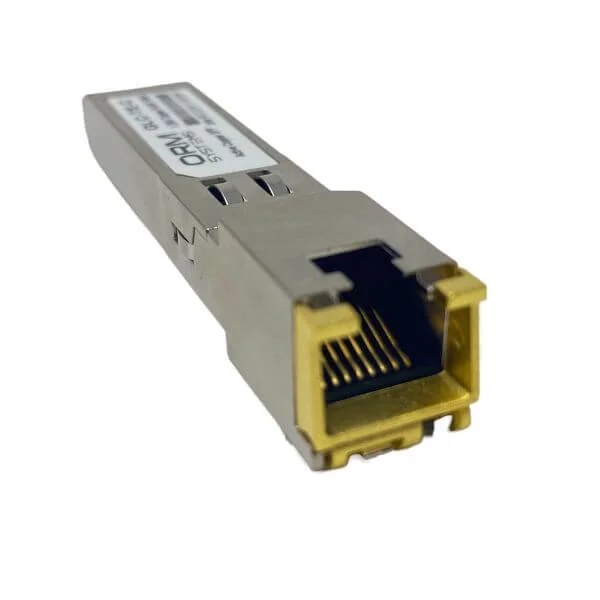
GLC-TE-C (1000Base-T SFP RJ45 Connector Ext Temp Cisco Compatible)
4.9 (8)- Transceiver
- Orm
- SFP
- 1G
- RJ45
- Short-Range
Est Value In stockFirst-Time Buyer Discount – Get up to 2% additional off on your first order
ORM Rewards Earn $50 in Rewards + Free Expedited Delivery – Join Now!
Use eCoupon ORMSAVE10
eCoupon limited to 5 units
SFP-GE-Z-C (1000Base-ZX SFP SMF 1550-NM DOM Cisco Compatible)
4.8 (8)- Transceiver
- Orm
- SFP
- 1G
- LC
- 1310nm
- Long-Range
Est Value In stockFirst-Time Buyer Discount – Get up to 2% additional off on your first order
ORM Rewards Earn $50 in Rewards + Free Expedited Delivery – Join Now!
Use eCoupon ORMSAVE10
eCoupon limited to 5 units
SFP-GE-T-C (1000Base-T SFP CAT-5 E-Temp Cisco Compatible)
4.6 (8)- Transceiver
- Orm
- SFP
- 1G
- RJ45
- Short-Range
Est Value In stockFirst-Time Buyer Discount – Get up to 2% additional off on your first order
ORM Rewards Earn $50 in Rewards + Free Expedited Delivery – Join Now!
Use eCoupon ORMSAVE10
eCoupon limited to 5 units
GLC-SX-MMD-RGD-C (1000BASE-SX SFP MMF DOM Rugged -40 to +85 Cisco Compatible)
4.8 (8)- Transceiver
- Orm
- SFP
- 1G
- LC
- 850nm
- Short-Range
Est Value In stockFirst-Time Buyer Discount – Get up to 2% additional off on your first order
ORM Rewards Earn $50 in Rewards + Free Expedited Delivery – Join Now!
Use eCoupon ORMSAVE10
eCoupon limited to 5 units
GLC-LX-SMD-RGD-C (1000BASE-LX/LH SFP SMF DOM Rugged -40 to +85 Cisco Compatible)
4.6 (8)- Transceiver
- Orm
- SFP
- 1G
- LC
- 1310 nm
- Long-Range
Est Value In stockFirst-Time Buyer Discount – Get up to 2% additional off on your first order
ORM Rewards Earn $50 in Rewards + Free Expedited Delivery – Join Now!
Use eCoupon ORMSAVE10
eCoupon limited to 5 units
GLC-EX-SMD-RGD-C (1000BASE-EX SFP SMF DOM Rugged -40 to +85 Cisco Compatible)
4.8 (8)- Transceiver
- Orm
- SFP
- 1G
- LC
- 1310 nm
- Extended-Range
Est Value In stockFirst-Time Buyer Discount – Get up to 2% additional off on your first order
ORM Rewards Earn $50 in Rewards + Free Expedited Delivery – Join Now!
Use eCoupon ORMSAVE10
eCoupon limited to 5 units
GLC-ZX-SMD-RGD-C (1000BASE-ZX SFP SMF DOM Rugged -40 to +85 Cisco Compatible)
4.8 (8)- Transceiver
- Orm
- SFP
- 1G
- LC
- 1550nm
- Long-Range
Est Value In stockFirst-Time Buyer Discount – Get up to 2% additional off on your first order
ORM Rewards Earn $50 in Rewards + Free Expedited Delivery – Join Now!
Use eCoupon ORMSAVE10
eCoupon limited to 5 units

ORM Sales Advisors
Buying for your business? Get a personalised quote in under 2 hours. Talk to an expert
LEARNFilters (48) 
Questions & Answers
What is a Cisco-compatible SFP?
A Cisco-compatible SFP is a third-party small form-factor pluggable optical transceiver designed to work seamlessly with Cisco switches, routers, and other network equipment.
How do Cisco-compatible SFPs differ from Cisco-branded SFPs?
Cisco-compatible SFPs offer the same form factor, performance specifications, and interface protocols as Cisco-branded modules at a lower price, while maintaining full interoperability.
Are Cisco-compatible SFPs reliable for enterprise networks?
Yes. Top-tier Cisco-compatible SFPs undergo rigorous testing and quality control to meet industry standards, ensuring reliable operation in enterprise and data center environments.
Which Cisco devices support Cisco-compatible SFP modules?
Most modern Cisco switches, routers, firewalls, and optical transport devices support Cisco-compatible SFPs; always verify compatibility lists for your specific model.
How do I choose the right Cisco-compatible SFP for my network?
Select an SFP based on interface type (SX, LX, ZX), connector (LC or RJ-45), wavelength, distance requirements, and compatibility with your Cisco device model.
Can I mix Cisco-branded and Cisco-compatible SFPs in the same chassis?
Yes. Cisco-compatible and Cisco-branded SFPs can coexist in the same switch or router slot without degrading performance or stability.
Are Cisco-compatible SFPs hot-swappable?
Yes. Like Cisco-branded transceivers, Cisco-compatible SFPs support hot-swapping, allowing insertion or removal without powering down the device.
What optical distances do Cisco-compatible SFPs support?
Depending on the variant—SX (up to 550 m), LX (up to 10 km), ZX (up to 80 km), CWDM/DWDM (up to 120 km)—Cisco-compatible SFPs cover multimode and single-mode applications.
How do I install a Cisco-compatible SFP module?
Align the SFP module with the slot, insert gently until it clicks, then secure the latch. The device should auto-detect and configure the port.
Will using Cisco-compatible SFPs void my Cisco warranty?
No. Cisco’s warranty covers hardware failures regardless of third-party transceivers, provided no damage is caused by improper installation or handling.
Do Cisco-compatible SFPs impact network performance?
No. High-quality Cisco-compatible SFPs meet or exceed Cisco specifications, delivering identical throughput, latency, and error-rate performance.
How do I verify my Cisco-compatible SFP is recognized by the device?
Use the show interface transceiver command in Cisco IOS or equivalent CLI to confirm the module’s vendor ID, model, and operational status.
What temperature range do Cisco-compatible SFPs support?
Standard Cisco-compatible SFPs operate between 0 °C and 70 °C; industrial versions extend from –40 °C to 85 °C for harsh environments.
Can I clean and maintain Cisco-compatible SFPs?
Yes. Use fiber-optic cleaning kits and lint-free swabs to clean the ferrule and connector; avoid touching the optical interface to maintain signal integrity.
What is the typical warranty for Cisco-compatible SFP modules?
Most vendors offer a lifetime or multi-year warranty covering defects and failures, ensuring longevity and product support for your investment.
How do I troubleshoot a non-working Cisco-compatible SFP?
Verify correct insertion, check link LEDs, confirm compatibility via CLI, replace fiber cables if needed, and test the module in another known-good port.