United States
Trusted by the Highest-Stakes Buyers
Federal agencies and Fortune 500 operations source through ORM Systems.
US Government & Defense
Enterprise Clients

Featured Deal
Hand-picked by our procurement team for standout value. This unit is offered at our sharpest price on current stock, verified against live market rates.
Name:

Added to cart 28 times recently
Ready to Ship
Certified Refurbished
Professionally inspected, bench-tested, and firmware-verified, with configurations wiped. Restored to full working order and backed by our warranty.

$4,221.00
$2,110.5050% off
Quantity:


3 Year Extended Warranty


Same-day Shipping

30-Day Money Back Guarantee
Shipping:
Payment:

3 Year Extended Warranty
Same-day Shipping
30-Day Money Back Guarantee
Need Additional Discount on Product?
Request a quote below - Get Exclusive Pricing and Support.
Shipping:
Payment:
SSDPD21K375GA01
Intel Solid-State Drive D4800 Series - SSD - 375 GB - PCIe 2...
Trusted by the Highest-Stakes Buyers
Federal agencies and Fortune 500 operations source through ORM Systems.
US Government & Defense




Enterprise Clients



Built Global. Stocked Local.
Regional teams and 25+ distribution partners keep stock near you and accountability in your time zone.
Buyer Protection on Every Order
Pay by PayPal or Revolut with full chargeback rights. Order on PO terms, Net-30 for government.
Verified By Federal Bodies
Every registration we claim is public record — check our federal contractor status yourself before you spend a dollar.



Since 2016, Enterprise-Trusted
Ten years serving buyers who audit their vendors. From federal agencies to 20,000+ enterprise clients worldwide.
SSDPD21K375GA01 is a HDD engineered with a 3.5-inch form factor and a SATA III interface operating at 7200 RPM. It offers a storage capacity of 2 TB paired with a 256 MB cache and an annual workload rating of 180 TB/yr, while its MTBF of 1,000,000 hours and 24/7 rated reliability underscore its robust performance.
SSDPD21K375GA01 is designed for demanding environments including desktop, server, NAS, and surveillance applications. It maintains efficient power consumption at 6.8 Watts during read/write operations and 4.5 Watts when idle, and features advanced innovations such as a helium-sealed design, dual actuator technology, and vibration protection—making it ideal for data centers, enterprise desktops, and network storage solutions.
SSDPD21K375GA01 price for new stock is is available on request. Get immediate quote. SSDPD21K375GA01 refurb price is $2,110.50.
Request bulk order quote for SSDPD21K375GA01 for additional pricing. Browse the full Hard Drives series or explore all Intel products.
Mon–Fri: [09:00-16:00]
Avg. response under 30 mins

| SSDPD21K375GA01 | 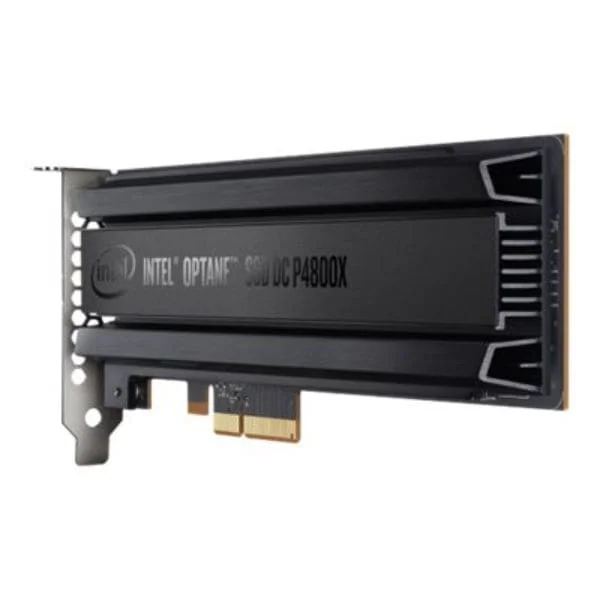 SSDSC2KB019T801 SSDSC2KB019T801 |  SSDPEK1A058GA01 SSDPEK1A058GA01 | 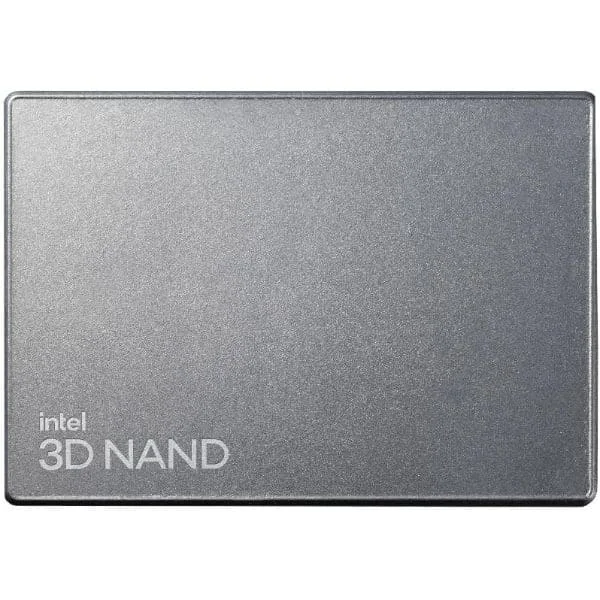 SSDPE2KX010T810 SSDPE2KX010T810 | 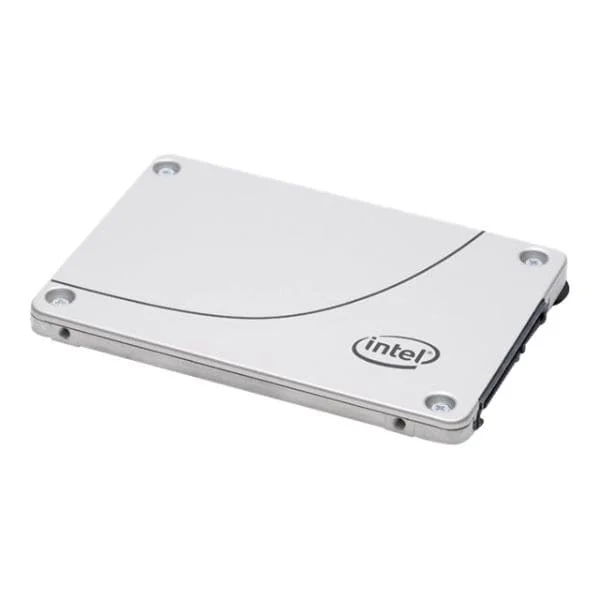 SSDPELKX020T801 SSDPELKX020T801 | |
|---|---|---|---|---|---|
| Product Type | Hard Drive | Hard Drive | Hard Drive | Hard Drive | Hard Drive |
| Drive Type | HDD | HDD | HDD | HDD | HDD |
| Use Case | Desktop / Server / NAS / Surveillance | Desktop / Server / NAS / Surveillance / Enterprise Storage | Server | Desktop / Server / NAS / Surveillance / Enterprise Storage | Desktop / Server / NAS |
| Interface | SATA III | SATA III | SATA III | SATA III | SATA III |
| Form Factor | 3.5-inch | 3.5-inch | 3.5-inch | 3.5-inch | 3.5-inch |
| Storage Capacity | 2 TB | 8 TB | 8 TB | 10 TB | 2 TB |
| Spindle Speed (RPM) | 7200 RPM | 7200 RPM | 7200 RPM | 7200 RPM | 7200 RPM |
| Cache (Buffer Size) | 256 MB | 256 MB | 256 MB | 256 MB | 256 MB |
| Data Transfer Rate | Up to 210 MB/s | Up to 250 MB/s | Up to 250 MB/s | Up to 250 MB/s | Up to 210 MB/s |
| Annual Workload Rating | 180 TB/yr | 300 TB/yr | 550 TB/yr | 550 TB/yr | 300 TB/yr |
| Power Consumption (Read/Write) | 6.8 Watts | 6.9 Watts | 9 Watts | 8.5 Watts | 8 Watts |
| Power Consumption (Idle) | 4.5 Watts | 5.8 Watts | 6 Watts | 6 Watts | 6 Watts |
| Encryption Support | AES 256-bit | AES 256-bit | AES 256-bit | AES 256-bit | AES 256-bit |
| Helium Sealed | Helium-Sealed | Helium-Sealed | Helium-Sealed | Helium-Sealed | Helium-Sealed |
| Drive Bays Supported | Multi-bay | Multi-bay | Multi-bay | Multi-bay | Multi-bay |
| Vibration Protection | Yes | Yes | Yes | Yes | Yes |
| Advanced Features | Dual Actuator | Dual Actuator | Dual Actuator | Dual Actuator | Dual Actuator |
| Operating Temperature | 5–60°C | 5–60°C | 5–60°C | 5–60°C | 5–60°C |
| Product Name | SSDPD21K375GA01 | SSDSC2KB019T801 | SSDPEK1A058GA01 Enterprise HDD | SSDPE2KX010T810 | SSDPELKX020T801 |
| Height | 1.03 inches | 1.0 inches | 1.03 inches | 1 inch | 1.03 inches |
| Width | 5.79 inches | 5.8 inches | 5.79 inches | 4 inches | 5.79 inches |
| Depth | 7.40 inches | 8.0 inches | 4 inches | 5.79 inches | 4.01 inches |
| Weight | 1.6 lbs | 2.3 lbs | 1.75 lbs | 1.5 lbs | 1.8 lbs |


Every unit is authentic, sourced through trusted and authorised channels, and serial-verified on request. Genuine networking and IT hardware, guaranteed, or your money back.

New products are backed by up to 3 years of extended warranty, and certified refurbished units by up to 3 months, for dependable protection on every order. Coverage is clear, honoured in full, and confirmed on each product page.

If a unit ever falls short, our streamlined RMA process gets a replacement to you fast, with advance replacement available to keep your network running. No jargon, no runaround.

Every device is inspected, bench-tested, and firmware-verified, with configurations wiped before dispatch. Additional testing can be arranged to confirm full working condition on request.

Our specialists assist with compatibility, configuration, licensing, and installation, before and after you buy. Real hardware expertise, whenever you need it.

dispatched quickly and shipped worldwide from regional hubs, fully tracked and insured.
Reviewed on the 31 October 2020

Reliable 375GB D4800 SSD with stable PCIe performance.
Reviewed on the 30 November 2022
Excellent low-latency storage for enterprise workloads.
Reviewed on the 20 March 2023
Consistent IOPS and dependable endurance.
Reviewed on the 5 October 2025
Smooth integration into existing server platforms.
Reviewed on the 12 April 2022
Professional NVMe solution delivering steady throughput.
Reviewed on the 4 August 2018
Strong reliability under sustained usage.
Reviewed on the 12 May 2019
Dependable enterprise storage upgrade.
The Intel SSD D4800 Series SSDPD21K375GA01 features 375 GB of raw storage, a PCIe 2.0 x2 NVMe interface, enterprise-grade endurance, end-to-end data protection, and a five-year limited warranty.
This Intel SSD provides 375 GB of usable storage, optimized for high-performance data-center and caching applications.
The SSD utilizes a PCIe 2.0 x2 (Gen2) NVMe interface in a half-height, half-length (HHHL) add-in-card form factor.
This drive delivers up to 1 000 MB/s sequential reads and up to 600 MB/s sequential writes, ensuring fast data throughput under load.
Yes. The SSD supports the NVMe 1.1 protocol over PCIe 2.0 x2, providing low-latency I/O and high queue depths for enterprise workloads.
The SSD is rated for up to 1.8 petabytes written (PBW) over five years, with a mean time between failures (MTBF) of 2 million hours.
Designed for mixed-read data-center applications, this SSD excels in caching, boot acceleration, virtualized environments, and high-throughput analytics.
The Intel SSD D4800 Series is compatible with Windows Server, Linux distributions, VMware ESXi, and major data-center motherboards supporting PCIe NVMe drives.
The drive offers end-to-end data protection, power-loss protection capacitors, and support for TCG Opal encryption via host-managed tools.
Typical active power consumption is 5 W, with < 3 W idle, and it operates reliably between 0 °C and 70 °C with integrated thermal throttling.
Install the HHHL add-in card into a free PCIe x2 or higher slot, secure it per chassis instructions, then configure it in BIOS/UEFI and your OS.
Yes. The SSD supports PCIe NVMe RAID via motherboard or HBA, and is commonly deployed as a high-speed cache tier in hybrid storage arrays.
Intel provides the SSD Data Center Tool (Intel® SCT) for firmware updates, health monitoring, SMART reporting, and secure-erase functions.
Intel backs this SSD with a five-year limited warranty, global technical support, and an online knowledge base with product documentation.
By reducing I/O latency, increasing IOPS, and offloading repetitive tasks, this SSD accelerates boot times, database queries, and virtual machine responsiveness.
You can purchase the SSD through Intel authorized distributors and channel partners. For technical assistance, visit Intel’s support portal or contact your regional Intel support team.